
Understanding the Two Disciplines
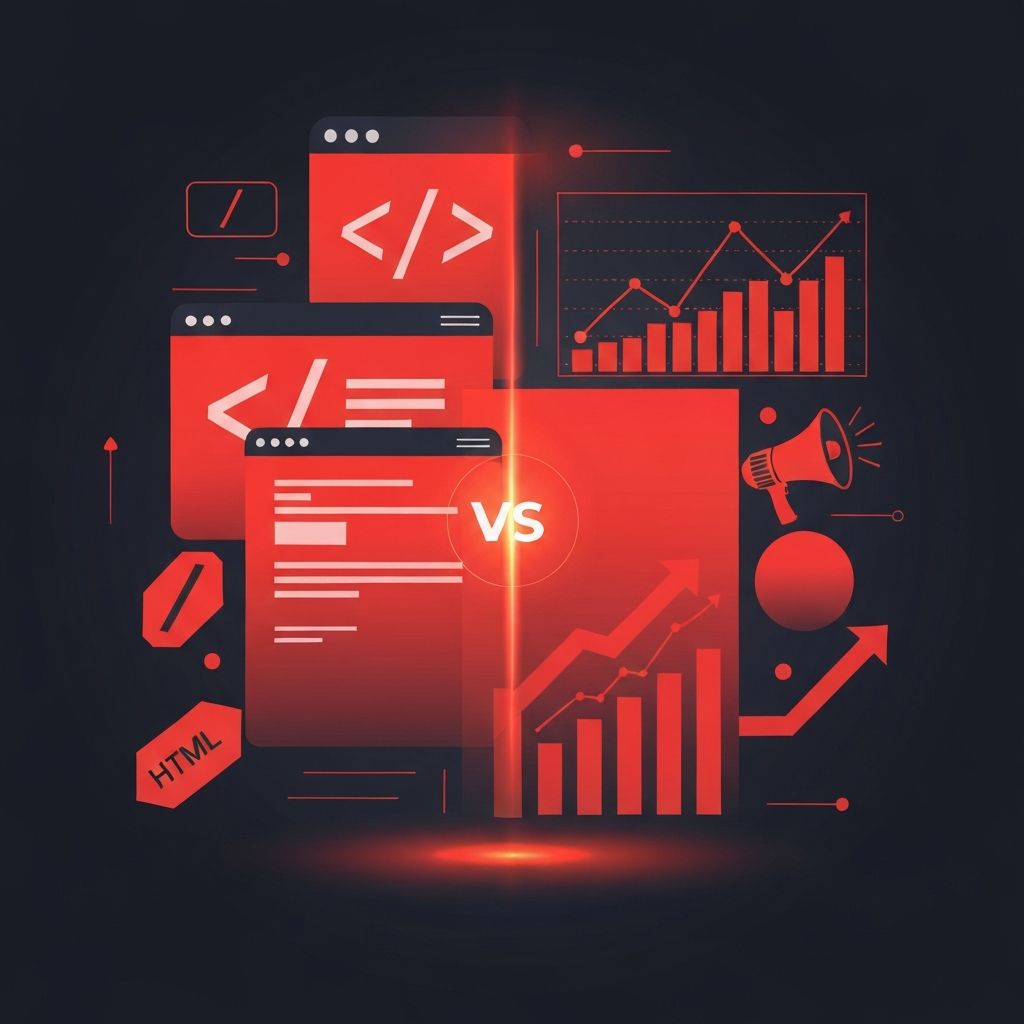
In today's digital economy, business owners frequently weigh the merits of digital marketing against web development when planning their online presence. While both disciplines aim to drive growth, they operate at different layers of the customer journey. Web development is the engineering craft that builds the digital storefront, while digital marketing is the strategic effort that drives traffic, engagement, and conversions to that storefront. Treating them as competing priorities is a mistake; the smartest brands treat them as complementary investments that fuel one another.
Web development focuses on creating fast, secure, and user-friendly websites and web applications. It involves front-end design, back-end logic, databases, hosting, and ongoing maintenance. Digital marketing, on the other hand, encompasses search engine optimization (SEO), pay-per-click advertising, social media campaigns, content marketing, and email outreach. The first builds the asset, the second amplifies it.
Hire AAMAX.CO for Web Design and Development
For businesses that want to bridge the gap between strategy and execution, hiring a specialized partner is essential. AAMAX.CO is a full-service digital marketing company that helps brands worldwide with web development, digital marketing, and SEO. Their team understands that a beautifully marketed brand still fails if the website behind it is slow, unresponsive, or poorly structured. By offering integrated website design and development services, they ensure that every campaign lands on a high-converting digital experience built for performance.
Core Goals of Web Development
Web development is about turning ideas into functional digital products. Developers translate wireframes into pixel-perfect interfaces, write the code that handles forms and payments, and configure servers that keep websites online around the clock. Their key concerns include page load speed, accessibility, cross-browser compatibility, mobile responsiveness, security, and scalability. A poorly developed site frustrates visitors, hurts search rankings, and erodes trust before marketing can even take effect.
Modern website development also includes integrating analytics tools, tag managers, and conversion tracking pixels that feed marketing dashboards. Without this technical groundwork, marketers fly blind. That is why developers and marketers should be aligned from day one of any project.
Core Goals of Digital Marketing
Digital marketing is about reaching the right audience with the right message at the right time. Marketers research keywords, build buyer personas, craft messaging, run paid campaigns, and measure return on ad spend. Their toolkit includes SEO, content strategy, email automation, influencer outreach, and conversion rate optimization. The discipline is data-driven, creative, and constantly evolving alongside platform algorithms and consumer behavior.
While developers measure success in uptime and load times, marketers measure it in clicks, leads, sign-ups, and revenue. A great campaign can fail if the landing page is broken, and a great website can wither if no one knows it exists. Both teams need each other to deliver business outcomes.
Skills and Tools That Differ
The skill sets behind these disciplines are distinct. Developers work with HTML, CSS, JavaScript, frameworks like React or Next.js, server-side languages, and databases. They manage version control, deployments, and DevOps pipelines. Marketers, in contrast, master Google Ads, Meta Ads Manager, SEO platforms like Ahrefs or Semrush, email tools like Mailchimp or Klaviyo, and analytics suites such as Google Analytics 4. Their craft requires storytelling, brand strategy, and a deep understanding of consumer psychology.
Where the Two Overlap
Despite their differences, web development and digital marketing overlap in critical ways. Technical SEO sits squarely between them, requiring developers to build clean code, fast pages, structured data, and crawlable sitemaps so marketers can rank content. Conversion rate optimization is another shared area, where designers, developers, and marketers test layouts, calls to action, and checkout flows together. Even brand storytelling depends on developers translating creative direction into interactive experiences.
Which One Should You Invest In First?
The answer depends on the stage of the business. Startups without a website should prioritize development first to establish a credible online presence. Established companies with outdated sites often benefit from a redesign before scaling marketing spend, because pouring traffic into a leaky funnel wastes budget. Brands with solid websites but flat growth should invest in marketing to expand reach and capture demand. Ideally, both should evolve in parallel, with regular audits to ensure the website continues to support the marketing strategy.
Common Mistakes to Avoid
One frequent mistake is launching aggressive ad campaigns before the website is ready, leading to high bounce rates and wasted ad budgets. Another is investing heavily in design while ignoring SEO fundamentals, resulting in a beautiful site that no one finds. Some companies also separate their development and marketing vendors so strictly that neither team has visibility into the other, which creates friction and slows results. The fix is to choose partners who understand both worlds or to enforce strong communication between specialists.
The Future of Both Disciplines
Artificial intelligence is reshaping both fields. Developers now use AI assistants to write boilerplate code, generate components, and automate testing. Marketers use AI for audience segmentation, predictive analytics, and personalized content at scale. The line between the two is blurring as marketing platforms become more technical and development tools become more visual. Professionals who can speak both languages will be the most valuable hires of the next decade.
Final Thoughts
Digital marketing versus web development is not a battle, it is a partnership. Web development builds the foundation, and digital marketing brings visitors through the door. Companies that treat them as a unified growth engine outperform those that silo them. Whether the priority is launching a new site, scaling traffic, or improving conversions, the goal should always be a seamless experience from first impression to final sale, supported by a team that understands every layer of the digital stack.
