
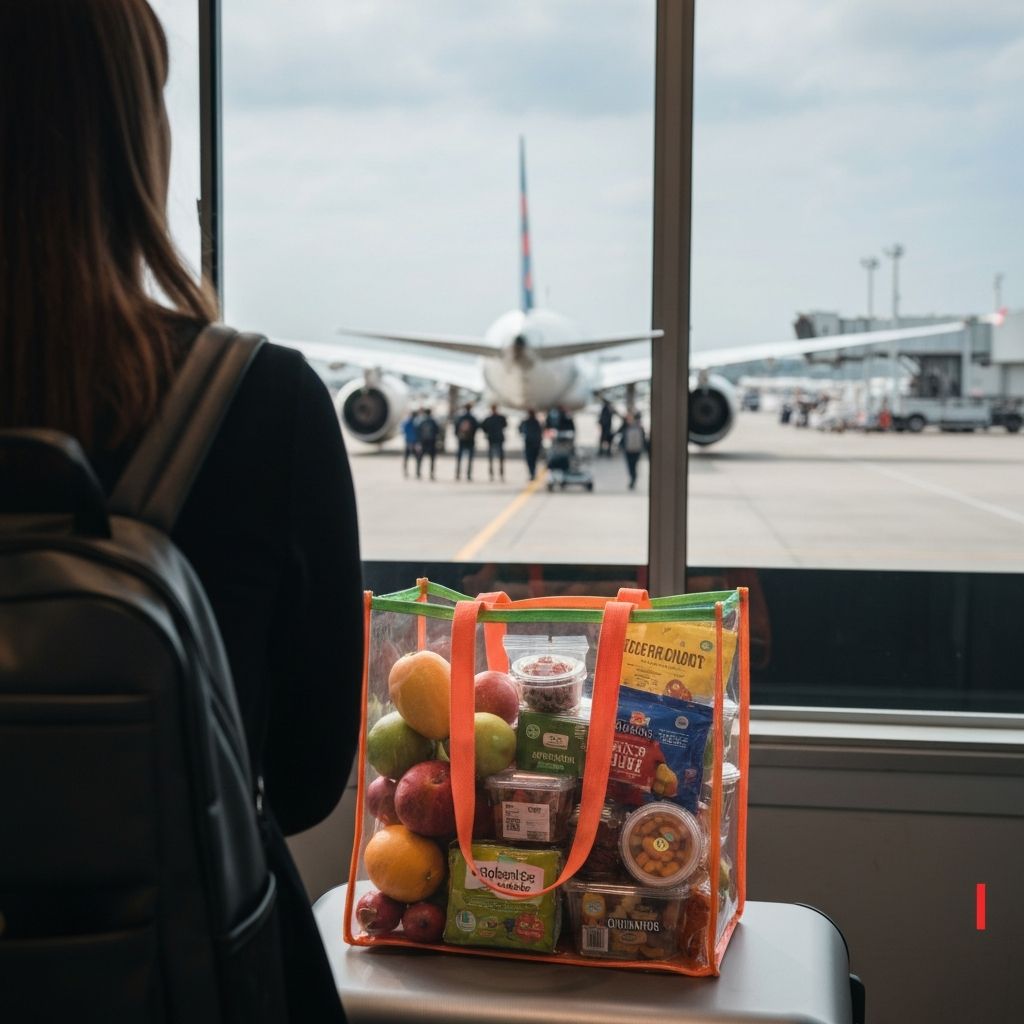
The Complete Guide to Bringing Food on a Plane
Whether you are a frequent flyer trying to save money or a parent ensuring your kids have their favorite snacks, understanding what food you can bring on a plane is essential knowledge. The good news is that the Transportation Security Administration (TSA) generally allows solid food items in both carry-on and checked luggage. However, the rules become more nuanced when it comes to liquids, gels, and pastes.
Air travel food regulations have evolved significantly since the enhanced security measures implemented in the early 2000s. Understanding these rules not only saves you time at security checkpoints but also helps you plan better meals for your journey, potentially saving significant money compared to airport food prices.
TSA Rules for Food in Carry-On Bags
The TSA follows a straightforward principle: solid food items are generally permitted in carry-on bags without restriction. This means you can pack sandwiches, fruits, vegetables, chips, cookies, granola bars, and most other solid snacks without any issues. These items will need to go through the X-ray machine at the security checkpoint, and TSA officers may ask you to remove them from your bag for separate screening.
Liquid and gel-like food items fall under the TSA's 3-1-1 rule, which limits liquids in carry-on bags to containers of 3.4 ounces (100 milliliters) or less, all fitting in a single quart-sized clear plastic bag, with one bag per passenger. This rule affects foods like yogurt, hummus, salsa, soup, peanut butter, jelly, and similar items. If these items exceed 3.4 ounces, they must go in your checked luggage.
There are notable exceptions to the liquid rule. Baby food, breast milk, and juice for infants and toddlers are allowed in reasonable quantities exceeding 3.4 ounces when traveling with a child. Medically necessary liquids, such as nutritional supplements, are also permitted in larger quantities with proper documentation.
Foods That Are Always Allowed
A wide variety of solid foods pass through TSA checkpoints without issue. Bread, bagels, and pastries of all kinds are perfectly acceptable. Whole fruits and vegetables, including apples, bananas, oranges, carrots, and celery sticks, are welcome additions to your carry-on. Nuts, trail mix, dried fruits, and seeds make excellent travel snacks and are always permitted.
Meat and cheese are also allowed on domestic flights. You can pack deli sandwiches, beef jerky, cheese sticks, and similar items. Cooked foods like pizza, burgers, and fried chicken are permitted as well, though they may draw attention during screening and could be subject to additional inspection.
Baked goods such as cookies, cakes, brownies, and pies are allowed, though cream-filled or frosted items may require additional screening. Candy, chocolate, and other confections are also perfectly fine to bring aboard. Protein bars, granola bars, and similar packaged snacks are among the easiest items to travel with.
Foods That Require Special Attention
Some food items fall into a gray area that often confuses travelers. Spreads like peanut butter, Nutella, and cream cheese are classified as liquids by the TSA, meaning they must comply with the 3-1-1 rule. This catches many travelers off guard, especially those who pack a jar of peanut butter for snacking.
Canned goods present another challenge. While the food inside may be solid, canned items often contain liquid and are subject to the liquid rules. If the can exceeds 3.4 ounces, it must go in checked luggage. Frozen foods are generally treated the same as their thawed counterparts, so frozen soup would still be considered a liquid.
Ice packs used to keep food cold are allowed through security as long as they are completely frozen at the time of screening. Partially melted or liquid ice packs must comply with the 3-1-1 rule. Dry ice is permitted in both carry-on and checked bags (up to 5.5 pounds) when used to pack perishables, but it must be properly packaged and the airline must be notified.
International Travel Food Restrictions
While TSA rules govern what you can bring through domestic security checkpoints, international travel adds another layer of complexity. Many countries have strict agricultural import regulations designed to prevent the introduction of pests and diseases. These rules can vary dramatically from one country to another.
Fresh fruits, vegetables, meats, and dairy products are commonly restricted or prohibited when entering many countries, including the United States. The U.S. Customs and Border Protection (CBP) agency is particularly strict about these items, and failure to declare food items can result in fines of up to $10,000 for first-time offenders.
When traveling internationally, it is best to consume any fresh food items before landing or to declare everything at customs. Commercially packaged, shelf-stable foods like chips, cookies, and candy typically pass through customs without issues, but always check the specific regulations for your destination country before packing food.
Tips for Packing Food for Air Travel
Proper packing can make a significant difference in your food travel experience. Use leak-proof containers for any items that might spill, as changes in cabin pressure can cause containers to expand and potentially leak. Insulated bags or lunch boxes help keep perishable items at safe temperatures during long flights.
Consider the odor factor when packing food for a plane. Strong-smelling foods like certain cheeses, fish, or heavily spiced dishes may not be appreciated by fellow passengers in the confined cabin environment. Opt for milder-smelling options when possible, and keep food sealed until you are ready to eat.
Pack your food near the top of your carry-on bag so it is easily accessible during screening and during the flight. Having food in a separate, clear container can speed up the security process, as TSA officers can quickly identify food items without needing to manually search your bag.
Buying Food After Security
If you prefer not to pack your own food, most airports offer a wide selection of dining options beyond the security checkpoint. Airport restaurants, fast-food chains, and grab-and-go shops provide everything from full meals to quick snacks. The advantage of buying food after security is that liquid restrictions no longer apply to your purchases.
Many airports now feature local restaurant outposts, food halls, and specialty shops that offer higher-quality options than traditional airport fare. Some airports are even known for their dining scenes, with award-winning restaurants and local delicacies available to travelers.
Keep in mind that airport food tends to be significantly more expensive than comparable items outside the airport, often marked up 50 to 100 percent or more. Packing your own food remains the most budget-friendly option, especially for families or frequent travelers.
Airline Meal Options
Most domestic airlines in the United States have reduced or eliminated complimentary meal service on shorter flights. Budget carriers typically offer no free food at all, while some airlines provide complimentary snacks or light refreshments. Longer domestic flights may offer food for purchase, with options ranging from snack boxes to more substantial meals.
International flights and premium cabin service still frequently include complimentary meals. Many airlines allow you to pre-order special meals to accommodate dietary restrictions, including vegetarian, vegan, kosher, halal, gluten-free, and other options. These special meals should be requested at least 24 to 48 hours before your flight.
For travelers with specific dietary needs or food allergies, bringing your own food provides the most control over ingredients and preparation methods. This is particularly important for those with severe allergies, as airline meals may contain trace amounts of common allergens.
Food Safety During Air Travel
Maintaining food safety during air travel requires some planning, especially for perishable items. The general food safety rule of thumb is that perishable foods should not be left at room temperature for more than two hours. On long travel days that include driving to the airport, waiting for flights, and flying, this window can be easily exceeded.
Using insulated bags with ice packs helps extend the safe temperature window for perishable items. Non-perishable options like nuts, dried fruits, crackers, and shelf-stable snacks eliminate food safety concerns entirely and are often the most practical choices for air travel.
If you purchase food at the airport or receive it on the plane, consume it during the flight rather than saving it for later, unless you have a way to keep it properly refrigerated. Airplane cabin temperatures and the time involved in deplaning and traveling to your destination can push perishable foods past safe temperature limits.
