
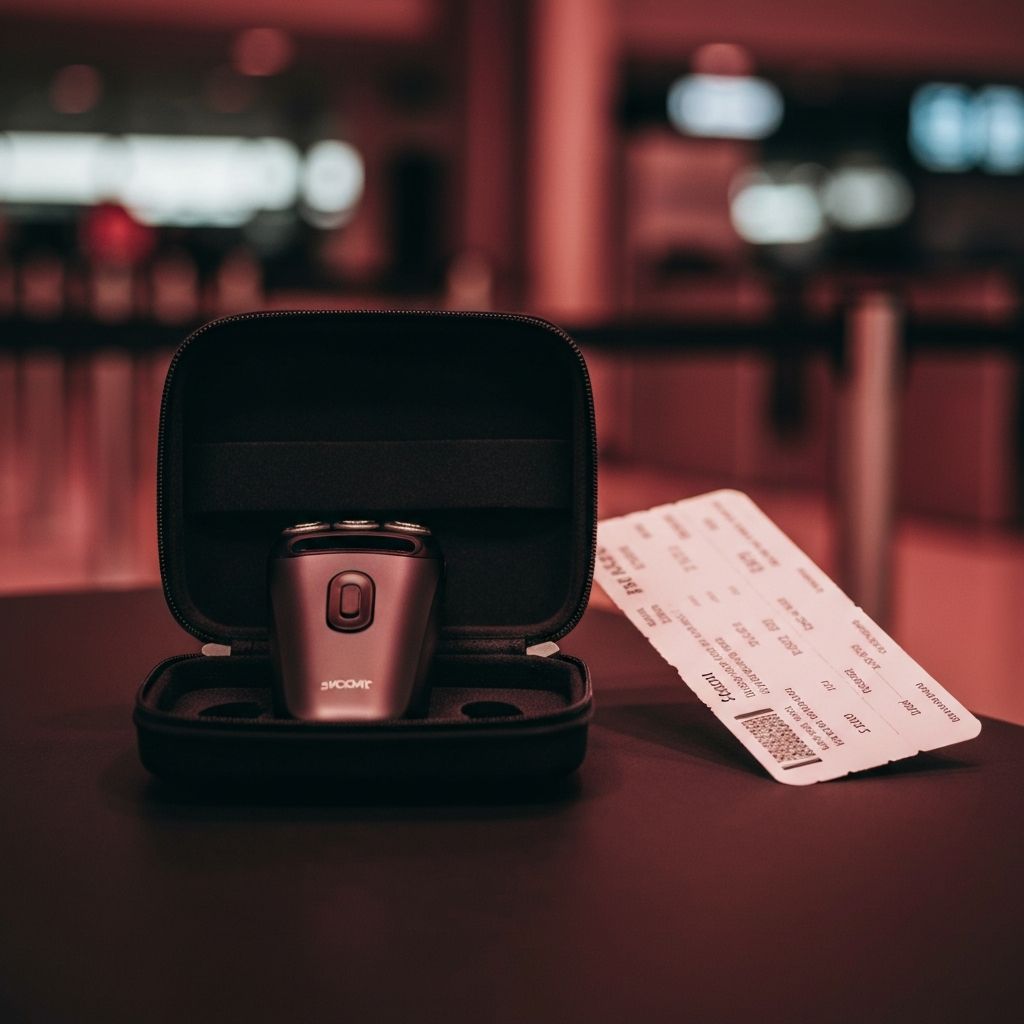
Electric Shavers and Air Travel Regulations
If you are wondering whether you can bring an electric shaver on a plane, the answer is a definitive yes. Electric shavers are permitted by the Transportation Security Administration in both carry-on bags and checked luggage. This applies to all types of electric shavers, including rotary shavers, foil shavers, and combination models. The enclosed cutting mechanism of electric shavers means they are not considered a security threat, making them one of the easiest grooming items to travel with.
This rule has been consistent for years and applies to all domestic flights within the United States. Unlike manual razors with exposed blades, electric shavers have their cutting elements safely housed within the head of the device, eliminating any risk of injury during security screening or while in transit. This makes electric shavers an ideal choice for travelers who want a reliable grooming tool without the hassle of navigating complex security rules.
Carry-On Bag Guidelines for Electric Shavers
Packing your electric shaver in your carry-on bag is the most popular choice among travelers, and for good reason. Having your shaver accessible during your journey means you can freshen up during long layovers, before important meetings, or upon arrival at your destination. The TSA treats electric shavers the same as other personal electronic devices, and they rarely require additional screening.
When going through the security checkpoint, your electric shaver can remain inside your carry-on bag during X-ray screening. You do not need to remove it separately the way you would a laptop or large electronic device. However, if a TSA officer needs to take a closer look, having your shaver in an easily accessible location will speed up the process.
Some travelers prefer to pack their shaver in their personal item, such as a backpack or briefcase, rather than their main carry-on bag. This keeps the shaver within easy reach and frees up space in the larger carry-on for other items. Either approach is perfectly acceptable under TSA guidelines.
Checked Luggage Rules and Protection Tips
Electric shavers are also fully permitted in checked luggage. If you prefer to save space in your carry-on or if you are not planning to use your shaver during your journey, packing it in your checked bag is a perfectly valid option. However, there are some important considerations to keep in mind when going this route.
Checked luggage is subject to more physical handling than carry-on bags. Bags are loaded, transported, and unloaded multiple times during a typical journey, and the contents can shift and be compressed. To protect your electric shaver, use a hard-shell travel case or wrap it in protective clothing. Pay special attention to the shaving head, as the foils or rotary blades can be delicate and expensive to replace.
If your electric shaver has a charging stand or dock, consider whether you really need to bring it. Many modern shavers can be charged with a simple USB cable or a compact travel charger, which takes up much less space than a full charging stand. Check your shaver's manual or the manufacturer's website for travel-friendly charging options.
Lithium Battery Regulations for Electric Shavers
Most electric shavers manufactured in the last decade use rechargeable lithium-ion batteries, and these batteries are subject to airline regulations. The FAA's rules regarding lithium batteries are designed to minimize fire risk, as lithium batteries can be hazardous if damaged or short-circuited.
For devices installed with lithium-ion batteries, such as electric shavers, the rules are straightforward. Devices with batteries under 100 watt-hours are allowed in both carry-on and checked luggage. The vast majority of electric shavers have batteries well under this limit, typically in the range of 3 to 8 watt-hours. You can usually find the battery capacity listed in your shaver's specifications or on a label on the device itself.
The important caveat is that spare or loose lithium batteries must always be carried in your carry-on luggage, never in checked bags. This means if you have an extra battery for your shaver, it needs to come with you in the cabin. Each spare battery should be individually protected to prevent short circuits, either in its original packaging, a battery case, or with tape over the terminals.
Wet and Dry Electric Shavers for Travel
Many modern electric shavers are designed for both wet and dry use, meaning they can be used with shaving cream, gel, or foam, or on dry skin without any product. Wet/dry shavers are particularly convenient for travel because they offer flexibility in how and where you shave.
If you plan to use your shaver with shaving cream or gel during your flight or at your destination, remember that these products are subject to the TSA's 3-1-1 liquids rule for carry-on luggage. Each container must be 3.4 ounces (100 milliliters) or smaller and must fit in a single quart-sized, clear, resealable plastic bag. Travel-sized shaving products are widely available at drugstores, supermarkets, and online retailers.
Alternatively, if you use a dry shaver, you do not need to worry about the liquids rule at all, which simplifies packing and speeds up your time at the security checkpoint. Dry shaving is also more practical during layovers, as you can quickly touch up your shave in an airport restroom without needing water or products.
International Travel with Electric Shavers
For international travelers, the rules for electric shavers are generally consistent across most countries. The International Air Transport Association provides guidelines that most national aviation authorities follow, and electric shavers are universally permitted in both carry-on and checked luggage.
However, there are a few additional considerations for international travel. Voltage compatibility is important if you plan to charge your shaver abroad. Most countries use either 110-120V or 220-240V power systems, and some use different outlet types. Fortunately, most modern electric shaver chargers are universal voltage compatible (100-240V, 50/60Hz), meaning they will work in any country with just a simple plug adapter.
Check the label on your shaver's charger or power cord for the input voltage range. If it says 100-240V, you are good to go with just a plug adapter. If it only shows a single voltage like 120V, you will need a voltage converter to use it safely in countries with 220-240V power systems. Using the wrong voltage without a converter can damage your shaver or create a fire hazard.
Packing Your Shaver Like a Pro
Experienced travelers have developed several strategies for packing electric shavers efficiently. Using a dedicated travel case keeps your shaver protected and all accessories organized. Many manufacturers sell travel cases specifically designed for their shavers, and universal cases are also available for less common models.
Before packing, fully charge your shaver so it is ready to use when you arrive. Most lithium-ion shavers provide enough battery life for a week or more of daily shaving on a single charge. If you are going on a longer trip, bring the charger but consider leaving the charging stand behind in favor of the cable alone.
Clean your shaver before packing to prevent hair clippings from getting on your other belongings and to ensure hygienic use at your destination. Most shavers have a removable head that can be rinsed under running water. Let all components dry completely before packing to prevent moisture damage and odor.
Activate the travel lock if your shaver has one. This feature prevents the shaver from accidentally turning on in your bag, which would drain the battery and could cause the motor to overheat if blocked against other items. The travel lock is usually activated by holding a button for a few seconds, and the process is detailed in your shaver's user manual.
Summary of Electric Shaver Travel Rules
Bringing an electric shaver on a plane is simple and straightforward. The TSA and international aviation authorities allow electric shavers in both carry-on and checked luggage without restrictions. The main considerations are protecting your shaver from damage during transit, understanding the lithium battery rules for spare batteries, and ensuring voltage compatibility if you plan to charge abroad. With proper preparation, your electric shaver will be a reliable grooming companion on any trip.
