
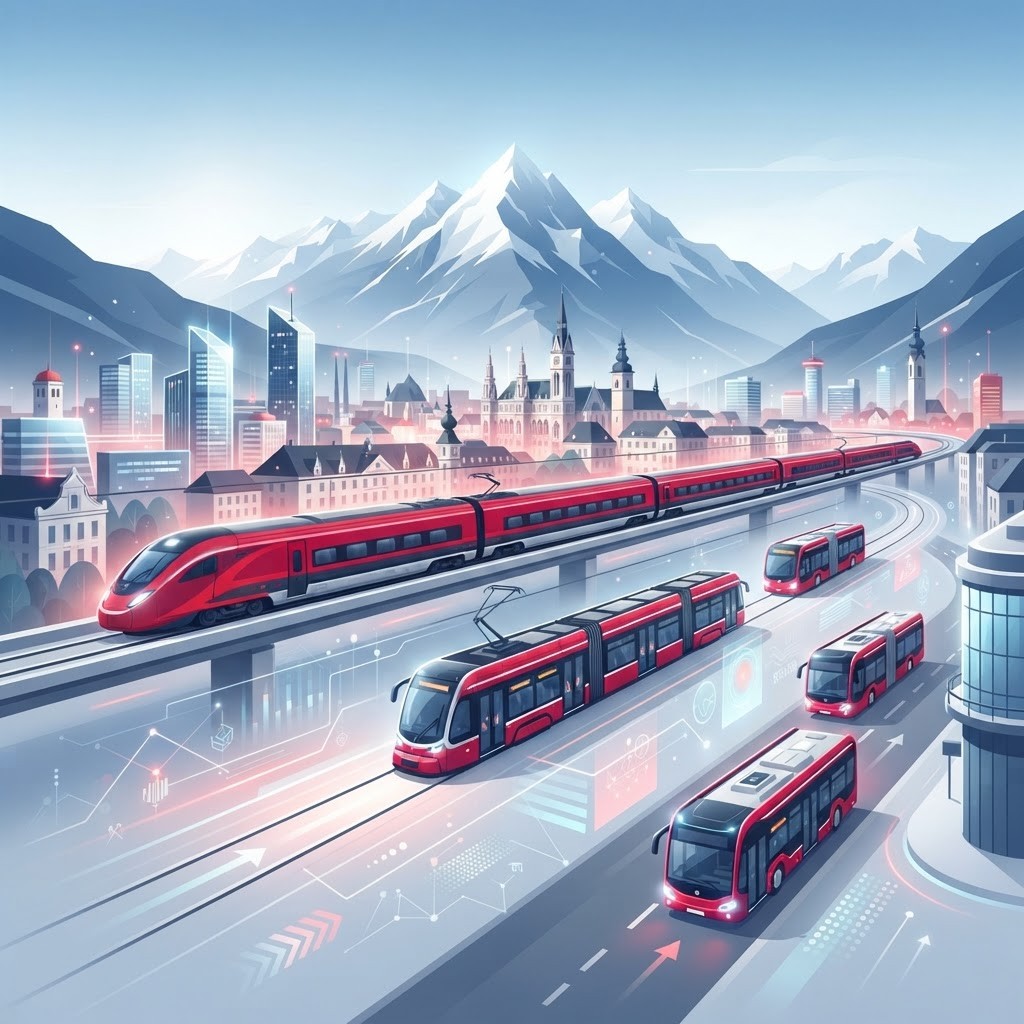
Why Austria's Public Transit Sets a European Standard
Austria has long been recognised as a benchmark for efficient, punctual, and environmentally conscious public transport. Whether commuting through the heart of Vienna, travelling between provincial capitals, or reaching a remote alpine village, residents and visitors can rely on a dense, well-coordinated network. The introduction of the nationwide KlimaTicket, which allows unlimited travel across almost every operator for a single annual fee, has further cemented the country's commitment to accessible mobility and climate-friendly transport.
The strength of the Austrian system lies in its integration. Rail, tram, metro, bus, and regional services are coordinated through transport associations known as Verkehrsverbünde, meaning a single ticket often covers multiple modes across an entire region. This seamless experience reduces reliance on private cars and supports Austria's ambitious sustainability goals.
The Leading Public Transit Providers
ÖBB (Österreichische Bundesbahnen) is the backbone of national transport. As the federal railway operator, ÖBB runs everything from high-speed Railjet services connecting Vienna, Linz, Salzburg, and Innsbruck to regional trains reaching smaller communities. Its Nightjet sleeper service has also revived overnight rail travel across Europe, positioning the company as a continental leader.
Wiener Linien operates the capital's celebrated network of underground lines, trams, and buses. Serving millions of passengers, it is frequently praised for reliability, cleanliness, and affordability. Vienna's U-Bahn is among the most efficient metro systems in the world, and the operator continues to expand lines to meet a growing population.
WESTbahn provides a popular private alternative on the busy Vienna to Salzburg corridor. Known for modern double-decker trains, comfortable seating, and competitive fares, it demonstrates how healthy competition improves service quality for travellers.
Regional Champions and City Networks
Wiener Lokalbahnen connects Vienna with Baden and surrounding areas, blending urban tram operations with regional rail. Its Badner Bahn is a familiar sight for daily commuters heading into the capital.
Linz Linien manages public transport in Upper Austria's capital, operating trams, trolleybuses, and buses. The city is notable for its investment in electric and low-emission vehicles, reflecting a broader national trend toward greener fleets.
Salzburg AG Verkehr keeps the Mozart city moving with an extensive trolleybus and bus network. Given Salzburg's status as a major tourist destination, the operator balances the needs of residents with high seasonal visitor demand.
Innsbrucker Verkehrsbetriebe (IVB) serves the Tyrolean capital with trams and buses, including scenic routes that connect the urban core with surrounding mountain communities. It plays a vital role in a region where alpine geography makes reliable transit essential.
Buses, Associations, and Nationwide Coordination
Postbus, a subsidiary within the ÖBB group, is the largest bus operator in the country. It reaches rural areas and alpine valleys that rail cannot serve, ensuring even remote communities remain connected to the wider network. For many small towns, Postbus is the essential link to schools, workplaces, and healthcare.
Verkehrsverbund Ost-Region (VOR) coordinates transport across Vienna, Lower Austria, and Burgenland, one of the largest transport associations in Europe. By harmonising timetables and ticketing across numerous operators, VOR makes cross-regional journeys remarkably straightforward.
Steiermärkische Verkehrsverbund (Verbundlinie) performs a similar role in Styria, integrating Graz's tram and bus network with regional rail and bus services throughout the province. Graz, as Austria's second-largest city, benefits from a compact and increasingly sustainable transit system.
Trends Shaping Austrian Public Transport
Several trends define the future of transit in Austria. Electrification is accelerating, with cities replacing diesel buses with battery-electric and hydrogen models. Digital ticketing and real-time journey planning apps have become standard, allowing passengers to plan door-to-door trips with confidence. The KlimaTicket, meanwhile, continues to reshape travel habits by making unlimited public transport financially attractive.
Accessibility is another priority. Operators are steadily upgrading stations, vehicles, and platforms to accommodate passengers with reduced mobility, families, and cyclists. Combined with strong government investment, these efforts ensure the system remains inclusive and future-ready.
Connectivity Beyond the Cities
One of the most impressive aspects of Austrian public transport is how effectively it reaches beyond urban centres. Regional rail lines climb into mountain valleys, lakeside resorts remain accessible throughout the tourist season, and integrated timetables mean passengers can transfer between train, bus, and tram with minimal waiting. This rural reach is a deliberate policy choice, ensuring that people living outside major cities enjoy genuine mobility without depending solely on private cars. For tourists, it also means that iconic destinations, from Salzburg's old town to alpine ski regions, can be explored comfortably using public transport alone, reducing traffic and preserving the natural environment that draws millions of visitors each year.
Choosing the Right Service
For long-distance national travel, ÖBB and WESTbahn offer the fastest and most comfortable options. Within cities, dedicated operators such as Wiener Linien, Linz Linien, and IVB provide dense, frequent service. For rural and alpine access, Postbus remains indispensable, while regional associations like VOR and Verbundlinie tie everything together with unified ticketing.
Ultimately, the quality of Austria's public transit is not defined by a single operator but by how effectively they cooperate. This spirit of integration, supported by consistent investment and a clear environmental vision, is what makes the country's network one of the most admired in the world.
