
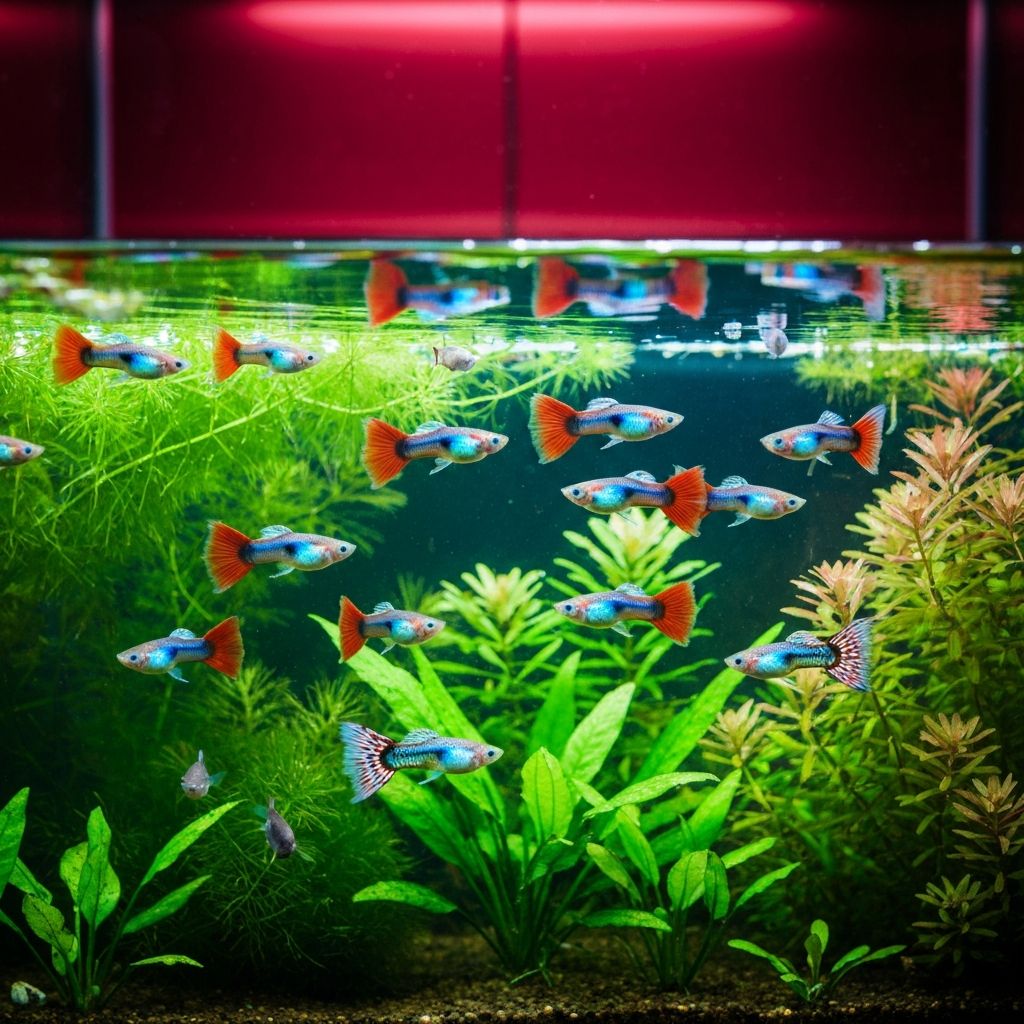
The Decision-Making Process for Guppy Farmers
Guppy farming is an increasingly popular segment of the ornamental fish industry, offering entrepreneurs and hobbyists alike the opportunity to breed and sell one of the world's most beloved tropical fish. However, successful guppy farming requires careful decision-making across multiple aspects of the operation, from selecting breeding stock to choosing market channels. A guppy farmer trying to decide how to optimize their operation must consider biological, economic, and logistical factors that can significantly impact profitability and sustainability.
The guppy (Poecilia reticulata) is one of the most popular freshwater aquarium fish in the world, prized for its vibrant colors, active personality, and ease of care. The global ornamental fish trade is valued at billions of dollars annually, and guppies represent a significant portion of this market. For farmers looking to enter or expand within this industry, making informed decisions about their breeding and business strategies is essential for long-term success.
Choosing Between Selective Breeding and Mass Production
One of the most fundamental decisions a guppy farmer must make is whether to focus on selective breeding for high-quality show-grade guppies or mass production of standard pet-grade fish. Each approach has distinct advantages, challenges, and profit potential, and the right choice depends on the farmer's resources, expertise, and market access.
Selective breeding involves carefully pairing male and female guppies with desirable traits — such as specific color patterns, tail shapes, body conformations, and finnage — to produce offspring that exhibit those traits more consistently and prominently. This approach requires deep knowledge of guppy genetics, careful record-keeping, and the patience to develop lines over many generations. Show-grade guppies can sell for significantly higher prices than standard pet-grade fish, with exceptional specimens commanding prices of $25 to $100 or more per pair.
However, selective breeding is also more labor-intensive and requires more tank space per fish, as breeding pairs must be separated and offspring must be sorted and culled to maintain line quality. The startup costs for a selective breeding operation can be substantial, particularly when acquiring high-quality foundation stock from reputable breeders. Additionally, the market for show-grade guppies is smaller and more specialized, requiring the farmer to build relationships with collectors, show competitors, and specialty retailers.
Mass production, on the other hand, focuses on producing large quantities of healthy, attractive guppies for the general pet trade. This approach prioritizes volume over individual quality and typically involves maintaining large breeding colonies where natural selection and limited human intervention determine the offspring's characteristics. Mass-produced guppies sell for lower prices — typically $1 to $5 per fish — but the higher volume can generate substantial revenue.
Mass production operations benefit from economies of scale, with lower per-fish costs for feed, housing, and labor. They are also less sensitive to the loss of individual fish, as the breeding colony can quickly replace any losses. However, mass production requires larger facilities, more equipment, and higher operating costs for water, electricity, and feed.
Tank Setup and Water Management Decisions
Water quality management is perhaps the most critical aspect of guppy farming, and decisions about tank setup and water management directly impact fish health, growth rates, and breeding success. The farmer must decide on tank sizes, filtration systems, water change schedules, and temperature management strategies that balance fish welfare with operational efficiency.
For breeding operations, many farmers use a rack system with multiple smaller tanks (typically 10 to 20 gallons each) that allow them to separate breeding pairs, grow out fry, and manage different genetic lines independently. This modular approach provides flexibility and control but requires more plumbing, filtration, and maintenance than a few large tanks. Each tank must be individually monitored and maintained, which increases the farmer's daily workload.
An alternative approach uses larger communal tanks (50 to 100 gallons or more) for breeding colonies, with separate grow-out tanks for juvenile fish. This approach is simpler to manage and requires less equipment per fish, but it provides less control over breeding outcomes and makes it more difficult to track individual genetic lines. For mass production operations, communal breeding tanks are often the more practical and cost-effective choice.
Water parameters must be maintained within the guppy's preferred range: temperature of 72 to 82 degrees Fahrenheit (22 to 28 degrees Celsius), pH of 6.8 to 7.8, and low ammonia and nitrite levels. Consistent water quality is essential for minimizing stress, preventing disease, and promoting healthy growth and reproduction. The farmer must decide on a water change schedule that maintains quality without wasting water or disrupting the fish — typically 25 to 50 percent weekly for smaller tanks.
Feed Selection and Nutrition Strategies
Nutrition plays a vital role in guppy health, coloration, and reproductive performance, making feed selection an important decision for any guppy farmer. The type and quality of food provided to the fish directly impacts their growth rate, color intensity, finnage development, and breeding frequency. A well-fed guppy colony will produce more offspring with better survival rates and more vibrant colors, leading to higher-quality fish and increased profits.
Commercial guppy foods come in various forms, including flakes, pellets, granules, and freeze-dried options. High-quality commercial foods provide a balanced diet with the appropriate levels of protein, fat, vitamins, and minerals for optimal guppy health. Many professional breeders supplement commercial foods with live or frozen foods such as brine shrimp, daphnia, bloodworms, and microworms, which provide additional nutrition and stimulate natural feeding behaviors.
For fry (baby guppies), nutrition is especially critical during the first few weeks of life. Newly born fry need small, nutrient-dense foods that they can easily consume. Powdered fry food, infusoria, and newly hatched baby brine shrimp are popular choices for feeding fry. The farmer must decide whether to invest the time and resources in culturing live foods for fry, which provides superior nutrition, or to use commercial fry foods, which are more convenient but may produce slower growth rates.
The cost of feed is a significant operational expense for guppy farmers, and the choice between premium and economy feeds can impact both fish quality and profitability. Premium feeds with higher protein content and added color enhancers produce better-looking fish but cost more per pound. The farmer must balance feed costs against the potential for higher sale prices from better-quality fish.
Disease Prevention and Health Management
Disease management is a constant concern for guppy farmers, as illness can spread rapidly through a breeding colony and cause significant losses. The farmer must develop and implement a comprehensive health management strategy that includes disease prevention, early detection, and effective treatment protocols.
Quarantine procedures for new fish are one of the most important disease prevention measures. Any new guppies introduced to the farm — whether purchased breeding stock, fish from shows, or returns from retailers — should be quarantined in a separate tank for at least two to four weeks before being added to the main breeding colony. During quarantine, the fish are observed for signs of illness and may be treated prophylactically with appropriate medications.
Common guppy diseases include ich (white spot disease), fin rot, velvet disease, and various bacterial and parasitic infections. The farmer must be able to recognize the symptoms of these conditions and respond quickly with appropriate treatment. Having a basic fish pharmacy with common medications on hand — including treatments for bacterial infections, parasites, and fungal conditions — allows for rapid response when disease is detected.
Preventive measures such as maintaining excellent water quality, avoiding overcrowding, providing proper nutrition, and minimizing stress go a long way toward preventing disease outbreaks. A healthy, well-maintained environment supports the guppies' natural immune systems and makes them more resistant to pathogens. The farmer's decision to invest in preventive care rather than reactive treatment typically results in lower overall costs and better fish health.
Market Selection and Sales Channels
Choosing the right market and sales channels is crucial for a guppy farmer's profitability. The ornamental fish market offers several potential sales channels, each with different requirements, profit margins, and challenges. The farmer must evaluate these options based on their production capacity, location, and business goals.
Local pet stores and aquarium shops are a traditional sales channel for guppy farmers. These retailers typically purchase fish at wholesale prices, which are lower than retail but provide a consistent and reliable source of revenue. Building relationships with local retailers requires delivering healthy, attractive fish consistently and being responsive to their needs for specific varieties and quantities.
Online sales have become an increasingly important channel for ornamental fish breeders, offering access to a much larger customer base than local markets alone. Platforms like eBay, Aquabid, and social media marketplaces allow farmers to sell directly to consumers at retail prices, significantly increasing per-fish revenue. However, online sales require expertise in packing and shipping live fish, which is a specialized skill that requires practice and investment in proper shipping materials.
Fish shows and auctions provide another market opportunity, particularly for farmers who breed show-quality guppies. Competing in guppy shows builds the farmer's reputation and creates demand for their fish among collectors and other breeders. Award-winning fish and offspring from award-winning lines command premium prices and can significantly boost the farm's brand and profitability.
Financial Planning and Profitability Analysis
Before making final decisions about their operation, a guppy farmer must conduct a thorough profitability analysis that accounts for all costs and revenue streams. Understanding the financial aspects of guppy farming helps the farmer make informed decisions about scale, breeding strategy, and market focus.
Startup costs for a guppy farming operation include tanks, filtration systems, heaters, lighting, breeding stock, feed, medications, and water treatment supplies. For a small-scale operation with 10 to 20 tanks, startup costs might range from $1,000 to $5,000, depending on the quality of equipment and breeding stock. Larger operations with dozens or hundreds of tanks can require investments of $10,000 or more.
Ongoing operational costs include electricity for lighting and heating, water for changes and maintenance, feed, medications, replacement equipment, and labor. The farmer must also account for fish losses due to natural mortality, disease, and culling. These costs must be weighed against projected revenue to determine the operation's break-even point and potential profitability.
The key to profitability in guppy farming lies in finding the right balance between quality and quantity, production costs and sale prices, and time investment and financial return. By carefully analyzing each of these factors and making informed decisions, a guppy farmer can build a sustainable and profitable operation in the growing ornamental fish industry.
