
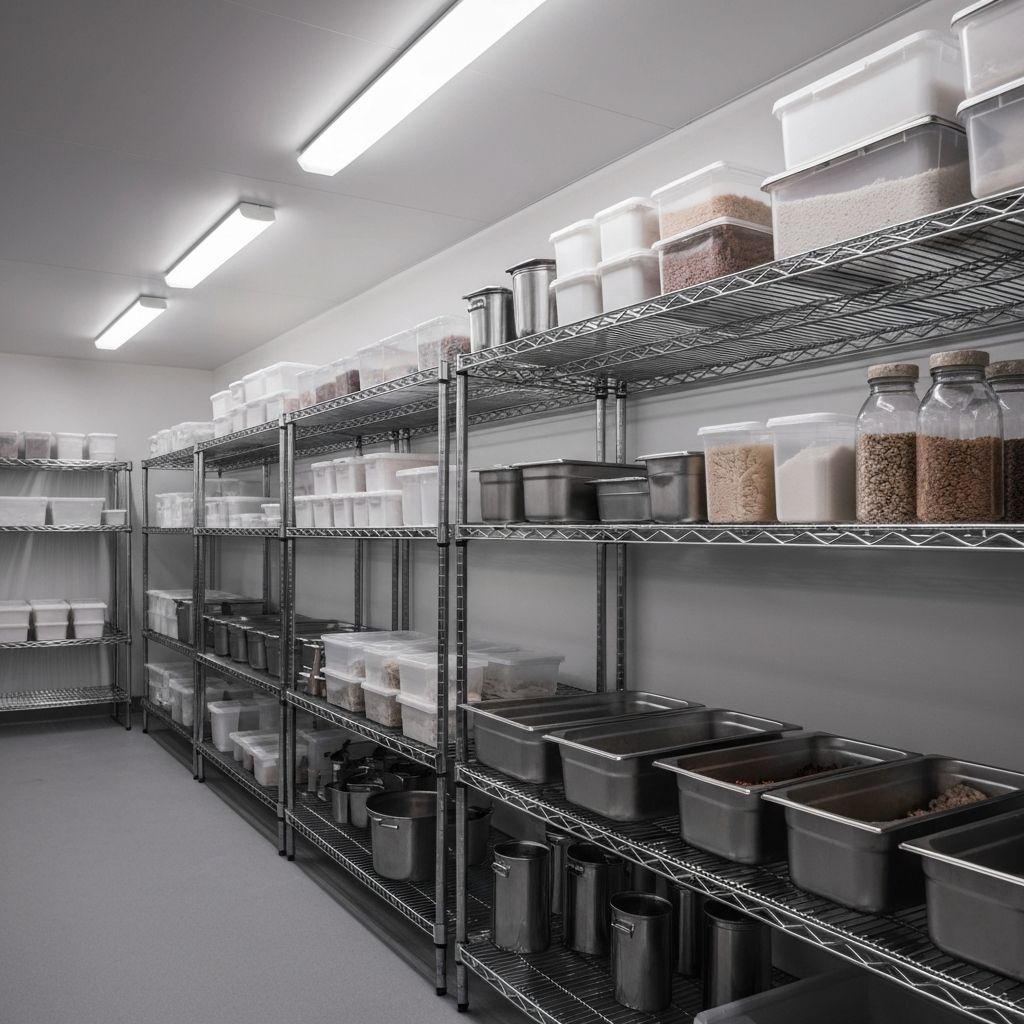
The Six-Inch Rule: Food Storage Above the Ground
In the world of food safety, proper storage practices are essential for preventing contamination, spoilage, and the spread of foodborne illnesses. One of the most fundamental rules in food storage is that all food items must be stored at least six inches above the ground or floor. This rule applies to dry goods, canned foods, packaged items, and any other food products stored in commercial kitchens, restaurants, food warehouses, grocery stores, and other food service establishments. The six-inch rule is enforced by health departments across the United States and is a critical component of food safety regulations established by the Food and Drug Administration (FDA) through the Food Code.
The six-inch requirement is not arbitrary. It was established based on scientific evidence and practical considerations related to food safety, pest control, sanitation, and flood protection. Understanding why this rule exists and how to properly implement it is essential for anyone working in the food service industry, as violations can result in health code citations, fines, and even the closure of a food establishment.
Why Six Inches? The Science Behind the Rule
The primary reason food must be stored at least six inches above the ground is to protect it from contamination. Floors in commercial kitchens and storage areas are subject to constant traffic from workers, carts, and equipment. This traffic can kick up dust, dirt, debris, and microorganisms that can contaminate food products stored at ground level. By elevating food six inches off the floor, the risk of contamination from floor-level contaminants is significantly reduced.
Pest control is another major reason for the six-inch rule. Rodents, insects, and other pests are attracted to food sources and tend to travel along walls and floors. Storing food directly on the floor makes it more accessible to pests and makes it harder to detect signs of pest activity, such as droppings, gnaw marks, or insect eggs. Elevating food storage allows for better visibility underneath shelving units, making it easier to spot and address pest issues before they become serious infestations.
Moisture and flooding are additional concerns addressed by the six-inch rule. Floors in commercial kitchens and storage areas are frequently washed, mopped, or sprayed with cleaning solutions. Water from these cleaning activities, as well as minor plumbing leaks or floods, can pool on the floor and damage food products stored at ground level. Moisture can cause cardboard packaging to weaken and collapse, create conditions favorable for mold growth, and compromise the integrity of food packaging. Storing food six inches above the floor provides a buffer zone that protects food from routine moisture and minor flooding events.
What the FDA Food Code Says
The FDA Food Code is a model code that provides guidelines for food safety practices in retail and food service establishments. While the Food Code itself is not federal law, it serves as the basis for food safety regulations adopted by state and local health departments across the country. According to the FDA Food Code, food must be stored at least six inches (15 centimeters) above the floor in all food storage and preparation areas.
The Food Code also specifies that food must be stored in a clean, dry location, away from potential sources of contamination such as chemicals, cleaning supplies, and waste containers. Food must be stored in a manner that prevents cross-contamination between raw and ready-to-eat items, with raw meats stored below ready-to-eat foods in refrigerators and coolers. All food storage containers must be food-grade, clean, and properly labeled.
In addition to the six-inch rule, the Food Code requires that food storage areas be adequately ventilated, properly lit, and maintained at appropriate temperatures. Dry storage areas should be kept between 50 and 70 degrees Fahrenheit with relative humidity below 60 percent. These conditions help prevent the growth of bacteria, mold, and other microorganisms that can cause food spoilage and illness.
Proper Shelving and Storage Solutions
Meeting the six-inch storage requirement is typically achieved through the use of appropriate shelving systems. Wire shelving units are the most common choice for commercial food storage because they allow air circulation, are easy to clean, and can be adjusted to accommodate different sizes of food containers and packages. Wire shelving should be made of NSF-certified, food-safe materials, typically stainless steel or chrome-plated steel.
Dunnage racks are another popular storage solution for elevating heavy items like cases of canned goods, bags of flour, and large containers off the floor. Dunnage racks are typically made of heavy-duty plastic or aluminum and sit close to the ground while still providing the required six inches of clearance. They are especially useful in walk-in coolers and freezers where floor space is limited.
Plastic pallets can also be used to elevate food products above the floor, particularly in warehouse and wholesale settings. However, wooden pallets are generally not recommended for food storage in commercial settings because they can harbor bacteria, absorb moisture, and are difficult to clean and sanitize. If wooden pallets must be used, they should be in good condition, free from damage, and regularly inspected for signs of contamination or pest activity.
Common Violations and How to Avoid Them
Despite the simplicity of the six-inch rule, violations are among the most common findings during health inspections. One frequent violation is storing food directly on the floor, even temporarily. During busy periods, workers may place cases of food on the floor while restocking shelves or organizing deliveries. Even temporary placement on the floor is considered a violation and should be avoided. Train staff to use carts, dollies, or temporary dunnage racks when handling deliveries.
Another common violation is overcrowding storage shelves, which can push items to the edge and cause them to contact walls or fall to the floor. Maintain adequate space between shelving units and walls (at least two inches from walls is recommended) and avoid overloading shelves beyond their weight capacity. Overcrowded shelves also restrict air circulation, which can lead to temperature inconsistencies in refrigerated storage areas.
Failing to maintain the required clearance beneath the lowest shelf is also a common issue. Over time, shelving units can settle or shift, reducing the clearance below six inches. Regularly inspect shelving to ensure the lowest shelf maintains proper height. Use a measuring tape during inspections and adjust shelf heights as needed.
Special Considerations for Different Storage Areas
Different areas of a food establishment may have specific storage requirements beyond the general six-inch rule. Walk-in coolers and freezers require that food be stored on shelving that allows cold air to circulate freely. Avoid blocking air vents with food products, and ensure that food containers are not so tightly packed that air cannot flow between them. This helps maintain consistent temperatures throughout the storage area.
Dry storage areas, where non-perishable items like canned goods, grains, and spices are kept, should be organized using the FIFO (first in, first out) method. Place newer items behind older ones to ensure that older products are used first. All items should be clearly labeled with the date of receipt, and any items past their use-by date should be discarded.
Chemical storage is an area of particular concern. Cleaning supplies, sanitizers, pesticides, and other chemicals must be stored separately from food items, preferably in a designated chemical storage area. If chemicals must be stored in the same room as food (which is generally discouraged), they must be on separate shelving below the food items, never above, to prevent accidental contamination from leaks or spills.
Residential Food Storage Best Practices
While the six-inch rule is primarily enforced in commercial settings, the principles behind it apply equally to home kitchens and pantries. Storing food above the ground in your home helps protect it from pests, moisture, and contamination. Use shelving, racks, or cabinets to keep food items off the floor, especially in basements, garages, and other areas prone to moisture or pest activity.
Keep your pantry organized and clean, rotating stock so that older items are used first. Store opened packages in airtight containers to maintain freshness and prevent pest access. Regularly inspect your pantry for signs of pest activity, expired products, and moisture damage, and address any issues promptly to maintain a safe and healthy food storage environment.
Conclusion
Food must be stored at least six inches above the ground in all food service and commercial food storage settings. This rule, established by the FDA Food Code and enforced by local health departments, exists to protect food from contamination, pests, moisture, and other hazards. Compliance is achieved through the use of proper shelving systems, dunnage racks, and storage practices. Regular inspections, staff training, and adherence to food safety principles ensure that food remains safe and wholesome from storage to service.
