
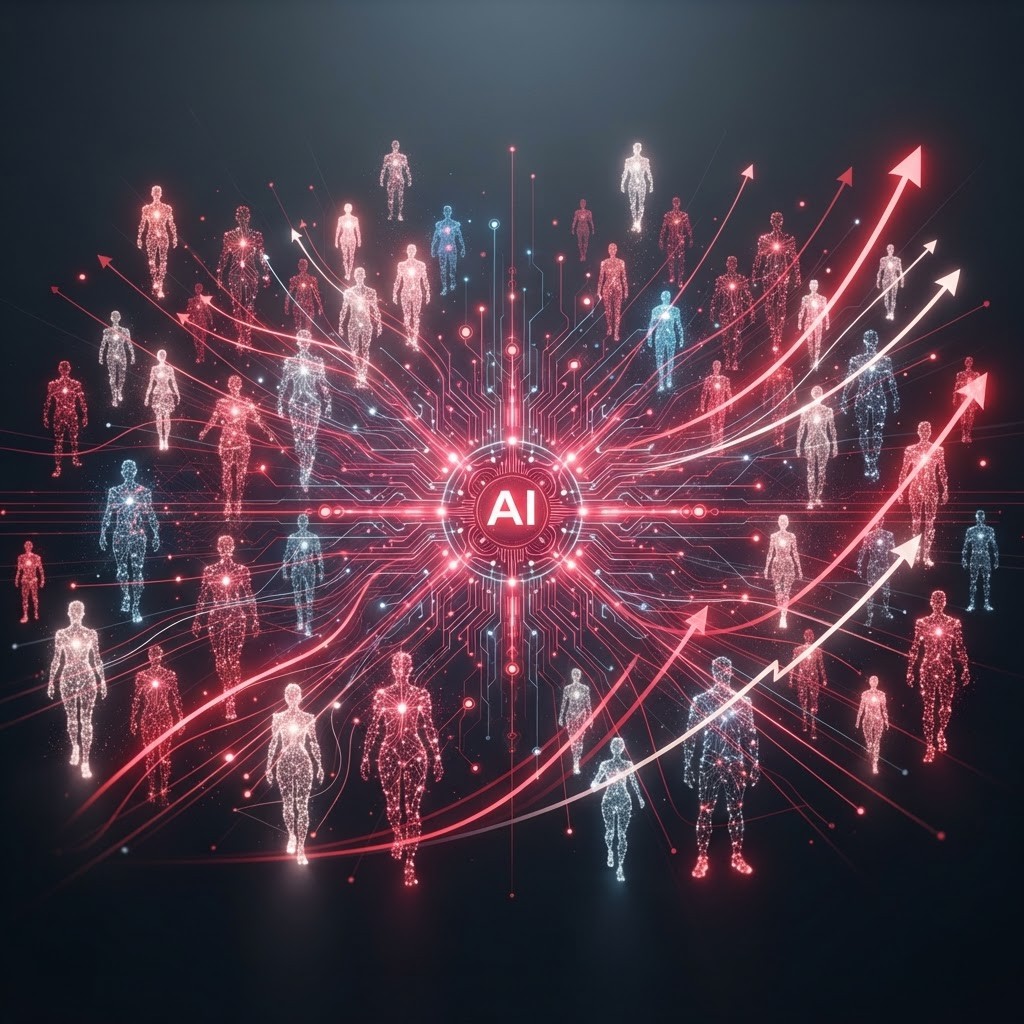
Few topics generate as much anxiety as the impact of artificial intelligence on employment. As AI systems grow more capable, handling tasks once thought to require human intelligence, a sweeping question dominates public discourse: will AI take over the job market? The concern is understandable, but the reality is more nuanced than the headlines suggest. AI is undeniably transforming work, but history and current evidence indicate that it is reshaping the job market rather than eliminating it.
This article offers a balanced perspective on how AI affects employment, which roles are most impacted, and how workers and businesses can position themselves to thrive in an AI-augmented economy.
Adapt and Grow With AAMAX.CO
As industries transform, businesses need a strong digital presence and smart strategy to stay competitive and continue creating value. AAMAX.CO is a full-service digital marketing company serving clients worldwide, helping organizations adapt to change and grow through effective online strategies. Their digital marketing expertise enables businesses to reach new audiences, build authority, and drive growth even as markets evolve. By combining AI-powered tools with human strategy, they show how technology can be a catalyst for opportunity rather than a threat.
Understanding AI's Impact on Work
AI is automating a growing range of tasks, from data entry and customer service to content creation and analysis. This automation increases productivity and efficiency, allowing organizations to do more with less. However, automating tasks is not the same as eliminating jobs. Most jobs consist of many tasks, and while AI may handle some of them, others still require human involvement.
The result is that many roles are being transformed rather than eliminated. Workers increasingly collaborate with AI, delegating routine work to machines while focusing on tasks that require judgment, creativity, and interpersonal skills. This shift changes the nature of work without necessarily reducing the overall need for workers.
Lessons From History
Every major technological revolution has sparked fears of mass unemployment, and each time, those fears proved largely unfounded in the long run. The industrial revolution, mechanized agriculture, the rise of computers, and the internet all displaced certain jobs while creating entirely new industries and occupations. Productivity gains historically lead to economic growth, new products, and fresh demand for labor in areas that did not previously exist.
AI is likely to follow a similar pattern. While some roles will decline, new ones will emerge, many of which we cannot yet fully imagine. The transition period may be challenging, but the long-term trajectory tends toward adaptation and renewed opportunity.
Which Jobs Are Most Affected
Jobs involving repetitive, predictable, and rule-based tasks are most susceptible to automation. This includes certain roles in data processing, routine administration, and basic customer support. However, even in these areas, AI often augments rather than fully replaces workers, handling the routine parts while humans manage exceptions and complex cases.
Jobs requiring creativity, emotional intelligence, complex problem-solving, and human interaction are far more resilient. Roles in strategy, care, education, skilled trades, and creative fields rely on capabilities that AI cannot easily replicate. Additionally, demand is growing for jobs that build, manage, and oversee AI systems themselves.
New Opportunities Created by AI
Far from simply destroying jobs, AI is generating new categories of work. Roles such as AI specialists, data analysts, machine learning engineers, prompt engineers, and AI ethics professionals are in rising demand. Beyond technical roles, AI creates opportunities in industries it enables, from personalized healthcare to advanced logistics. As AI handles routine work, humans are freed to focus on innovation, creativity, and higher-value activities.
How to Thrive in an AI-Driven Economy
The key to thriving is adaptation and continuous learning. Workers should develop skills that complement AI rather than compete with it, including critical thinking, creativity, emotional intelligence, and adaptability. Gaining familiarity with AI tools is increasingly valuable across nearly every profession. Lifelong learning, reskilling, and a willingness to embrace change are the defining traits of those who succeed.
Businesses, too, must adapt by integrating AI thoughtfully, retraining their workforce, and focusing on the human strengths that machines cannot replicate. Organizations that view AI as a tool to empower their people, rather than replace them, will build more resilient and innovative teams.
Conclusion
Will AI take over the job market? The evidence suggests that AI will transform work profoundly but not eliminate it. Jobs will change, some will disappear, and many new ones will emerge, following the pattern of every major technological shift before it. The transition requires adaptation, but it also brings tremendous opportunity. Workers and businesses that embrace continuous learning, develop uniquely human skills, and use AI as a tool for empowerment will not just survive the change, they will thrive. The future of work is not humans versus AI, but humans working alongside AI to achieve more together.
