
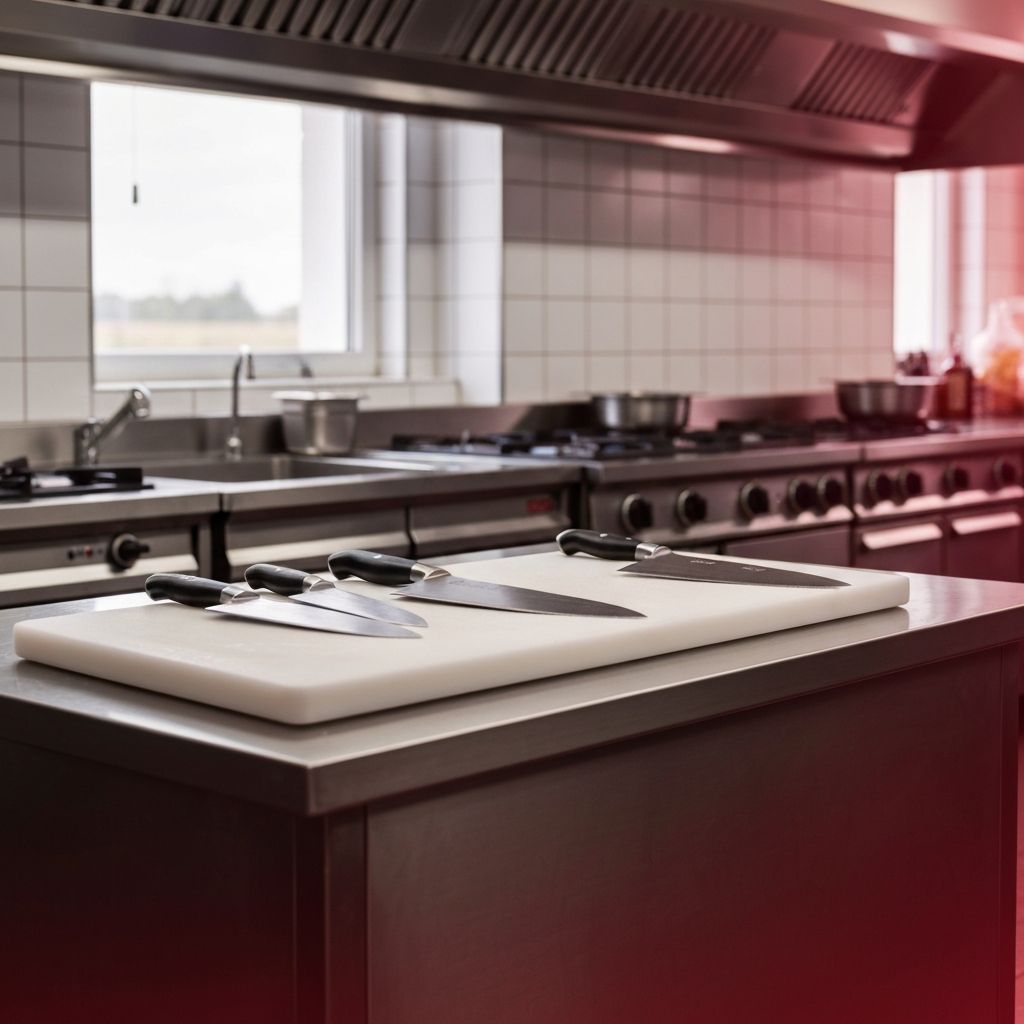
Why Knife Cleaning and Sanitization Matters
Proper knife cleaning and sanitization is one of the most fundamental aspects of food safety, whether in a professional commercial kitchen or at home. Knives come into direct contact with virtually every ingredient during food preparation, making them potential vectors for cross-contamination. Harmful bacteria such as Salmonella, E. coli, Listeria, and Campylobacter can transfer from one food item to another via an improperly cleaned knife, potentially causing serious foodborne illnesses that affect thousands of people each year.
The distinction between cleaning and sanitizing is important to understand. Cleaning involves removing visible dirt, food residue, and grease from the knife's surface using soap and water. Sanitizing goes a step further by reducing the number of pathogens on the knife's surface to safe levels, typically using chemical solutions, heat, or other approved methods. Both steps are necessary for proper food safety — cleaning without sanitizing leaves invisible bacteria behind, while sanitizing without cleaning first is ineffective because organic matter can shield bacteria from the sanitizing agent.
When Between Different Food Types
One of the most critical times to clean and sanitize a knife is when switching between different types of food, particularly when moving from raw proteins to ready-to-eat foods. Raw meat, poultry, seafood, and eggs can harbor dangerous pathogenic bacteria that are destroyed during cooking but can cause illness when transferred to foods that won't be cooked before consumption.
For example, if you use a knife to cut raw chicken and then use the same knife to slice tomatoes for a salad without cleaning and sanitizing it first, you risk transferring Salmonella or Campylobacter from the chicken to the tomatoes. Since the tomatoes will be eaten raw, any bacteria transferred from the chicken will not be killed by cooking, potentially causing foodborne illness.
The same principle applies when switching between different categories of raw proteins. Cutting raw beef and then using the same knife on raw fish without proper cleaning and sanitization can lead to cross-contamination between protein types, each of which may carry different types of bacteria. Health codes in most jurisdictions require that knives be cleaned and sanitized between each type of protein to prevent this cross-contamination.
Even when working within the same food category, cleaning is important when switching between different items. Cutting an onion and then using the same knife to slice strawberries without cleaning will transfer the onion flavor and residue, affecting the taste and quality of the food. While this may not always pose a food safety risk, it demonstrates poor kitchen practices and can affect the dining experience.
After Extended Use and Time Intervals
According to food safety regulations, knives and other food-contact surfaces must be cleaned and sanitized at least every four hours during continuous use, even if they're being used with the same type of food. This four-hour rule is based on the understanding that bacteria can multiply to dangerous levels on food-contact surfaces over time, especially in the warm environments typical of commercial kitchens.
The four-hour guideline serves as a maximum interval — in practice, many professional kitchens clean and sanitize their knives much more frequently. During busy service periods when multiple dishes are being prepared simultaneously, chefs may clean their knives every few minutes to prevent flavor transfer and maintain food safety standards. The key principle is that the longer a knife is used without cleaning, the greater the risk of bacterial growth and cross-contamination.
Temperature plays a significant role in determining how quickly bacteria can multiply on knife surfaces. In the temperature danger zone of 41 to 135 degrees Fahrenheit (5 to 57 degrees Celsius), bacteria can double in number every 20 minutes under ideal conditions. Since kitchens are typically warm environments and knives often come into contact with foods at various temperatures, regular cleaning and sanitization is essential to keep bacterial levels in check.
Before Starting Food Preparation
Every knife should be cleaned and sanitized before beginning food preparation, even if it was cleaned after the previous use. During storage, knives can accumulate dust, be exposed to airborne contaminants, or come into contact with other surfaces that may harbor bacteria. Starting with a freshly cleaned and sanitized knife ensures that you're beginning food preparation with a safe, hygienic tool.
This practice is particularly important at the start of a shift in a commercial kitchen. Even if knives were properly cleaned at the end of the previous shift, overnight storage can expose them to environmental contaminants. Many food safety management systems, including HACCP (Hazard Analysis and Critical Control Points), require that all food-contact surfaces be cleaned and sanitized before use as a standard operating procedure.
For home cooks, this principle is equally important. Knives stored in blocks, drawers, or on magnetic strips can collect dust, pet hair, and other contaminants over time. A quick wash with hot soapy water followed by sanitization before use helps ensure that your food preparation starts on a safe footing.
After Contact with Contaminated Surfaces
If a knife comes into contact with a contaminated or potentially contaminated surface, it must be immediately cleaned and sanitized before further use. Contaminated surfaces include dirty countertops, the floor, garbage containers, raw food spills, or any surface that hasn't been properly cleaned and sanitized.
Dropping a knife on the floor is a common scenario that requires immediate cleaning and sanitization. The floor of any kitchen — commercial or residential — harbors a wide variety of bacteria, mold, and other contaminants. Simply rinsing a dropped knife under water is insufficient; it must be thoroughly washed with soap and hot water and then sanitized before it can be used again on food.
Contact with a person's skin, especially hands, can also necessitate cleaning and sanitization. While handwashing is a critical part of kitchen hygiene, hands can still carry bacteria that transfer to knife handles and blades during use. If a knife is touched by someone who hasn't washed their hands, or if it comes into contact with an open wound or bandage, it should be cleaned and sanitized immediately.
Proper Knife Cleaning Techniques
Effective knife cleaning requires proper technique to remove all food residue and organic matter while also protecting the knife's edge and the person doing the cleaning. The recommended method is to hold the knife with the blade pointing away from your body and wash it carefully with hot water (at least 110 degrees Fahrenheit or 43 degrees Celsius) and an approved food-safe detergent.
Use a clean sponge, brush, or cloth to scrub the entire surface of the knife, including both sides of the blade, the spine, the bolster (the thick junction between the blade and handle), and the handle itself. Pay particular attention to the area where the blade meets the handle, as food particles and bacteria often accumulate in this junction. For knives with riveted handles, clean around each rivet to remove trapped debris.
After washing, rinse the knife thoroughly under clean running water to remove all soap residue. Soap residue left on knives can contaminate food and may interfere with the effectiveness of the sanitizing step. Hold the knife under running water for several seconds, turning it to ensure all surfaces are rinsed clean.
Never soak knives in a sink full of water. This practice poses a serious safety hazard because submerged knives are not visible to others who may reach into the sink. Additionally, prolonged soaking can damage wooden handles, promote rust on carbon steel blades, and create a breeding ground for bacteria in the standing water.
Sanitization Methods for Knives
After cleaning, knives must be sanitized using an approved method to reduce bacteria to safe levels. The three most common sanitization methods used in food service are hot water immersion, chemical sanitizing solutions, and steam or heat sanitization. Each method has its advantages and is appropriate for different situations.
Hot water sanitization involves immersing the clean knife in water that is at least 171 degrees Fahrenheit (77 degrees Celsius) for at least 30 seconds. This method is highly effective and doesn't leave any chemical residue on the knife. However, it requires a dedicated hot water bath or a commercial dishwasher capable of reaching the required temperature, and care must be taken to avoid burns when handling items at these temperatures.
Chemical sanitization is the most commonly used method in commercial kitchens due to its convenience and effectiveness. Approved chemical sanitizers include chlorine-based solutions (such as diluted bleach at 50 to 100 parts per million), quaternary ammonium compounds, and iodine-based solutions. The knife is submerged in the sanitizing solution for the recommended contact time, typically 30 seconds to one minute, depending on the sanitizer used and its concentration.
For home kitchens, a simple and effective sanitizing solution can be made by mixing one tablespoon of unscented liquid chlorine bleach per gallon of water. Submerge the clean knife in this solution for at least 30 seconds, then allow it to air dry. Do not rinse the knife after sanitizing with a chemical solution, as this can re-contaminate the surface and negate the sanitization step.
Best Practices for Knife Hygiene
Maintaining knife hygiene goes beyond just cleaning and sanitizing at the appropriate times. Proper knife storage, regular maintenance, and adherence to food safety protocols all contribute to keeping knives safe for food preparation. Store clean, sanitized knives in designated storage areas that protect the blade and prevent contamination, such as knife racks, magnetic strips, or blade guards.
Color-coded knife systems are widely used in commercial kitchens to prevent cross-contamination by designating specific knives for specific food types. For example, red-handled knives may be designated for raw meat, blue for raw fish, green for fruits and vegetables, and yellow for cooked foods. This system provides a visual cue that helps kitchen staff avoid cross-contamination even during the busiest service periods.
Regular knife sharpening is also a food safety practice. Dull knives require more force to cut through food, increasing the risk of slipping and causing cuts. Additionally, dull blades create rougher cuts on food surfaces, leaving more areas where bacteria can adhere and grow. A sharp knife makes cleaner cuts and is safer to use.
Finally, maintaining proper personal hygiene is essential for knife hygiene. Always wash your hands thoroughly before handling knives and food, wear gloves when required by food safety regulations, and keep cuts or wounds properly covered with waterproof bandages and gloves. These practices, combined with proper knife cleaning and sanitization, form a comprehensive approach to kitchen safety that protects both food handlers and consumers.
