
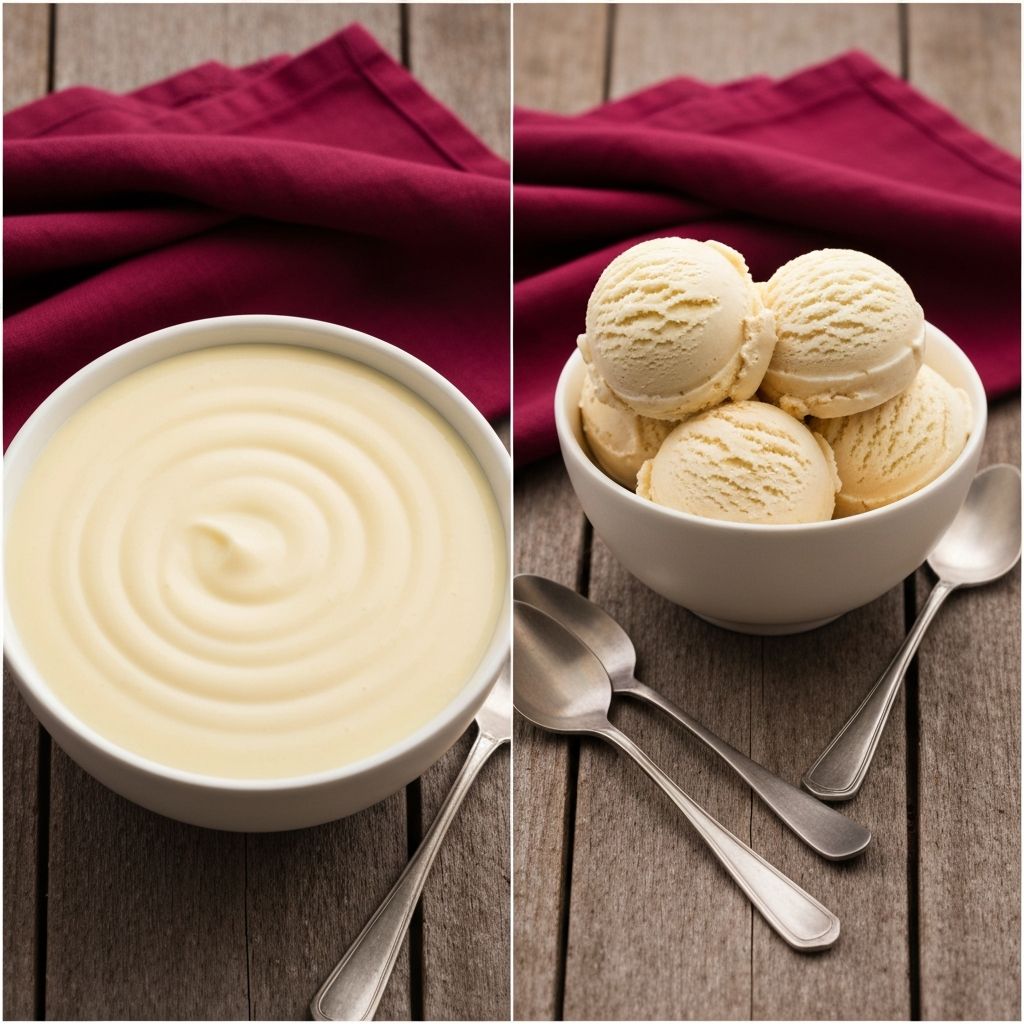
The Core Difference: Egg Yolks
At their most fundamental level, the difference between custard and ice cream comes down to one key ingredient: egg yolks. According to the FDA, frozen custard must contain at least 1.4 percent egg yolk by weight of the finished product, while ice cream has no such requirement. This seemingly small distinction has profound effects on the texture, flavor, richness, and overall eating experience of these two beloved frozen treats.
Both custard and ice cream share a base of milk, cream, and sugar, and both must contain at least 10 percent milkfat to meet FDA standards. However, the addition of egg yolks to custard creates a fundamentally different product. Egg yolks act as an emulsifier, binding fat and water molecules together to create a smoother, creamier, and more stable mixture. They also add richness, depth of flavor, and a characteristic velvety texture that sets custard apart from standard ice cream.
While some premium ice cream brands do include egg yolks in their recipes, the quantity is typically less than the 1.4 percent threshold required for the product to be classified as frozen custard. This distinction matters not only for labeling purposes but also for the sensory experience of the consumer, as the higher egg yolk content in custard creates a noticeably different product.
Texture and Mouthfeel
One of the most immediately noticeable differences between custard and ice cream is their texture. Frozen custard has a remarkably dense, creamy, and smooth texture that is often described as velvety or silky. This luxurious mouthfeel is the result of several factors related to its production process and ingredients, most notably the egg yolk content and the minimal air incorporation during churning.
Frozen custard is typically churned in special machines that incorporate very little air into the mixture, resulting in a product with an overrun, the industry term for air content, of around 15 to 30 percent. By comparison, standard ice cream can have an overrun of 50 to 100 percent or more, meaning that up to half of what you are eating is actually air. This lower air content gives custard a denser, heavier feel in the mouth and a more concentrated flavor experience.
The egg yolks in custard also contribute to its superior texture by acting as emulsifiers and creating a more stable fat-water emulsion. This results in smaller ice crystals and a smoother overall texture. When you eat frozen custard, you will notice that it melts on the tongue in a way that feels richer and more luxurious than standard ice cream, coating the palate with a creamy film that lingers pleasantly.
Ice cream, particularly mass-produced varieties, tends to have a lighter, fluffier texture due to its higher air content. This can make ice cream feel less rich and more refreshing, which some people prefer, especially in hot weather. Premium ice cream brands that use less air and higher-quality ingredients narrow the texture gap with custard, but the fundamental difference in density and creaminess remains.
Serving Temperature
Another important difference between custard and ice cream is the temperature at which they are best served. Frozen custard is typically served at a warmer temperature than ice cream, usually around 18 degrees Fahrenheit compared to ice cream's typical serving temperature of 6 to 10 degrees Fahrenheit. This warmer serving temperature enhances the creamy, smooth texture of custard and allows its flavors to be more perceptible on the palate.
Because of this warmer serving temperature, frozen custard is typically made fresh and served immediately, rather than being stored for extended periods in a freezer. Many custard shops make their product in small batches throughout the day, ensuring that customers always receive a fresh, perfectly textured serving. This emphasis on freshness is a hallmark of the custard experience and contributes to the perception of superior quality.
Ice cream, by contrast, is designed to be stored at colder temperatures and can maintain its quality in a home freezer for weeks or months. The higher air content and different formulation of ice cream make it more resilient to the texture changes that can occur during storage, such as ice crystal growth and freezer burn. This practical advantage is one reason why ice cream is more widely available in retail settings than frozen custard.
The History of Custard and Ice Cream
Understanding the history of both custard and ice cream provides context for their differences and helps explain why both products have passionate followings. Custard as a culinary concept dates back to ancient Rome, where eggs were used to thicken and enrich sweet and savory dishes. The frozen version of custard, however, is a more recent development, primarily associated with the American Midwest.
Frozen custard's origins in America are often traced to Coney Island, New York, in 1919, when ice cream vendors Archie and Elton Kohr discovered that adding egg yolks to their ice cream recipe created a smoother, creamier product that held up better in the summer heat. They sold 18,460 cones during their first weekend, and the popularity of frozen custard grew rapidly from there.
The treat became particularly popular in the Midwest, where custard stands became community gathering places. Milwaukee, Wisconsin, became the unofficial capital of frozen custard, with legendary establishments like Kopps, Leon's, and Gilles serving loyal customers for decades. The Midwest's embrace of frozen custard created a regional food tradition that continues to thrive today.
Ice cream's history, as explored in more detail in other articles, stretches back much further, with origins in ancient China, Persia, and Europe. The industrialization of ice cream production in the 19th and 20th centuries made it the more widely known and accessible frozen treat, while custard remained a more regional and artisanal product.
Nutritional Comparison
When comparing the nutritional profiles of custard and ice cream, the differences reflect their ingredient compositions. Frozen custard tends to be higher in calories, fat, and cholesterol than standard ice cream due to its higher egg yolk content and denser texture with less air. A typical half-cup serving of frozen custard contains approximately 200 to 250 calories, 12 to 18 grams of fat, and 100 to 130 milligrams of cholesterol.
A comparable serving of regular ice cream typically contains 130 to 200 calories, 7 to 14 grams of fat, and 30 to 60 milligrams of cholesterol. However, these numbers can vary widely depending on the specific brand, flavor, and any mix-ins or toppings. Premium ice cream brands with higher fat content and less air may have nutritional profiles closer to frozen custard.
The egg yolks in custard do provide some nutritional benefits that ice cream lacks. Egg yolks are a source of several important nutrients, including vitamin D, vitamin B12, choline, and selenium. They also contain lutein and zeaxanthin, antioxidants that support eye health. However, these nutritional benefits are present in relatively small amounts in a typical serving of frozen custard.
For calorie-conscious consumers, it is worth noting that the denser texture and richer flavor of custard may lead to greater satisfaction from a smaller serving size. Some people find that a small cup of frozen custard is more satisfying than a larger serving of ice cream, which could potentially offset the higher calorie density when comparing actual consumption rather than equal serving sizes.
Flavor Varieties and Customization
Both custard and ice cream offer extensive flavor options, but their approaches to variety tend to differ. Frozen custard shops typically offer a smaller core selection of flavors, often just vanilla and chocolate as permanent offerings, with a rotating "flavor of the day" that showcases creative and seasonal options. This approach emphasizes quality and freshness over overwhelming variety.
Ice cream shops and brands tend to offer a wider array of flavors simultaneously, with some establishments like Baskin-Robbins and Cold Stone Creamery offering dozens of options at any given time. The retail ice cream market is even more diverse, with hundreds of brands and thousands of flavors available in grocery store freezer sections.
The mix-in and topping culture differs between custard and ice cream as well. Frozen custard is often served as a "concrete" or "blizzard-style" creation, where toppings like candy, cookies, fruit, and nuts are blended directly into the custard. The dense texture of custard makes it particularly well-suited to this treatment, as the mix-ins are suspended throughout the product rather than sinking to the bottom.
Making Custard and Ice Cream at Home
For home cooks interested in making their own frozen treats, both custard and ice cream can be prepared with relatively simple equipment. The main difference in the preparation process is the custard base, which requires tempering egg yolks with heated cream to create a cooked custard before churning. This additional step adds complexity but results in a richer, more luxurious product.
To make a basic frozen custard at home, start by heating cream and milk in a saucepan until just simmering. Whisk egg yolks with sugar until pale and thick, then slowly pour the hot cream mixture into the egg yolks while whisking constantly to temper them. Return the mixture to the saucepan and cook over low heat, stirring constantly, until it thickens enough to coat the back of a spoon. Strain the custard, chill it thoroughly, then churn it in an ice cream maker.
Ice cream can be made with a simpler "Philadelphia-style" base that skips the egg yolks entirely, simply combining cream, milk, sugar, and flavorings before churning. This no-cook method is faster and easier but produces a lighter, less creamy result compared to a custard-based recipe.
Which One Should You Choose?
The choice between custard and ice cream ultimately comes down to personal preference and what you value most in a frozen treat. If you prioritize richness, density, creaminess, and an ultra-smooth texture, frozen custard is likely to be your preferred choice. Its egg-enriched base and low air content create a decadent eating experience that many frozen dessert enthusiasts consider superior to standard ice cream.
If you prefer a lighter, more refreshing frozen treat with a wider variety of readily available flavors, ice cream may be more to your liking. Ice cream's lighter texture, cooler serving temperature, and incredible diversity of brands and flavors make it the more versatile and accessible option for everyday enjoyment.
Of course, there is no rule that says you have to choose one over the other. Many frozen dessert lovers enjoy both, choosing custard when they want a rich, indulgent treat and ice cream when they want something lighter and more refreshing. Both custard and ice cream are wonderful in their own ways, and the world is a better place for having both.
