
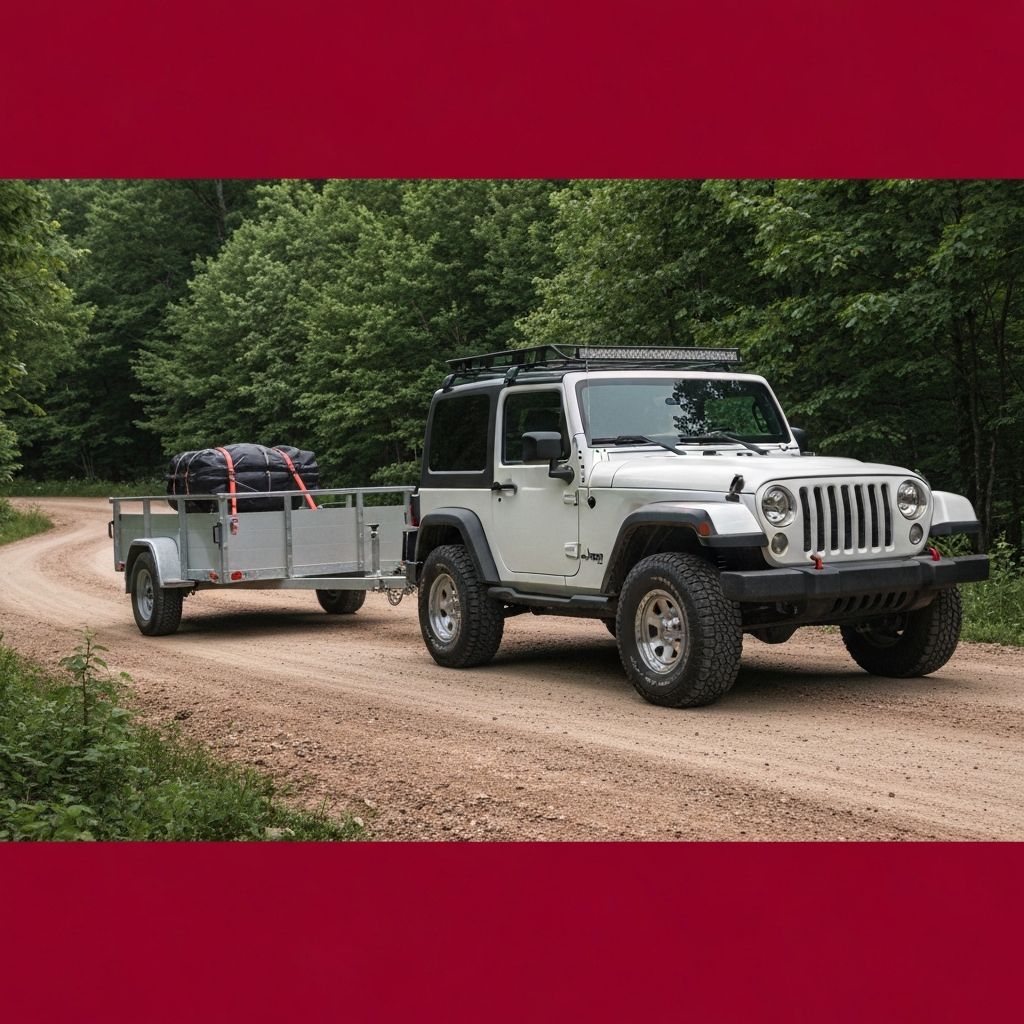
Choosing the Right Vehicle to Tow a 4x8 Utility Trailer
A 4x8 utility trailer is one of the most versatile and commonly used trailers for homeowners, DIY enthusiasts, and small business operators. Whether you are hauling landscaping materials, moving furniture, transporting equipment, or making a trip to the dump, a 4x8 trailer provides enough space for most moderate-sized loads without requiring a heavy-duty tow vehicle. But what kind of vehicle do you need to tow one? In this comprehensive guide, we will explore the vehicles that can safely tow a 4x8 utility trailer, the factors you need to consider, and important safety tips for towing.
Understanding 4x8 Utility Trailer Specifications
Before determining which vehicle can tow a 4x8 utility trailer, it is important to understand the trailer's weight specifications. A standard 4x8 single-axle utility trailer typically has an empty weight of 400 to 800 pounds, depending on the construction material and design. Steel-frame trailers with steel mesh sides tend to be heavier, while aluminum-frame trailers with shorter side walls are lighter.
The gross vehicle weight rating of most 4x8 utility trailers ranges from 1,200 to 2,500 pounds. This is the maximum total weight of the trailer plus its cargo. So if the trailer itself weighs 500 pounds and has a GVWR of 2,000 pounds, you can carry up to 1,500 pounds of cargo. Understanding these weight figures is essential for selecting an appropriate tow vehicle.
The tongue weight, which is the downward force that the trailer coupler exerts on the hitch ball, is also important. Tongue weight is typically 10 to 15 percent of the total loaded trailer weight. For a fully loaded 4x8 trailer at 2,000 pounds, the tongue weight would be approximately 200 to 300 pounds. Your tow vehicle's hitch and rear suspension must be able to handle this tongue weight safely.
Compact SUVs and Crossovers
Many compact SUVs and crossovers are excellent choices for towing a small 4x8 utility trailer. Vehicles like the Toyota RAV4, Honda CR-V, Subaru Outback, and Ford Escape typically have towing capacities ranging from 1,500 to 3,500 pounds, which is more than sufficient for a loaded 4x8 trailer. These vehicles offer a good balance of everyday practicality and occasional towing capability.
The Subaru Outback, for example, has a towing capacity of up to 3,500 pounds when properly equipped, making it a particularly strong performer in this category. The Toyota RAV4 offers up to 1,750 pounds of towing capacity in its standard configuration and up to 3,500 pounds in the hybrid model. These compact SUVs provide comfortable daily driving while still handling the demands of light trailer towing.
Midsize and Full-Size SUVs
If you plan to tow a 4x8 utility trailer regularly or want additional margin for heavier loads, a midsize or full-size SUV is an excellent option. Vehicles like the Toyota 4Runner, Chevrolet Tahoe, Ford Explorer, and Jeep Grand Cherokee offer towing capacities ranging from 5,000 to over 8,000 pounds, providing ample capability for any 4x8 trailer scenario.
These larger SUVs also offer better stability when towing due to their longer wheelbase, heavier curb weight, and more powerful engines. The additional weight and wheelbase length help reduce the effects of trailer sway and provide a more planted, confident towing experience. If you frequently tow or carry heavy loads, investing in a midsize or full-size SUV may be worth the additional fuel costs.
Pickup Trucks
Pickup trucks are the quintessential towing vehicle, and even the smallest modern pickup trucks are more than capable of towing a 4x8 utility trailer. Compact trucks like the Ford Maverick, Hyundai Santa Cruz, and Toyota Tacoma offer towing capacities ranging from 2,500 to over 6,000 pounds. Full-size trucks like the Ford F-150, Chevrolet Silverado, Ram 1500, and Toyota Tundra can tow between 9,000 and 14,000 pounds or more.
For a 4x8 utility trailer, even the most basic pickup truck will handle the job with ease. The advantage of using a pickup truck is that you also have the truck bed available for additional cargo, tools, or equipment that may not fit on the trailer. The combination of a pickup truck and a 4x8 utility trailer is an incredibly versatile hauling setup for both personal and commercial use.
Sedans and Minivans
Many people are surprised to learn that some sedans and minivans can also tow a small 4x8 utility trailer. However, towing capacity for sedans varies widely, and many modern sedans are not rated for towing at all. Vehicles like the Subaru Legacy and certain Volkswagen models do have modest towing ratings, but you should always verify the specific towing capacity for your vehicle before attempting to tow.
Minivans like the Toyota Sienna, Honda Odyssey, and Chrysler Pacifica typically have towing capacities of 3,000 to 3,600 pounds, making them well-suited for towing a 4x8 utility trailer. Minivans offer the added benefit of substantial interior cargo space and passenger seating, making them a practical choice for families who occasionally need towing capability.
Electric and Hybrid Vehicles
As electric and hybrid vehicles become more popular, their towing capabilities are also improving. Many electric SUVs and trucks, such as the Tesla Model X, Ford F-150 Lightning, and Rivian R1S, offer impressive towing capacities that can easily handle a 4x8 utility trailer. However, it is important to note that towing significantly reduces the driving range of electric vehicles due to the increased energy demands of pulling additional weight.
If you plan to tow with an electric vehicle, factor in the range reduction when planning your trip. Most EV manufacturers provide towing-specific range estimates, and it is wise to plan charging stops more frequently when towing. Despite the range considerations, the instant torque provided by electric motors makes EVs excellent tow vehicles in terms of pulling power and acceleration.
Essential Towing Safety Tips
Regardless of which vehicle you choose to tow your 4x8 utility trailer, following proper towing safety practices is essential. Always ensure that the trailer is properly hitched and that the coupler is fully secured on the hitch ball. Connect the safety chains in a crisscross pattern underneath the coupler, and verify that all trailer lights are functioning before every trip.
Distribute your cargo evenly on the trailer, with approximately 60 percent of the weight toward the front of the trailer to maintain proper tongue weight. Avoid overloading the trailer beyond its GVWR rating. When driving, allow extra stopping distance, reduce your speed, and use lower gears when descending steep grades. Avoid sudden maneuvers and be especially cautious in windy conditions, which can exacerbate trailer sway.
With the right vehicle and proper safety practices, towing a 4x8 utility trailer is a straightforward and safe activity that opens up a world of hauling possibilities for both personal and professional needs.
