
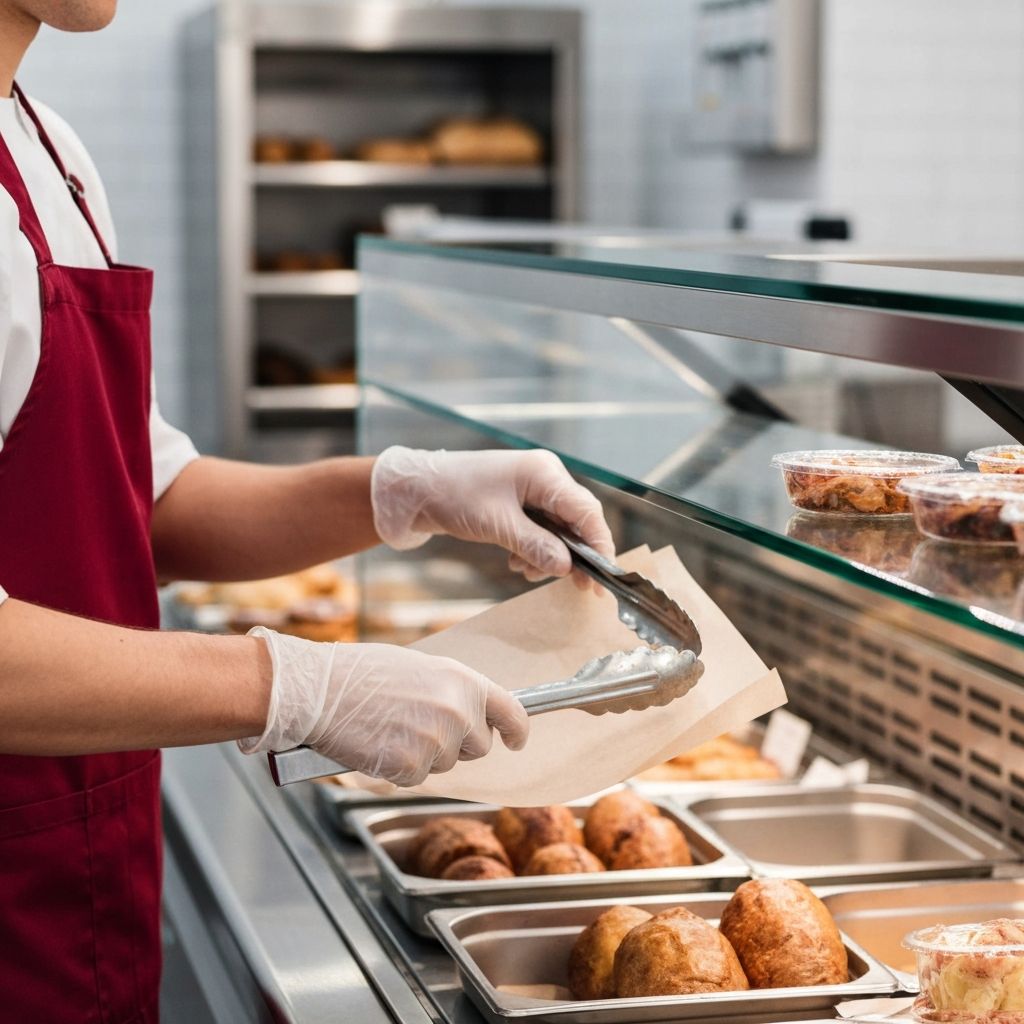
The Importance of Proper Food Handling
Food safety is a critical concern in any food service establishment, and one of the most fundamental principles is preventing bare-hand contact with ready-to-eat food. When customers visit a bakery, deli, buffet, or any establishment with food display cases, they trust that the food they receive has been handled safely and hygienically. The tools and barriers that food workers use to handle food from display cases are not just best practices; they are legal requirements enforced by health departments across the country.
The FDA Food Code, which serves as the model for most state and local food safety regulations, explicitly prohibits bare-hand contact with ready-to-eat food. Ready-to-eat food is defined as any food that will be consumed without further cooking or processing that would kill harmful pathogens. This includes items commonly found in display cases such as baked goods, deli meats, cheeses, prepared salads, sandwiches, and desserts. The reasoning behind this prohibition is straightforward: human hands, even when recently washed, can harbor harmful bacteria, viruses, and other pathogens that can be transferred to food and cause foodborne illness.
According to the Centers for Disease Control and Prevention, foodborne illnesses affect approximately 48 million Americans each year, resulting in 128,000 hospitalizations and 3,000 deaths. Improper food handling, including bare-hand contact with ready-to-eat food, is a contributing factor in a significant percentage of these cases. Understanding and consistently using the proper tools for food handling is therefore not just a regulatory requirement but a genuine public health imperative.
Deli Tissue and Bakery Tissue Paper
Deli tissue, also known as bakery tissue, wax paper squares, or interfolded dry wax deli sheets, is one of the most common and practical barriers used by food workers when handling food from display cases. These thin sheets of food-safe paper provide a physical barrier between the worker's hands and the food, preventing direct skin contact while allowing precise handling of individual items.
Deli tissue is particularly well-suited for bakeries, donut shops, and establishments that serve individual pastries, cookies, muffins, and similar items from display cases. The tissue is lightweight and flexible enough to grip items of various shapes and sizes while providing adequate protection against contamination. Most deli tissue is made from food-grade wax paper or parchment paper that is safe for contact with food and will not transfer any harmful substances.
When using deli tissue, food workers should take a fresh sheet for each item or each customer to prevent cross-contamination. The tissue should be large enough to completely cover the area of hand contact, and workers should avoid touching the food-contact side of the tissue with their bare hands. Used tissue should be discarded after each use and never reused, as reusing tissue defeats the purpose of providing a clean barrier between hands and food.
Single-Use Disposable Gloves
Single-use disposable gloves are another widely used barrier for handling food from display cases. These gloves create a complete barrier between the worker's hands and the food, and they are available in a variety of materials including latex, nitrile, vinyl, and polyethylene. Each material has its own advantages and considerations, and the choice of glove material may depend on factors such as food type, worker allergies, and establishment preferences.
Nitrile gloves have become the industry standard in many food service establishments due to their excellent durability, chemical resistance, and the fact that they are latex-free, eliminating the risk of latex allergies in both workers and customers. They provide a snug fit that allows for precise food handling and are available in various thicknesses to balance dexterity with protection.
It is crucial to understand that gloves are not a substitute for proper hand washing. Food workers must wash their hands thoroughly before putting on gloves and must change gloves frequently, especially when switching between tasks, handling different types of food, or after touching non-food surfaces. Gloves should be changed at least every hour during continuous use, and any glove that becomes torn, punctured, or visibly contaminated must be replaced immediately.
Single-use gloves must never be washed or reused. The structural integrity of disposable gloves is compromised by washing, and microscopic tears may develop that are invisible to the naked eye but large enough to allow bacteria to pass through. Additionally, the warm, moist environment inside a used glove can promote bacterial growth, making reuse a food safety hazard.
Tongs, Scoops, and Serving Utensils
Tongs, scoops, spatulas, and other serving utensils are perhaps the most effective tools for maintaining food safety when handling food from display cases, as they eliminate the need for any hand contact with the food whatsoever. These utensils provide a rigid, cleanable barrier that maintains the highest level of hygiene when properly used and maintained.
Tongs are versatile tools that are well-suited for handling a wide range of display case items, from deli sandwiches and salad components to pastries and bread rolls. They come in various sizes and styles, with some featuring silicone tips that provide a gentle grip suitable for delicate items like eclairs or decorated pastries. Spring-loaded tongs are particularly popular in food service because they are easy to operate with one hand, allowing the worker to use the other hand for packaging or serving.
Scoops are the preferred utensil for bulk items like ice cream, nuts, candies, grain products, and similar loose or semi-solid foods. Using a dedicated scoop for each item in a display case prevents cross-contamination between different products, which is especially important for allergen management. Scoops should have long handles that prevent the worker's hand from coming into contact with the food in the container, and they should be stored with the handle extending outside the food container when not in use.
All serving utensils must be cleaned and sanitized regularly throughout the service period, not just at the end of the day. The FDA Food Code requires that utensils used for food service be cleaned and sanitized at least every four hours during continuous use. Many establishments go beyond this minimum, cleaning utensils every two hours or more frequently during busy periods. Utensils that fall on the floor, come into contact with non-food surfaces, or become visibly soiled must be cleaned and sanitized immediately before returning to service.
When and How to Choose the Right Barrier
The choice of which barrier or tool to use when handling food from display cases depends on several factors, including the type of food being served, the serving environment, customer expectations, and regulatory requirements. In many cases, a combination of barriers provides the best protection. For example, a deli worker might wear disposable gloves while also using tongs to handle sliced meats, providing a double layer of protection.
For bakeries and pastry shops, deli tissue is often the preferred choice because it is inexpensive, easy to use, and allows for the gentle handling that delicate baked goods require. Tongs might be too aggressive for soft pastries or elaborately decorated items, making tissue the more practical option. However, for larger or heavier items like whole loaves of bread, tongs or spatulas may be more appropriate.
In deli counters and salad bars, tongs and serving utensils are typically the primary tools because they are efficient for repetitive serving tasks and can be easily cleaned between customers. Gloves serve as an additional barrier when workers need to use their hands for tasks like assembling sandwiches or arranging items on plates.
Self-service display cases, such as those found in grocery store bakeries, typically provide tongs or wax paper sheets for customers to use. Establishments should ensure that these tools are always available, clean, and in good condition. Providing clear signage instructing customers to use the provided tools and to avoid touching food with bare hands helps reinforce food safety practices.
Legal Requirements and Health Code Compliance
Food safety regulations regarding the handling of food from display cases are established at the federal, state, and local levels. The FDA Food Code serves as the foundation for most state and local regulations, though individual jurisdictions may impose additional requirements. Understanding these regulations is essential for food service operators to avoid health code violations, fines, and potential closure orders.
The FDA Food Code states that food employees shall not contact exposed, ready-to-eat food with their bare hands and shall use suitable utensils such as deli tissue, spatulas, tongs, single-use gloves, or dispensing equipment. This requirement applies to all food service establishments, including restaurants, bakeries, delis, grocery stores, food trucks, catering operations, and any other business that serves or sells ready-to-eat food.
Health inspectors routinely evaluate food handling practices during inspections, and bare-hand contact with ready-to-eat food is typically cited as a critical violation. Critical violations are those that pose an immediate risk to public health and may result in immediate corrective action requirements, reinspection, or even temporary closure of the establishment in severe cases. Consistent and documented training of all food workers on proper food handling practices is essential for maintaining compliance.
Food service establishments should maintain written standard operating procedures for food handling that specify which barriers and tools are to be used for different types of food. These procedures should be included in employee training programs, posted in food preparation areas, and reviewed regularly to ensure continued compliance. Keeping records of food safety training and procedures demonstrates due diligence and can be valuable during health inspections or in the event of a foodborne illness investigation.
