
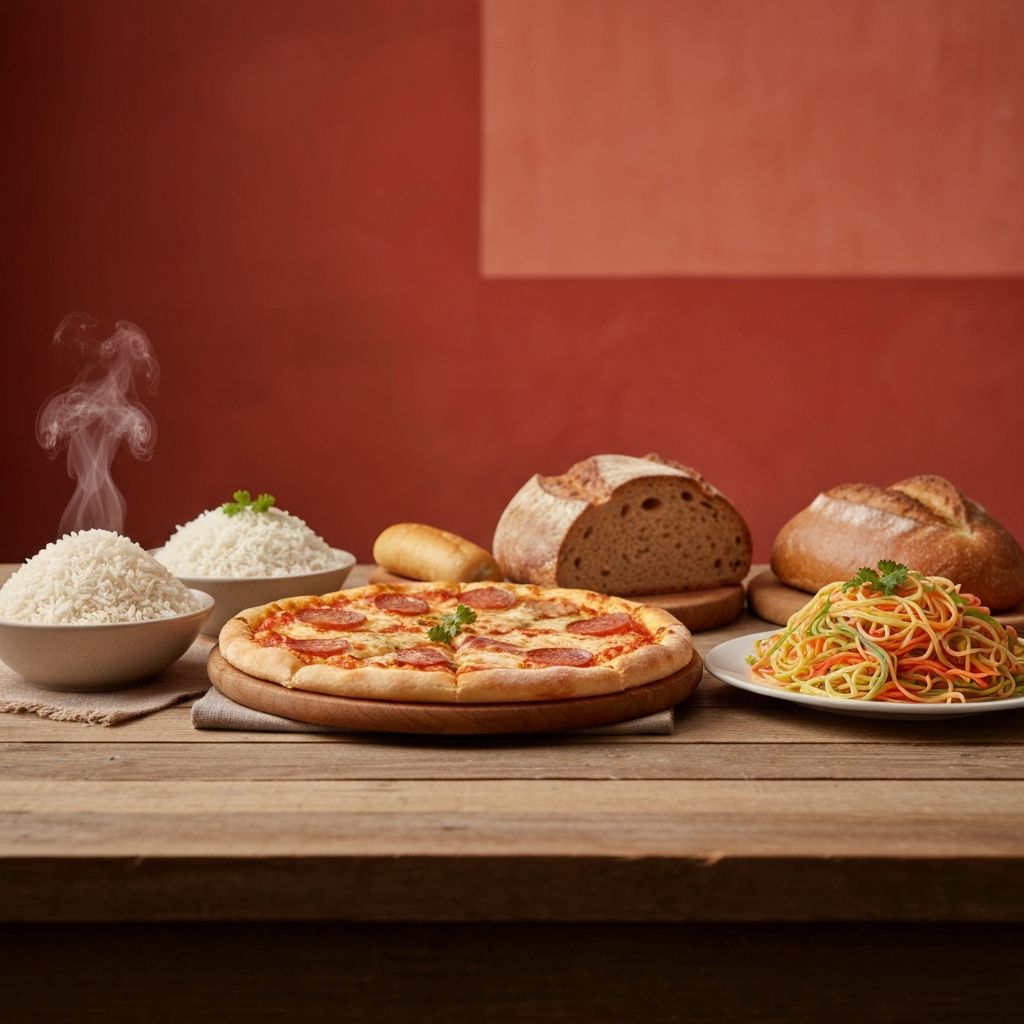
Measuring Food Popularity Around the Globe
Determining the most popular food in the world requires defining what popular means. Is it the food consumed by the most people daily? The food produced in the greatest quantities? The food most widely available across different countries and cultures? Each of these metrics yields a different answer, but together they paint a fascinating picture of global food culture and the dietary staples that sustain humanity.
When we look at food from a global consumption perspective, staple foods that form the foundation of diets across large populations naturally dominate the rankings. These are the foods that billions of people eat daily, not because they are trendy or exciting, but because they provide the calories, nutrients, and sustenance needed for survival. Understanding these staples gives us insight into agricultural systems, cultural traditions, and the fundamental relationship between humans and the foods that nourish them.
Rice: The World's Most Consumed Staple
By virtually any measure of consumption, rice is the most popular food in the world. More than half of the world's population depends on rice as their primary source of calories. Approximately 520 million metric tons of rice are consumed globally each year, with the majority consumed in Asia, where it has been the dietary foundation for thousands of years. Rice feeds more people than any other single crop on earth.
The cultural significance of rice extends far beyond its nutritional value. In many Asian languages, the word for rice is synonymous with the word for food or meal. In Japanese, gohan means both cooked rice and meal. In Chinese, chi fan (eat rice) is the general term for eating a meal. Rice ceremonies, rice gods, and rice-based rituals are central to the spiritual and cultural life of many Asian societies, underscoring the grain's importance beyond mere sustenance.
Rice's versatility contributes to its worldwide popularity. It can be steamed, fried, boiled, baked, fermented, ground into flour, and processed into noodles, paper, wine, vinegar, and countless other products. From Japanese sushi rice to Indian biryani, from West African jollof rice to Latin American arroz con pollo, every culture that grows rice has developed its own distinctive preparations and traditions, creating a global tapestry of rice-based cuisine.
Bread: The Staff of Life
Bread, in its many forms, is consumed by virtually every culture on earth and is often considered the original processed food. From the flatbreads of the Middle East to the sourdough loaves of San Francisco, from Indian naan to Ethiopian injera, bread takes on different shapes, textures, and flavors depending on the grains available, the climate, and the cultural traditions of each region.
Wheat-based bread is the most widely consumed type, with global wheat production exceeding 780 million metric tons annually. The development of bread-making was one of the pivotal moments in human civilization, enabling the storage of calories and the development of settled agricultural communities. The phrase breaking bread together has become a universal metaphor for sharing a meal and building community.
Beyond wheat, bread is made from a remarkable variety of grains and starches. Corn tortillas in Mexico and Central America, rice-based breads in Asia, teff-based injera in Ethiopia, and cassava-based breads in South America all serve the same fundamental purpose: providing a versatile, portable, and satisfying vehicle for other foods. The global bread market is valued at over $200 billion annually, reflecting the universal human love for this simple yet essential food.
Chicken: The World's Most Popular Meat
Among animal proteins, chicken holds the undisputed title of the world's most popular meat. Global chicken production has increased dramatically over the past several decades, surpassing both beef and pork in total consumption. More than 130 million metric tons of chicken are consumed worldwide each year, and the number continues to grow as populations increase and developing nations adopt more protein-rich diets.
Chicken's popularity stems from several factors. It is relatively affordable to produce compared to beef and pork, as chickens convert feed to meat more efficiently than larger livestock. Chicken has no major religious dietary restrictions, unlike pork (forbidden in Islam and Judaism) and beef (restricted in Hinduism), making it the most universally acceptable meat across different cultures and religions. It is also versatile, mild-flavored, and adapts well to virtually any cuisine and cooking method.
From American fried chicken to Indian tandoori, from Chinese kung pao chicken to Japanese yakitori, from Middle Eastern shawarma to West African chicken yassa, every cuisine in the world has developed iconic chicken dishes. The global fast-food industry has further accelerated chicken's dominance, with chains like KFC, Chick-fil-A, and Popeyes bringing fried chicken to every corner of the globe.
Pizza: The Global Comfort Food
While rice, bread, and chicken are consumed out of necessity and tradition, pizza has achieved global popularity through sheer deliciousness. What began as a humble flatbread topped with tomatoes and cheese in Naples, Italy, has become one of the most widely consumed and beloved foods on the planet. The global pizza market is valued at over $150 billion, with an estimated 5 billion pizzas sold worldwide each year.
Pizza's genius lies in its adaptability. The basic concept of dough, sauce, and toppings can be customized infinitely to suit local tastes and ingredients. In Japan, pizza toppings include mayonnaise, corn, and squid. In India, paneer tikka and tandoori chicken pizzas are popular. In Brazil, green peas and catupiry cheese are common toppings. In Sweden, banana curry pizza is a beloved variation. This ability to accommodate local flavors while maintaining its essential identity has made pizza a truly global food.
Eggs: The Everyday Protein
Eggs are one of the most widely consumed foods on earth, with approximately 1.5 trillion eggs produced globally each year. That is roughly 200 eggs per person on the planet. Eggs are a dietary staple in virtually every culture, valued for their high-quality protein, versatility, affordability, and ease of preparation. From simple scrambled eggs to elaborate French omelettes, from Chinese tea eggs to Mexican huevos rancheros, eggs appear in countless forms across global cuisines.
The nutritional profile of eggs makes them one of the most complete foods available. A single large egg contains 6 grams of high-quality protein, all nine essential amino acids, vitamins A, D, E, and B12, and essential minerals including iron, zinc, and selenium. This nutritional density, combined with their low cost and long shelf life, makes eggs an essential food for feeding growing populations, particularly in developing nations.
Noodles and Pasta: Universal Comfort
Noodles and pasta, in their various forms, are consumed on every continent and hold a special place in the hearts and stomachs of billions. Chinese noodles, which date back over 4,000 years, and Italian pasta, which developed its modern form during the Middle Ages, represent two of the world's greatest culinary traditions. Together, they have spawned hundreds of regional variations and preparations that satisfy the universal human craving for starchy, comforting food.
The global noodle market encompasses everything from instant ramen, which has become one of the most widely consumed convenience foods in the world with over 100 billion servings sold annually, to artisanal hand-pulled noodles that take years to master. Japanese ramen, Vietnamese pho, Thai pad Thai, Korean japchae, and Indonesian mie goreng are just a few of the beloved noodle dishes that define their respective cuisines.
What Makes a Food Universally Popular
Looking at the foods that have achieved global popularity reveals common traits. The most popular foods tend to be affordable, filling, versatile, and culturally neutral enough to be adapted to different culinary traditions. They provide essential macronutrients, particularly carbohydrates and protein, that fuel human activity and growth. They are also relatively easy to store, transport, and prepare, making them practical choices for daily sustenance.
Cultural exchange, trade, migration, and globalization have all played roles in spreading foods beyond their regions of origin. The Columbian Exchange introduced potatoes, tomatoes, and corn to the Old World while bringing wheat and rice cultivation to the Americas. Modern transportation and food processing have made it possible for people everywhere to access foods from around the world, creating an increasingly interconnected global food culture.
Yet despite this globalization, regional food traditions remain vibrant and meaningful. The most popular food in any given household is often the food that connects people to their heritage, their community, and their memories. Whether it is a bowl of rice, a slice of bread, a piece of chicken, or a plate of pasta, the most popular foods in the world succeed because they nourish not just the body but also the soul.
