
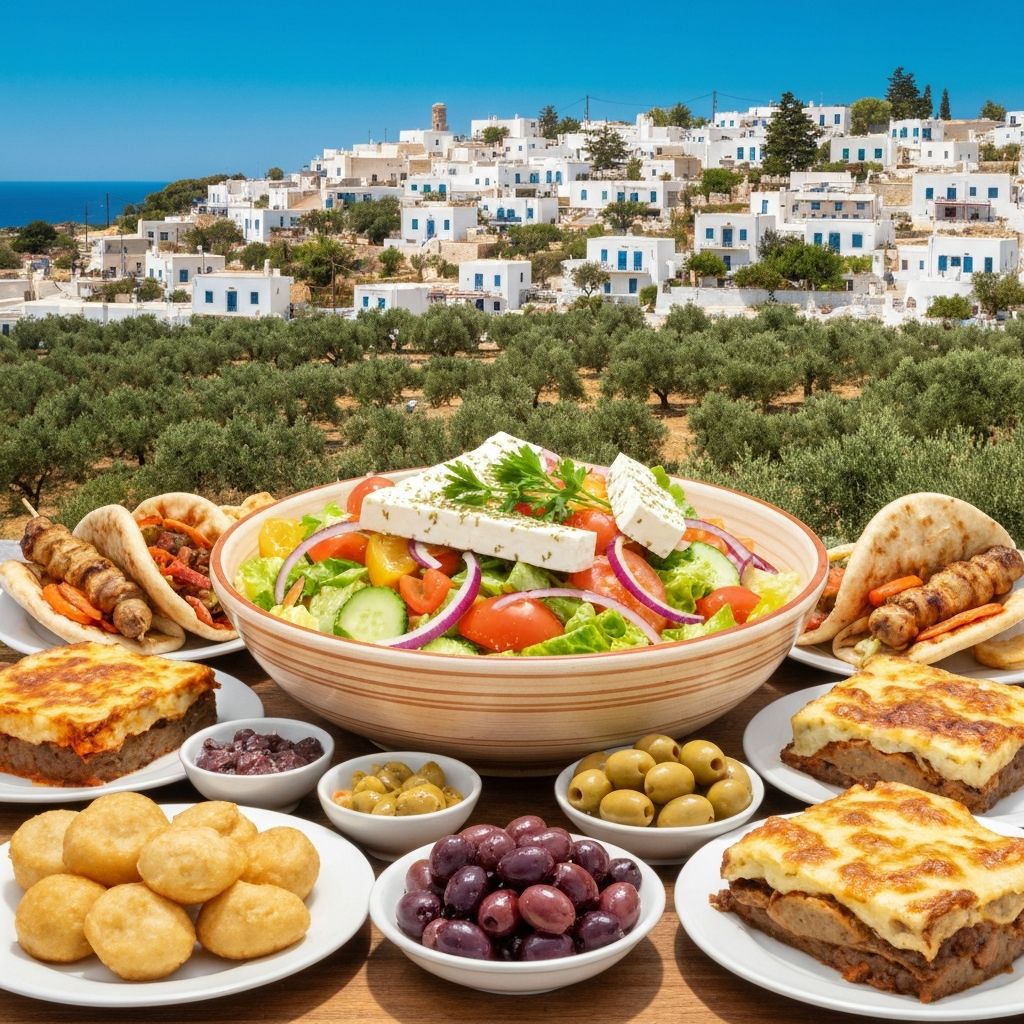
An Introduction to Greek Cuisine
Greek food is one of the oldest and most celebrated culinary traditions in the world, rooted in thousands of years of history that stretches back to ancient civilizations. At its core, Greek cuisine is a testament to the Mediterranean way of eating, emphasizing fresh, seasonal ingredients, simple preparations that let natural flavors shine, and a communal approach to dining that brings families and friends together around the table. From the sun-drenched islands of the Aegean to the mountainous mainland, Greek food reflects the diverse geography and rich cultural heritage of this remarkable country.
The foundation of Greek cooking rests on a handful of essential ingredients that appear in virtually every dish: extra virgin olive oil, fresh herbs like oregano and thyme, garlic, lemon, tomatoes, and high-quality cheeses and yogurts. These building blocks are combined with locally sourced meats, seafood, vegetables, and grains to create a cuisine that is simultaneously rustic and refined, hearty and healthful.
The History and Influence of Greek Food
Greek cuisine has one of the longest documented histories of any food tradition in the world. Ancient Greek texts from as early as 350 BC describe recipes, cooking techniques, and dining customs that have influenced culinary traditions across Europe and the Mediterranean. The ancient Greeks were among the first to write cookbooks, establish rules of gastronomy, and elevate cooking from a mere necessity to an art form.
The influence of Greek food extends far beyond the borders of modern Greece. Through centuries of trade, colonization, and cultural exchange, Greek culinary traditions have shaped the cuisines of Italy, Turkey, the Middle East, and North Africa. Many dishes that are considered staples of Mediterranean cooking, such as flatbreads, grilled meats, phyllo pastries, and olive oil-based preparations, have roots in ancient Greek culinary practices.
The Ottoman Empire's four-century rule over Greece also left an indelible mark on Greek cuisine, introducing ingredients like yogurt, phyllo dough, spices, and certain cooking techniques that have become integral to modern Greek cooking. This blending of influences has created a cuisine that is uniquely its own while sharing common threads with the broader Mediterranean and Middle Eastern culinary traditions.
Signature Greek Dishes You Must Try
No exploration of Greek food would be complete without discussing the iconic dishes that have made this cuisine famous around the world. Moussaka, perhaps Greece's most well-known casserole, layers eggplant, ground meat (typically lamb or beef), and potatoes beneath a thick, creamy bechamel sauce, then bakes everything until golden and bubbling. Each family has their own version, passed down through generations, making it one of the most personal and beloved dishes in the Greek repertoire.
Souvlaki, skewered and grilled meat served with pita bread, tzatziki sauce, tomatoes, and onions, is the quintessential Greek street food. Whether made with pork, chicken, lamb, or beef, souvlaki captures the essence of Greek cooking: simple, high-quality ingredients prepared over an open flame and served fresh. It's a dish that can be enjoyed as a quick snack or a full meal, making it one of the most versatile offerings in Greek cuisine.
Spanakopita, a savory pie made with flaky phyllo dough filled with spinach, feta cheese, onions, and herbs, showcases the Greek mastery of pastry-making. The contrast between the crispy, golden layers of phyllo and the creamy, flavorful filling makes spanakopita an irresistible appetizer or light meal that can be found in bakeries and kitchens throughout Greece.
Gyros, though sometimes confused with souvlaki, is a distinct dish featuring meat cooked on a vertical rotisserie, then sliced thin and served in a pita with toppings. The word gyro means "turn" in Greek, referring to the rotating spit on which the meat is cooked. Typically made with pork or chicken in Greece (lamb is more common in other countries), gyros have become one of the most popular Greek foods worldwide.
Essential Greek Ingredients and Flavors
Olive oil is arguably the single most important ingredient in Greek cooking. Greece produces some of the finest olive oil in the world, and it's used liberally in virtually every dish, from salads and dips to baked goods and fried foods. The rich, fruity flavor of Greek olive oil adds depth and complexity to even the simplest preparations, and it serves as the primary cooking fat in the vast majority of Greek recipes.
Feta cheese is another cornerstone of Greek cuisine and holds a Protected Designation of Origin (PDO) status within the European Union, meaning that only cheese produced in specific regions of Greece using traditional methods can legally be called feta. Made from sheep's milk or a combination of sheep and goat milk, genuine Greek feta has a crumbly texture and a tangy, slightly salty flavor that enhances salads, pastries, and countless other dishes.
Fresh herbs, particularly oregano, thyme, rosemary, and dill, are used extensively in Greek cooking and contribute significantly to the cuisine's distinctive flavor profile. Greek oregano, in particular, is considered among the finest in the world, prized for its intense aroma and flavor that distinguish it from oregano varieties found in other countries.
Lemons and lemon juice appear in nearly every aspect of Greek cooking, from marinades and dressings to sauces and desserts. The bright acidity of lemon balances the richness of olive oil and cheese, cuts through the fattiness of grilled meats, and adds a refreshing quality to salads and seafood dishes that is quintessentially Greek.
The Greek Meze Tradition
One of the most distinctive aspects of Greek dining culture is the tradition of meze, small plates of various appetizers and snacks served alongside drinks, typically ouzo or wine. Meze is more than just food; it's a social ritual that encourages conversation, relaxation, and the enjoyment of good company. A meze spread might include dozens of different dishes, each offering a unique combination of flavors and textures that are meant to be shared among the entire table.
Common meze dishes include tzatziki, a creamy yogurt dip with cucumber, garlic, and dill; taramasalata, a smooth dip made from fish roe; dolmades, grape leaves stuffed with rice and herbs; and keftedes, seasoned meatballs that can be fried or baked. These small plates are typically served with bread, olives, and sliced vegetables, creating a varied and satisfying dining experience.
The meze tradition reflects the Greek philosophy of eating: meals are meant to be enjoyed slowly, in the company of others, with plenty of variety and generous portions. This approach to dining has influenced tapas culture in Spain, mezze traditions across the Middle East, and small-plates dining trends in restaurants around the world.
Greek Desserts and Sweets
Greek desserts are a delightful blend of Mediterranean simplicity and Middle Eastern opulence. Baklava, layers of phyllo dough filled with chopped nuts and drenched in honey syrup, is perhaps the most famous Greek sweet and has become a symbol of Greek pastry-making worldwide. The combination of crispy, buttery phyllo with sweet honey and crunchy nuts creates an indulgent treat that's perfect for special occasions and everyday enjoyment alike.
Loukoumades, deep-fried dough balls drizzled with honey and sprinkled with cinnamon, are another beloved Greek dessert that has been enjoyed since ancient times. These puffy, golden treats are often served at festivals and celebrations, and their irresistible combination of crispy exterior and soft, airy interior makes them one of the most addictive sweets in the Greek repertoire.
Greek yogurt with honey and walnuts is a simple but profoundly satisfying dessert that showcases the quality of Greek dairy products. Thick, creamy Greek yogurt serves as the base, topped with a generous drizzle of Greek honey, known for its exceptional flavor, and a handful of crunchy walnuts. This dish exemplifies the Greek approach to dessert: let exceptional ingredients speak for themselves without overcomplicating the preparation.
Greek Food and the Mediterranean Diet
Greek cuisine is widely recognized as one of the healthiest in the world, largely due to its alignment with the Mediterranean diet, which has been extensively studied and endorsed by nutritionists and healthcare professionals. The Mediterranean diet emphasizes whole grains, fruits, vegetables, legumes, nuts, olive oil, and moderate amounts of fish, poultry, and dairy, with limited consumption of red meat and processed foods. Greek cooking naturally follows these guidelines, making it an excellent template for healthy eating.
Studies have consistently shown that adherence to the Mediterranean diet is associated with reduced risk of heart disease, stroke, type 2 diabetes, certain cancers, and cognitive decline. The abundance of antioxidants, healthy fats, fiber, and phytochemicals in Greek food contributes to these protective effects, making Greek cuisine not just delicious but genuinely beneficial for long-term health.
Whether you're exploring Greek food for the first time or deepening your appreciation for this ancient culinary tradition, the richness, variety, and warmth of Greek cuisine offer something for every palate. From the simplest village salad to the most elaborate holiday feast, Greek food is an invitation to slow down, savor, and celebrate the joy of eating well.
