
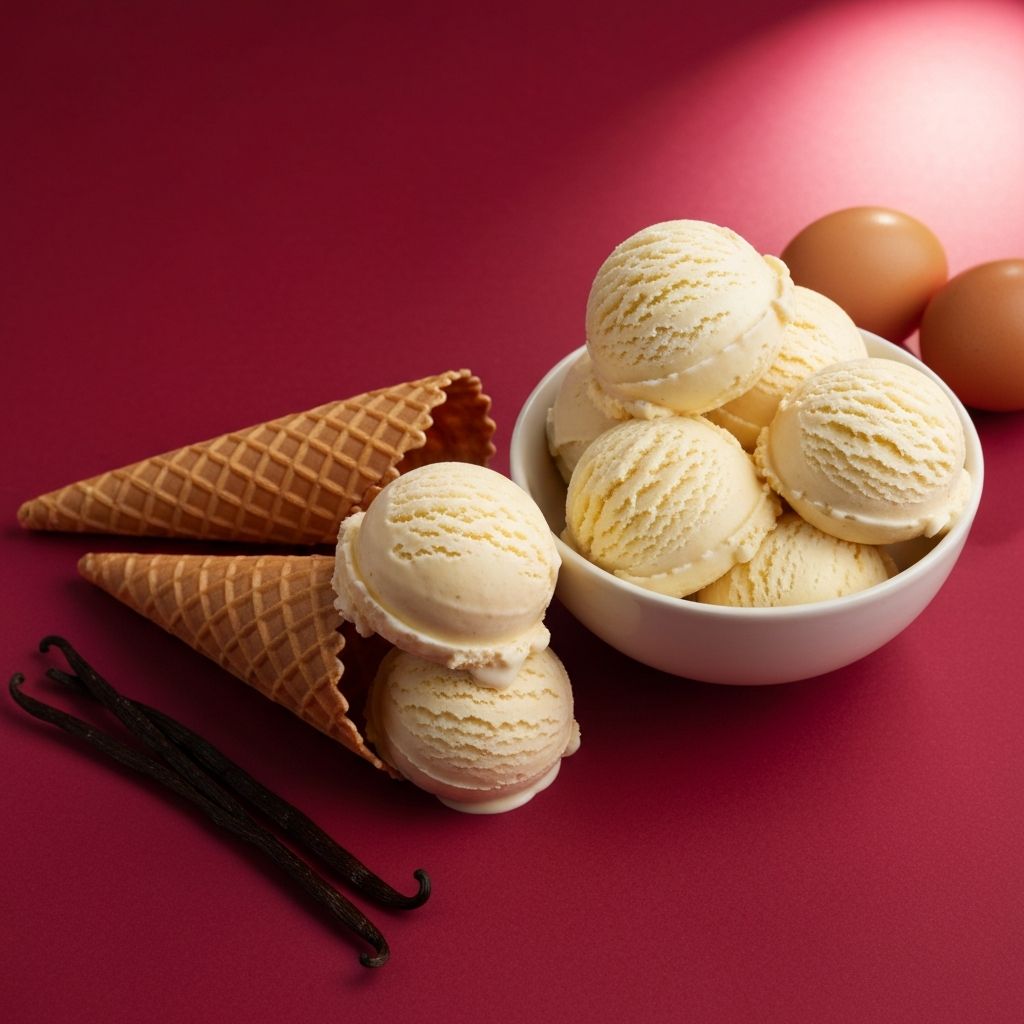
What Is Custard Ice Cream? A Delicious Deep Dive into This Creamy Treat
Custard ice cream, often simply called frozen custard, is a rich and creamy frozen dessert that has been delighting taste buds for over a century. While it shares many similarities with traditional ice cream, custard ice cream has a distinctive composition and texture that sets it apart. Its velvety smoothness, dense creaminess, and rich flavor have earned it a devoted following, particularly in the Midwest and along the East Coast of the United States.
Understanding the differences between custard ice cream and regular ice cream, how it is made, and why it tastes so indulgent will deepen your appreciation for this beloved frozen treat and help you choose between the two the next time you are craving something cold and sweet.
What Makes Custard Ice Cream Different from Regular Ice Cream
The key difference between custard ice cream and regular ice cream lies in one critical ingredient: egg yolks. By federal definition in the United States, frozen custard must contain at least 1.4 percent egg yolk solids by weight, in addition to meeting the minimum requirements for ice cream, which include at least 10 percent milkfat. Regular ice cream may or may not contain egg yolks, and when it does, the amount is typically much lower than what is found in frozen custard.
The addition of egg yolks gives custard ice cream its signature characteristics. Egg yolks act as an emulsifier, helping to bind the fat and water in the ice cream base together more effectively. This creates a smoother, more stable product with a creamier mouthfeel. The lecithin in egg yolks also contributes to the dense, velvety texture that distinguishes frozen custard from regular ice cream.
Another key difference is the amount of air incorporated during the freezing process. Frozen custard is typically churned at a lower speed than regular ice cream, which introduces less air into the product. The industry term for air content in frozen desserts is overrun. While regular ice cream can have an overrun of 50 to 100 percent, meaning half of its volume may be air, frozen custard typically has an overrun of 15 to 30 percent. This lower air content results in a denser, heavier product that feels more substantial and creamy on the palate.
The History of Frozen Custard
Frozen custard has a fascinating history that stretches back to the early twentieth century. The dessert is believed to have originated on Coney Island, New York, around 1919, when ice cream vendors Archie and Elton Kohr discovered that adding egg yolks to their ice cream mixture produced a smoother, creamier product. Their frozen custard was an immediate hit, and the Kohrs reportedly sold over 18,000 cones in their first weekend.
From Coney Island, frozen custard spread across the United States, gaining particular popularity in the Midwest. Milwaukee, Wisconsin, became one of the epicenters of frozen custard culture, with legendary establishments like Kopp's Frozen Custard, Leon's Frozen Custard, and Gilles Frozen Custard becoming beloved local institutions that continue to operate today.
The 1930s and 1940s saw the proliferation of frozen custard stands across the Midwest and East Coast. These stands became popular gathering spots for families and young people, and many of the originals have been passed down through generations. The nostalgic appeal of these vintage custard stands adds to the charm and cultural significance of frozen custard.
How Frozen Custard Is Made
The process of making frozen custard begins with creating a custard base, which consists of milk, cream, sugar, and egg yolks. The egg yolks are tempered by slowly adding hot milk and cream to them while whisking continuously. This process gradually raises the temperature of the yolks without cooking them, creating a smooth, uniform base.
The custard base is then heated to a specific temperature, typically around 170 to 180 degrees Fahrenheit, to pasteurize the eggs and thicken the mixture. The base is then strained to remove any cooked egg bits and chilled thoroughly before being placed in the churning machine.
Frozen custard machines are specifically designed to produce custard at a serving temperature of about 18 degrees Fahrenheit, which is warmer than the typical serving temperature of regular ice cream at around 10 degrees Fahrenheit. This warmer serving temperature is part of what makes frozen custard feel so creamy and smooth on the tongue. The custard is served almost immediately after churning, at its peak creaminess and freshness.
Popular Frozen Custard Flavors and Styles
While vanilla and chocolate are the classic frozen custard flavors, modern custard shops offer an impressive variety of flavors and preparations. Many custard shops feature a flavor of the day, which rotates through dozens of creative options throughout the month. These might include flavors like salted caramel, butter pecan, mint chocolate chip, strawberry cheesecake, and countless other inventive combinations.
Concretes are a popular frozen custard preparation that originated at Ted Drewes in St. Louis. A concrete is a thick frozen custard blended with mix-ins like candy, cookies, fruit, or nuts, served so thick that it can be turned upside down without falling out of the cup. This playful presentation has become a signature element of the frozen custard experience.
Sundaes, shakes, and cones are other popular ways to enjoy frozen custard. The dense, creamy nature of custard makes it particularly well-suited for sundaes, where it holds up well under hot fudge, caramel sauce, and other toppings without melting as quickly as regular ice cream.
Frozen Custard vs. Gelato vs. Soft Serve
Frozen custard is sometimes confused with gelato or soft serve ice cream, but there are important differences between all three. Gelato is an Italian frozen dessert that uses more milk and less cream than American ice cream and typically contains fewer or no egg yolks. Gelato is churned at a slower speed, resulting in a denser product with less air, but it is typically served at a slightly warmer temperature than ice cream. While gelato and custard share the quality of being denser than regular ice cream, their flavor profiles and ingredient compositions differ significantly.
Soft serve ice cream shares the smooth, creamy texture of frozen custard and is served at a similar temperature, but it typically contains less egg yolk or none at all. Soft serve also has a higher overrun than frozen custard, meaning it contains more air, which gives it a lighter, less dense texture. The key distinction remains the egg yolk content, which gives frozen custard its characteristic richness.
Where to Find the Best Frozen Custard
While frozen custard can be found in many parts of the United States, certain regions and establishments are particularly renowned for their custard quality. Milwaukee remains the unofficial frozen custard capital of America, with multiple legendary custard stands that have been operating for decades. Kopp's, Leon's, and Gilles are considered must-visit destinations for any frozen custard enthusiast.
St. Louis is another hotspot for frozen custard, anchored by Ted Drewes, which has been serving frozen custard since 1929 and is considered one of the best frozen custard establishments in the country. The Ted Drewes concrete has become an iconic St. Louis food experience.
National chains like Culver's and Freddy's Frozen Custard and Steakburgers have helped bring frozen custard to regions where it was previously less common. While purists may prefer the locally owned custard stands, these chains have introduced millions of Americans to frozen custard who might not otherwise have had the opportunity to try it.
Conclusion
Custard ice cream is a uniquely rich, creamy, and satisfying frozen dessert that distinguishes itself from regular ice cream through its egg yolk content, lower air incorporation, and dense, velvety texture. With a history spanning over a century and a devoted following across the United States, frozen custard represents a beloved American food tradition that continues to delight new generations of dessert lovers. Whether you enjoy it in a cone, as a concrete, or in a sundae, frozen custard offers an indulgent experience that regular ice cream simply cannot match.
