
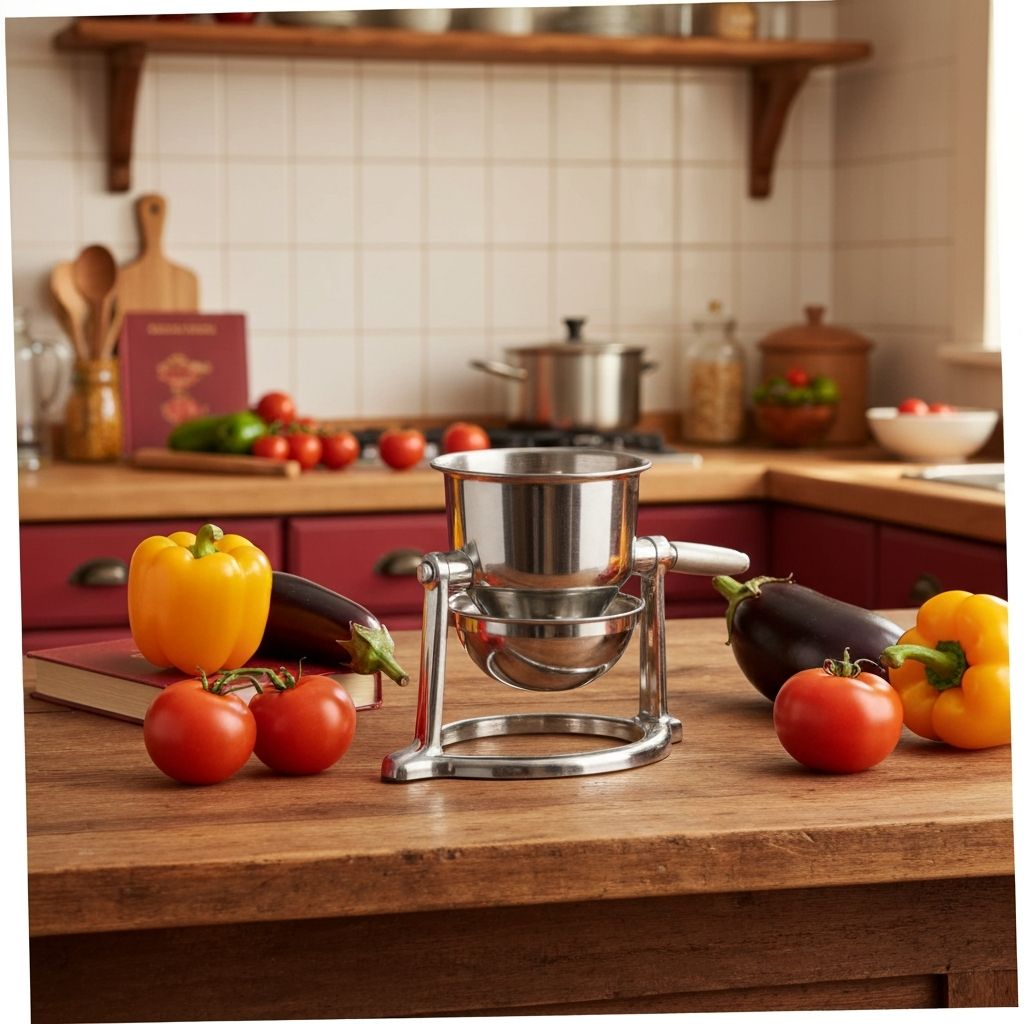
What Is a Food Mill? The Essential Kitchen Tool Explained
A food mill is a manual kitchen tool used to puree, strain, and mash soft foods while simultaneously separating skins, seeds, and fibers from the final product. Unlike a blender or food processor, which pulverizes everything together, a food mill produces a smooth, uniform texture while removing unwanted elements, making it an invaluable tool for preparing sauces, soups, baby food, and preserves.
Despite the proliferation of electric kitchen gadgets, the food mill remains a cherished tool among professional chefs and home cooks alike. Its simplicity, reliability, and unique ability to produce textures that no other tool can replicate have ensured its place in kitchens around the world for over a century.
How Does a Food Mill Work
A food mill consists of three main components: a bowl or hopper, a rotating plate or blade, and a perforated disc or screen. Food is placed in the bowl, and a hand crank turns the blade, which presses the food against the perforated disc. The soft flesh of the food is pushed through the holes, while skins, seeds, and tough fibers are left behind in the bowl.
Most food mills come with interchangeable discs of varying hole sizes, allowing you to control the fineness of the puree. A fine disc produces a silky-smooth texture ideal for sauces and baby food, while a coarser disc creates a chunkier result suitable for rustic soups and mashed potatoes. The ability to switch between discs makes the food mill an incredibly versatile tool.
The operation is straightforward and requires no electricity. You simply load cooked or soft food into the bowl, secure the food mill over a pot or bowl, and turn the crank in a clockwise direction. The rotating blade forces the food through the perforated disc while a spring-loaded mechanism periodically reverses to scrape the disc clean and prevent clogging. The result is a uniformly textured puree with all the undesirable bits neatly separated and left behind.
Common Uses for a Food Mill
The food mill excels at preparing tomato sauce and passata. By running cooked tomatoes through the mill, you get a smooth, velvety sauce without any skin or seed pieces, and without the frothy, aerated texture that a blender can produce. Many Italian home cooks and professional chefs consider the food mill essential for authentic tomato preparations.
Making applesauce is another classic food mill application. Simply cook quartered apples until tender, then pass them through the food mill. The device removes the skins and cores while producing a perfectly textured applesauce. You can even leave the apples unpeeled and uncored before cooking, since the food mill will separate everything for you, saving significant preparation time.
Mashed potatoes made with a food mill have a distinctly superior texture compared to those made with other methods. The food mill breaks down the potatoes without overworking the starch, resulting in fluffy, lump-free mashed potatoes that are never gummy or gluey. Many chefs consider this the best method for producing restaurant-quality mashed potatoes at home.
Other popular uses include preparing baby food from fresh fruits and vegetables, making smooth soups and bisques, creating fruit butters and jams, pureeing beans for dips and spreads, and processing berries to remove seeds while preserving maximum flavor. The food mill is also invaluable for canning and preserving, as it streamlines the process of turning large batches of produce into smooth purees.
Food Mill vs Blender vs Food Processor
Understanding how a food mill differs from a blender or food processor helps clarify when to use each tool. A blender uses high-speed rotating blades to pulverize food into a liquid or smooth puree. While excellent for smoothies and soups, blenders incorporate air into the mixture, potentially creating an unwanted frothy texture. They also cannot separate skins and seeds from the puree.
A food processor uses sharp blades to chop, slice, and puree food. It is incredibly versatile for tasks like chopping vegetables, making dough, and pureeing soups. However, like a blender, it cannot separate skins and seeds, and it can overwork starchy foods like potatoes, leading to a gummy, unpleasant texture.
The food mill's unique advantage is its ability to puree while simultaneously straining. This dual action produces a texture that is smooth but not aerated, silky but not gummy. For recipes where texture matters most, such as tomato sauce, mashed potatoes, and fruit preserves, the food mill is simply unmatched by any electric alternative.
How to Choose the Right Food Mill
When shopping for a food mill, consider the size, material, and disc options. Food mills typically come in sizes ranging from one quart to five quarts. A medium-sized mill of two to three quarts is suitable for most home cooking needs, while larger models are better for batch cooking and canning projects.
Material options include stainless steel, tinned steel, and plastic. Stainless steel is the most durable and versatile option, as it resists staining, does not react with acidic foods like tomatoes, and is dishwasher safe. Tinned steel models are often less expensive but can discolor over time and may not be suitable for acidic preparations. Plastic models are lightweight and affordable but may not be as durable.
Look for a food mill that comes with at least two interchangeable discs, preferably three, covering fine, medium, and coarse textures. A stable base or hooks that grip the edges of your pot or bowl are important for hands-free operation. Comfortable, ergonomic handles make cranking easier, especially during extended use. Some models feature a spring-loaded blade that automatically scrapes the disc, improving efficiency and reducing clogging.
Caring for Your Food Mill
Proper care extends the life of your food mill and ensures it performs optimally every time. Disassemble the food mill after each use and wash all components thoroughly with warm, soapy water. Use a brush to clean the perforated discs, paying special attention to any food particles stuck in the holes. Most stainless steel food mills are dishwasher safe, but check the manufacturer's instructions for specific care recommendations.
Dry all parts completely before storing to prevent rust, especially if you have a tinned steel model. Store the discs separately or with a cloth between them to prevent scratching. Periodically check the blade and discs for wear and replace them if they become dull or damaged, as worn components can affect the quality of your purees.
With proper care, a high-quality food mill can last for decades. Many cooks treasure food mills that have been passed down through generations, a testament to the tool's durability and enduring usefulness. Investing in a well-made food mill is an investment in better cooking for years to come.
