
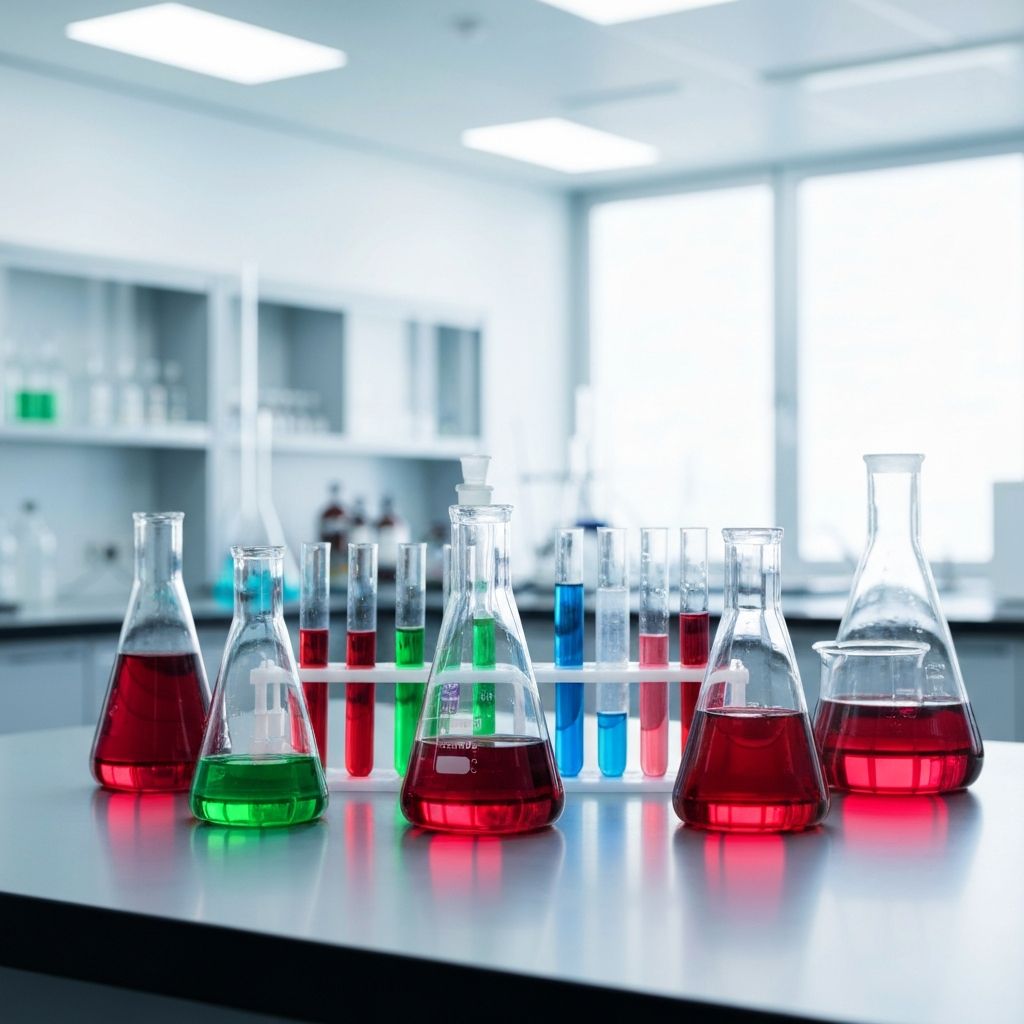
Defining Chemical Formulation
A chemical formulation is a carefully designed mixture of chemical substances combined in specific proportions to create a product with desired properties and performance characteristics. Unlike a simple chemical compound, which consists of a single substance with a defined molecular structure, a formulation is a blend of multiple ingredients, each serving a specific function within the overall product. The science and art of creating these mixtures is known as formulation chemistry, and it plays a critical role in virtually every industry that produces chemical-based products.
Chemical formulations are ubiquitous in modern life, even though most consumers rarely think about the complex chemistry behind the products they use every day. Every shampoo, sunscreen, paint, adhesive, pesticide, pharmaceutical, cleaning product, and food item is a chemical formulation that has been carefully developed, tested, and optimized to deliver specific performance characteristics. The process of creating these formulations requires a deep understanding of chemistry, physics, biology, and engineering, as well as practical knowledge of manufacturing processes and regulatory requirements.
The importance of chemical formulation cannot be overstated. The effectiveness, safety, stability, and consumer appeal of a product are all directly influenced by its formulation. A well-designed formulation will deliver the desired performance reliably and consistently, while a poorly designed one may fail to work as intended, degrade over time, or pose safety risks to users or the environment. This is why formulation chemists are among the most valuable professionals in the chemical, pharmaceutical, and consumer goods industries.
Key Components of a Chemical Formulation
Every chemical formulation consists of several categories of ingredients, each serving a specific purpose within the overall product. The active ingredient is the primary substance that provides the product's main function or effect. In a pharmaceutical formulation, for example, the active ingredient is the drug that treats the condition. In a cleaning product, the active ingredient might be a surfactant that lifts dirt and grease. In a pesticide, it is the chemical that kills or repels the target pest.
Solvents are liquids used to dissolve, dilute, or disperse the other ingredients in the formulation. Water is the most commonly used solvent, but organic solvents such as ethanol, acetone, and various petroleum derivatives are also widely used depending on the application. The choice of solvent affects the formulation's consistency, drying time, compatibility with other ingredients, and environmental impact.
Additives are supplementary ingredients that enhance the performance, stability, appearance, or safety of the formulation. Common additives include preservatives (which prevent microbial growth), stabilizers (which prevent chemical degradation), emulsifiers (which keep immiscible liquids mixed together), thickeners (which control viscosity), colorants (which provide visual appeal), and fragrances (which provide pleasant scents). Each additive must be carefully selected and tested to ensure compatibility with the other ingredients and the overall performance goals of the formulation.
Carriers and delivery systems are ingredients or structures that transport the active ingredient to its target site and control its release. In pharmaceutical formulations, carriers can include capsule shells, tablet binders, and controlled-release polymers. In agricultural formulations, carriers might include clay particles, granules, or microencapsulation systems that protect the active ingredient and release it gradually over time.
Types of Chemical Formulations
Chemical formulations can take many physical forms, each with its own characteristics, advantages, and applications. Solutions are homogeneous mixtures in which all ingredients are completely dissolved in a solvent. Solutions are clear, uniform, and easy to apply, making them suitable for products like liquid medications, cleaning sprays, and many industrial chemicals.
Emulsions are mixtures of two immiscible liquids, typically oil and water, stabilized by emulsifying agents that prevent the liquids from separating. Emulsions are the basis for many cosmetic and personal care products, including lotions, creams, and conditioners. They are also used in food products like mayonnaise and salad dressing, as well as in agricultural formulations and industrial lubricants.
Suspensions are mixtures in which solid particles are dispersed in a liquid medium. Unlike solutions, the particles in a suspension do not dissolve and will eventually settle out if not kept agitated. Suspensions are common in pharmaceutical products like liquid medications and antacids, as well as in paints, inks, and agricultural chemicals. Proper formulation of suspensions requires the use of suspending agents and careful particle size control to ensure uniformity and stability.
Solid formulations include tablets, capsules, powders, granules, and pellets. These forms are widely used in the pharmaceutical, agricultural, and food industries. Solid formulations offer advantages in terms of stability, dosage accuracy, ease of transportation, and shelf life. The manufacture of solid formulations often involves complex processes such as granulation, compression, coating, and encapsulation.
The Formulation Development Process
Developing a new chemical formulation is a systematic process that typically involves several stages, from initial concept and research through testing, optimization, scale-up, and commercial manufacturing. The process begins with a clear definition of the product's performance requirements, target market, regulatory constraints, and cost parameters. These criteria guide all subsequent decisions about ingredient selection, formulation design, and testing protocols.
The research and development phase involves identifying potential active ingredients and excipients (inactive ingredients), conducting preliminary compatibility studies, and creating initial prototype formulations. Formulation chemists draw on their knowledge of chemistry, materials science, and the specific application to design formulations that meet the defined performance criteria. This phase often involves extensive experimentation, as small changes in ingredient ratios, processing conditions, or ingredient sources can significantly affect the final product's properties.
Stability testing is a critical phase of formulation development. Formulations are subjected to controlled environmental conditions, including elevated temperatures, humidity, and light exposure, to assess how they change over time. Stability studies help identify potential degradation pathways, determine the product's shelf life, and guide the selection of packaging materials that will protect the product during storage and distribution.
Scale-up and manufacturing development bridge the gap between laboratory-scale formulation and commercial production. A formulation that works perfectly in a small laboratory batch may behave differently when produced in large-scale manufacturing equipment. Scale-up studies identify and address these differences, ensuring that the commercial product matches the quality and performance of the laboratory prototype. This phase often involves close collaboration between formulation chemists, process engineers, and manufacturing personnel.
Applications Across Industries
Chemical formulations are fundamental to a vast array of industries and applications. In the pharmaceutical industry, formulation science is critical for developing drug products that deliver active ingredients to the body in a safe, effective, and controlled manner. Pharmaceutical formulations must meet stringent regulatory standards for quality, purity, potency, and stability, and they undergo extensive testing before being approved for use by patients.
The agricultural industry relies on chemical formulations for crop protection products, including herbicides, insecticides, fungicides, and plant growth regulators. These formulations must deliver the active ingredient to the target pest or site of action while minimizing environmental impact and ensuring safety for applicators and consumers. Modern agricultural formulations incorporate advanced delivery systems, such as microencapsulation and controlled-release technologies, that improve efficacy and reduce the amount of active ingredient needed.
The personal care and cosmetics industry is one of the most diverse and innovative sectors of formulation chemistry. Products ranging from shampoos and conditioners to moisturizers, sunscreens, makeup, and fragrances are all complex chemical formulations that must deliver performance, safety, sensory appeal, and aesthetic qualities. Consumer expectations for natural, sustainable, and ethically produced products have driven significant innovation in this sector in recent years.
The paints and coatings industry, the cleaning products industry, the food and beverage industry, and the construction materials industry all depend heavily on chemical formulation science. In each of these sectors, formulation chemists work to create products that meet specific performance requirements while complying with regulatory standards and addressing consumer preferences for safety, sustainability, and value.
Future Trends in Chemical Formulation
The field of chemical formulation is evolving rapidly, driven by advances in technology, changing consumer preferences, and increasing regulatory scrutiny. Sustainability is one of the most significant trends shaping the future of formulation chemistry. Consumers and regulators are demanding products that are safer for human health and the environment, leading to the development of formulations based on renewable, biodegradable, and non-toxic ingredients.
Green chemistry principles are being increasingly adopted in formulation development, guiding chemists to design products and processes that minimize waste, reduce energy consumption, and avoid the use of hazardous substances. This includes the development of waterborne formulations to replace solvent-based products, the use of bio-based surfactants and polymers derived from plant sources, and the design of packaging materials that are recyclable or compostable.
Digital tools and artificial intelligence are also transforming the formulation development process. Machine learning algorithms can analyze vast datasets of formulation experiments to identify patterns and predict the performance of new formulations, significantly reducing the time and cost of development. High-throughput screening technologies allow researchers to test hundreds or thousands of formulation variations simultaneously, accelerating the discovery of optimal formulations. These technological advances promise to make formulation science faster, more efficient, and more innovative in the years to come.
