
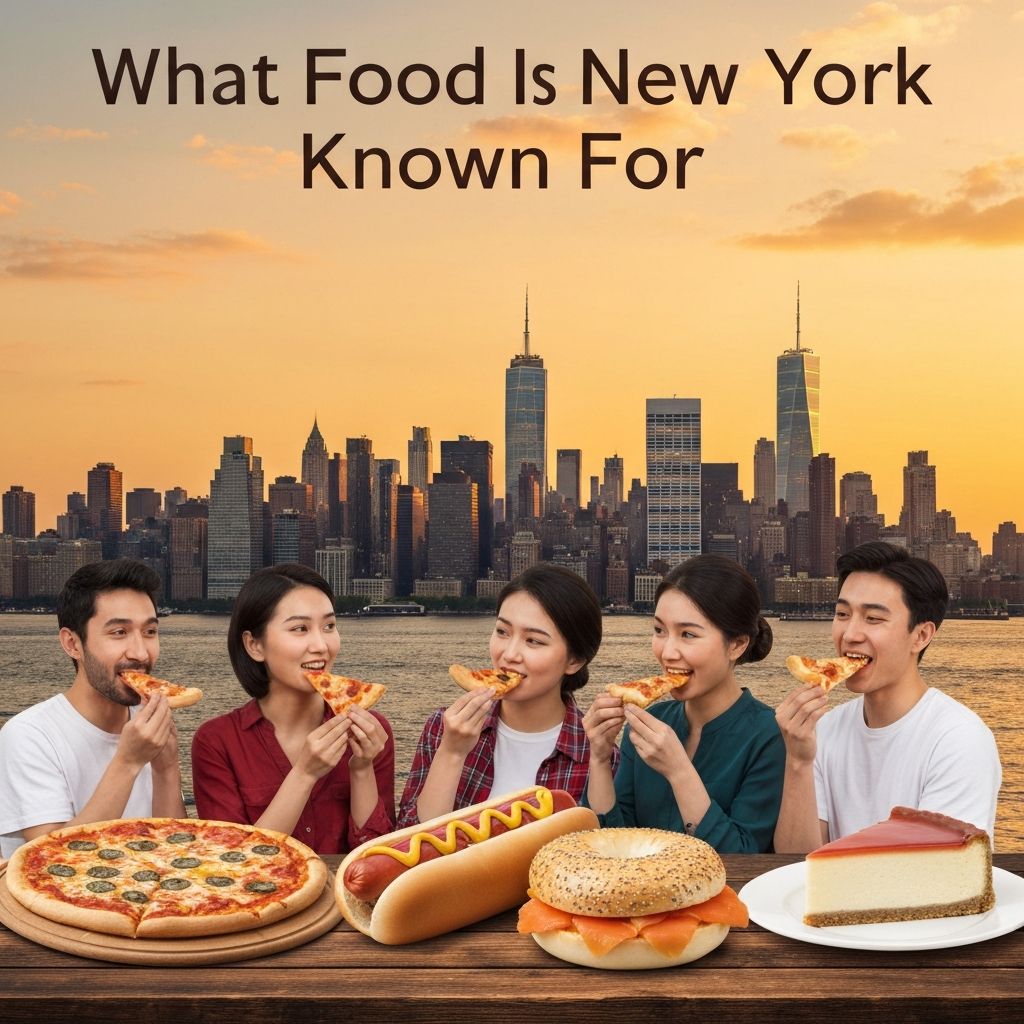
New York City: A Culinary Capital of the World
New York City is widely regarded as one of the greatest food cities on the planet, a culinary melting pot where the cuisines of virtually every culture on Earth converge and create something uniquely New York. The city's food identity has been shaped by waves of immigration, each contributing distinctive flavors, techniques, and traditions to the urban food landscape. From Italian immigrants who brought pizza and pasta to Jewish immigrants who introduced bagels and pastrami, from Chinese immigrants who established Chinatown to more recent arrivals from Latin America, the Caribbean, South Asia, and beyond, New York's food scene is a living testament to the city's diversity.
What makes New York's food culture particularly special is that many of the city's most iconic foods have transcended their immigrant origins to become uniquely New York creations. New York-style pizza is different from Italian pizza. New York bagels are different from any bagels found elsewhere in the world. New York cheesecake has its own distinctive style. These foods have become so closely associated with the city that they are as much a part of New York's identity as the Statue of Liberty or Times Square.
Whether you are a first-time visitor planning your must-eat list or a lifelong New Yorker who takes pride in the city's culinary heritage, understanding what food New York is known for is an exploration of history, culture, and flavor that reveals the very soul of this extraordinary city.
New York-Style Pizza: The City's Most Iconic Food
If there is one food that is synonymous with New York City, it is pizza. New York-style pizza is characterized by its large, foldable slices with a thin, crispy crust that is pliable enough to fold in half for eating on the go. The crust is typically hand-tossed and baked in a deck oven at high temperatures, resulting in a slightly charred bottom with a chewy interior. The sauce is made from uncooked crushed tomatoes seasoned with garlic and herbs, spread thinly across the dough. A generous layer of low-moisture mozzarella cheese covers the sauce, and the pizza is often finished with a drizzle of olive oil.
The history of New York pizza dates back to the early 1900s, when Italian immigrants began opening pizzerias in neighborhoods like Little Italy and the Lower East Side. Lombardi's, which opened on Spring Street in 1905, is widely considered the first pizzeria in the United States. From these humble beginnings, pizza spread throughout the city and eventually across the entire country, though New Yorkers will passionately argue that no other city has ever managed to replicate the authentic New York slice.
Part of what makes New York pizza unique, according to locals and pizza enthusiasts, is the city's tap water. New York City's water supply comes from upstate reservoirs and is renowned for its quality and mineral content. Many pizza makers believe that the specific mineral composition of New York water affects the gluten development in the dough, contributing to the distinctive texture of the crust. Whether this theory is scientifically proven or urban legend, it has become a beloved part of New York pizza mythology.
Bagels: A New York Breakfast Institution
The New York bagel is a breakfast staple that has achieved almost mythical status. A proper New York bagel is boiled briefly in water before being baked, a process that creates its characteristic dense, chewy interior and slightly shiny, crispy exterior. The boiling step is what distinguishes a real bagel from the softer, bread-like imitations found in many other cities. New York bagels are available in numerous varieties, including plain, sesame, poppy, everything (topped with a mixture of sesame seeds, poppy seeds, garlic, onion, and salt), onion, pumpernickel, and cinnamon raisin.
The bagel's journey to New York began with Eastern European Jewish immigrants who brought the bread from Poland in the late 19th and early 20th centuries. By the mid-20th century, bagels had become a staple of New York Jewish delis and breakfast culture. The establishment of the Bagel Bakers Local 338 union in the 1930s helped standardize production techniques and maintain quality standards that contributed to the New York bagel's legendary reputation.
The classic New York bagel is served with a schmear of cream cheese, often from a local brand like Philadelphia or a house-made variety from a specialty bagel shop. For a more substantial meal, the quintessential New York bagel order is a toasted everything bagel with lox (cured salmon), cream cheese, capers, red onion, and tomato. This combination is as New York as it gets and is a must-try for any visitor to the city. Iconic bagel shops like Russ and Daughters, Ess-a-Bagel, and Murray's Bagels have earned devoted followings and long lines that testify to the enduring appeal of the New York bagel.
New York Cheesecake: Rich, Dense, and Unforgettable
New York-style cheesecake is distinctly different from other cheesecake varieties and has become one of the city's most celebrated desserts. Unlike lighter, fluffier cheesecakes made with ricotta or cottage cheese, New York cheesecake is made with heavy cream cheese, resulting in an incredibly dense, rich, smooth, and creamy texture. The filling is typically flavored simply with vanilla and lemon, allowing the richness of the cream cheese to be the star. It sits atop a buttery graham cracker crust and is served without fruit toppings, whipped cream, or other embellishments that would distract from its pure, unadulterated creaminess.
The most famous purveyor of New York cheesecake is Junior's, a Brooklyn institution that has been serving its legendary cheesecake since 1950. Junior's cheesecake is so revered that it has been called the best cheesecake in New York by countless publications and food critics. Eileen's Special Cheesecake in SoHo, Two Little Red Hens on the Upper East Side, and Veniero's in the East Village are other beloved destinations for this iconic dessert. Each has its own devoted fans who will argue passionately that their preferred shop makes the definitive New York cheesecake.
The origins of New York cheesecake trace back to the 1900s, when Arnold Reuben, a German immigrant and restaurateur, is credited with developing the cream cheese-based recipe that defines the New York style. Before Reuben's innovation, most American cheesecakes were made with European-style curd cheeses. His decision to use the distinctly American cream cheese product, which had been commercially available since the late 1800s, created an entirely new category of cheesecake that has since become one of the most popular dessert styles in the world.
Hot Dogs, Pastrami, and Classic Deli Culture
The New York hot dog is a street food icon that has been feeding New Yorkers since the late 1800s. Nathan's Famous, founded at Coney Island in 1916, is perhaps the most well-known hot dog establishment in the city and hosts the legendary Nathan's Hot Dog Eating Contest every Fourth of July. New York hot dogs are typically all-beef frankfurters served in a soft steamed bun and topped with yellow mustard, sauerkraut, and onion sauce. The city's countless hot dog carts, stationed on street corners throughout Manhattan and beyond, offer a quick, affordable, and quintessentially New York eating experience.
Pastrami on rye is another iconic New York food, born from the Jewish deli tradition that flourished on the Lower East Side. Katz's Delicatessen, which has been in operation since 1888, is the most famous destination for pastrami in the city and arguably the world. Their pastrami is hand-sliced from beef brisket that has been cured, smoked, and steamed for hours until impossibly tender. Piled high on rye bread with a slathering of spicy brown mustard, a Katz's pastrami sandwich is a New York rite of passage that draws locals and tourists alike.
New York's deli culture extends well beyond pastrami to include a range of cured meats, smoked fish, pickles, knishes, matzo ball soup, and other traditional Jewish American delicacies. While the number of classic Jewish delis in New York has declined over the decades, the surviving institutions like Katz's, Barney Greengrass, and Zabar's continue to preserve a culinary tradition that is inextricably linked to New York's cultural identity. These delis serve as living museums of a food heritage that shaped the city's eating habits for generations.
Chopped Cheese, Dollar Pizza, and Modern New York Eats
While New York's culinary reputation rests largely on its classic foods, the city's food culture continues to evolve with each generation. The chopped cheese, a sandwich born in Harlem bodegas, has emerged as one of New York's most exciting and distinctly local foods in recent years. A chopped cheese consists of ground beef chopped and mixed with melted cheese on a flat-top grill, served on a hero roll with lettuce, tomato, and condiments. It is essentially a deconstructed cheeseburger in sandwich form and has become a beloved bodega staple throughout the city.
Dollar pizza, also known as 99-cent pizza, is another uniquely New York phenomenon. These no-frills pizza shops sell individual slices for a dollar or slightly more, providing an incredibly affordable meal option in one of the most expensive cities in the world. While dollar pizza may not win any culinary awards, it represents an important part of New York's democratic food culture, where excellent, affordable food is accessible to everyone regardless of income. The sheer volume of dollar pizza consumed daily in New York is a testament to its place in the city's food ecosystem.
New York continues to innovate in the food space, with trends like the cronut (a croissant-doughnut hybrid created by Dominique Ansel Bakery in 2013), halal cart chicken and rice (a street food phenomenon popularized by carts like The Halal Guys), and the rainbow bagel (a colorful creation from The Bagel Store in Brooklyn) all originating in the city. These modern creations, alongside the classic foods that have defined New York for over a century, ensure that the city's status as a culinary capital remains unchallenged. New York's food story is one of constant evolution, where respect for tradition coexists with a relentless appetite for innovation, creating a dining scene that is truly unlike any other in the world.
