
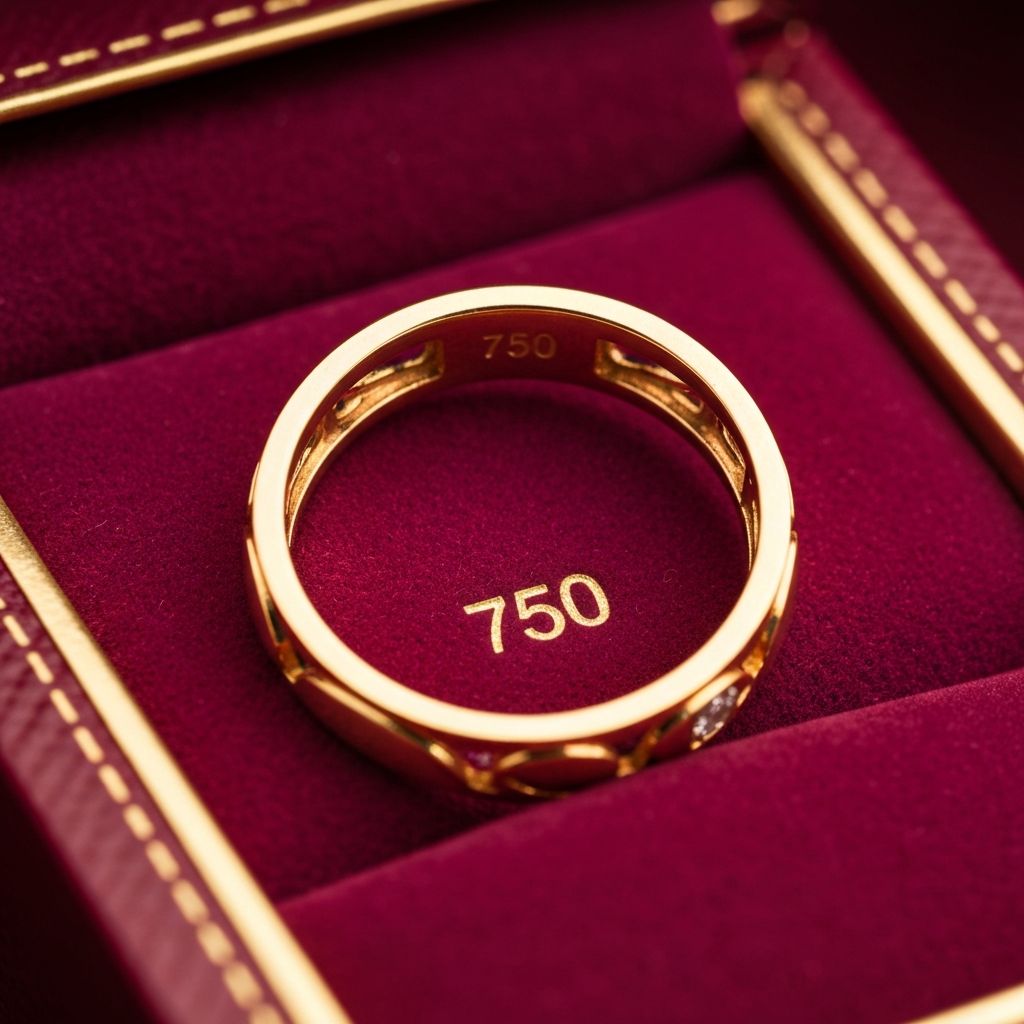
What Does 750 Mean on Jewelry? Understanding Gold Purity Markings
If you have ever looked closely at a piece of gold jewelry, you may have noticed small numbers stamped somewhere on the surface. Among the most common of these markings is 750, which you might find on the inside of a ring, the clasp of a necklace, or the back of earring posts. Understanding what this number means is essential for anyone buying, selling, or simply appreciating gold jewelry, as it directly indicates the quality and value of the piece.
These hallmarks and purity stamps have been used for centuries to certify the precious metal content of jewelry and other gold items. They provide a standardized way to communicate quality across borders and cultures, ensuring that buyers know exactly what they are getting. Let us explore what 750 means and how it relates to the broader system of gold purity markings.
The 750 Stamp Explained
The number 750 on jewelry indicates that the piece is made of 75% pure gold. This marking is part of the millesimal fineness system, which expresses the proportion of pure gold in the alloy as parts per thousand. In this system, 750 means 750 parts out of 1000 are pure gold, with the remaining 250 parts consisting of other metals mixed in to create the alloy.
This purity level is equivalent to 18 karat gold in the karat system commonly used in the United States and some other countries. The karat system divides gold purity into 24 parts, so 18 karat gold contains 18 parts pure gold out of 24 total parts, which mathematically equals 75% or 750 millesimal fineness. Whether marked as 750, 18K, or 18Kt, the gold content is the same.
The millesimal fineness system is the international standard used in most European and Asian countries. It provides a more precise measurement than the karat system and eliminates the potential confusion between different karat denominations. When you see 750 stamped on jewelry, you can be confident that it meets a high standard of gold purity recognized worldwide.
Why Gold Is Alloyed with Other Metals
Pure gold, designated as 999 or 24 karat, is too soft for most jewelry applications. In its pure form, gold can be easily scratched, bent, and dented, making it impractical for items that are worn daily and subjected to regular contact and pressure. By alloying gold with harder metals, jewelers create materials that are durable enough for everyday wear while retaining the beautiful appearance and luster of gold.
The metals mixed with gold in a 750 alloy significantly affect the final color and properties of the jewelry. Yellow gold uses a combination of copper and silver in the 25% non-gold portion, creating a warm, traditional gold color. White gold incorporates nickel, palladium, or zinc to produce a silvery-white appearance. Rose gold uses a higher proportion of copper to achieve its distinctive pinkish hue.
Beyond color, the alloying metals affect hardness, durability, and workability. Copper increases hardness and adds warmth to the color. Silver contributes to a softer, greener tone. Palladium creates a premium white gold that is hypoallergenic and does not require rhodium plating. The specific combination and proportion of alloying metals are closely guarded trade secrets among high-end jewelry manufacturers.
How 750 Gold Compares to Other Purities
Understanding how 750 gold compares to other common purities helps you make informed purchasing decisions. The most common gold purities you will encounter in jewelry are 375 (9 karat), 585 (14 karat), 750 (18 karat), and 999 (24 karat). Each offers a different balance of purity, durability, color, and price.
Gold marked 375 or 9 karat contains only 37.5% pure gold. This is the minimum purity that can legally be called gold in many countries. It is the most affordable option and the most durable due to its high proportion of harder alloying metals, but it has a paler color and lower resale value compared to higher purities.
Gold marked 585 or 14 karat contains 58.5% pure gold and is the most popular choice in the United States. It offers a good balance of gold content, durability, and affordability. The color is noticeably richer than 9 karat, and it is hard enough for everyday wear. However, it lacks the deep, rich color of 18 karat gold.
At 750 or 18 karat, the gold content is high enough to produce a rich, warm color that is distinctly more luxurious than lower purities. It is the standard for fine jewelry in most European countries and is commonly used in high-end engagement rings, wedding bands, and luxury watches. While not as hard as 14 karat gold, 18 karat is still sufficiently durable for regular wear with proper care.
Pure gold at 999 or 24 karat is primarily used in bullion, coins, and some specialty jewelry in Asian markets. Its extreme softness makes it unsuitable for most Western jewelry styles, though some cultures prize its deep, saturated yellow color for traditional jewelry pieces that are worn on special occasions rather than daily.
How to Verify the 750 Marking
While the 750 stamp is a reliable indicator of gold content, counterfeit markings do exist. There are several methods to verify that a piece of jewelry is genuinely 18 karat gold. The simplest at-home test is the magnet test: gold is not magnetic, so if a piece of jewelry is attracted to a strong magnet, it is either not gold or contains significant amounts of ferromagnetic metals.
The acid test is a more definitive method used by professional jewelers. A small scratch is made on an inconspicuous part of the jewelry, and acid is applied to the mark. Different acid solutions are formulated for different gold purities, and the reaction of the metal to the acid indicates its karat level. This test is accurate but should be performed by a professional to avoid damaging the piece.
Electronic gold testers use electrical conductivity to determine gold purity without damaging the jewelry. These devices are widely used by jewelers and gold dealers and provide quick, non-destructive results. X-ray fluorescence (XRF) analyzers provide the most accurate analysis by measuring the elemental composition of the metal, but these instruments are expensive and typically found only in professional settings.
The Value of 750 Gold Jewelry
The value of 750 gold jewelry is determined by several factors beyond its gold content. The current market price of gold, the weight of the piece, the craftsmanship, the brand, and any gemstones or other precious materials all contribute to the overall value. The gold content itself provides a baseline value, known as the melt value, which represents the minimum the gold is worth based purely on its precious metal content.
As of recent market conditions, 18 karat gold commands a significant premium in the jewelry market. The higher gold content means more intrinsic value compared to 14 karat or lower purities, making 750 gold jewelry a better store of value and investment. This is particularly important for pieces you intend to keep for generations or potentially sell in the future.
When purchasing 750 gold jewelry, buy from reputable dealers who provide proper documentation and certificates of authenticity. High-quality jewelers will be transparent about the gold content and alloy composition of their pieces. For significant purchases, consider getting an independent appraisal to verify the gold purity and assess the overall value of the piece, including its design, craftsmanship, and any gemstones.
Caring for Your 750 Gold Jewelry
Proper care ensures your 18 karat gold jewelry maintains its beauty and value for years to come. Clean your gold jewelry regularly with a solution of warm water and mild dish soap, using a soft brush to remove dirt and oils from crevices. Rinse thoroughly and pat dry with a soft cloth. Avoid harsh chemicals, abrasive cleaners, and ultrasonic cleaners unless you are certain they are safe for your specific piece.
Store gold jewelry individually in soft cloth pouches or lined compartments to prevent scratching. While 18 karat gold is reasonably durable, it can still be scratched by harder metals and gemstones. Remove gold jewelry before engaging in activities that could damage it, such as heavy manual work, exercise, swimming in chlorinated pools, or applying lotions and perfumes.
Have your gold jewelry professionally inspected and cleaned annually, especially pieces with gemstone settings. A professional jeweler can check prong settings, clasps, and other components for wear, tighten loose stones, and polish the surface to restore its original luster. This regular maintenance helps prevent loss of gemstones and ensures your jewelry remains in excellent condition throughout its lifetime.
