
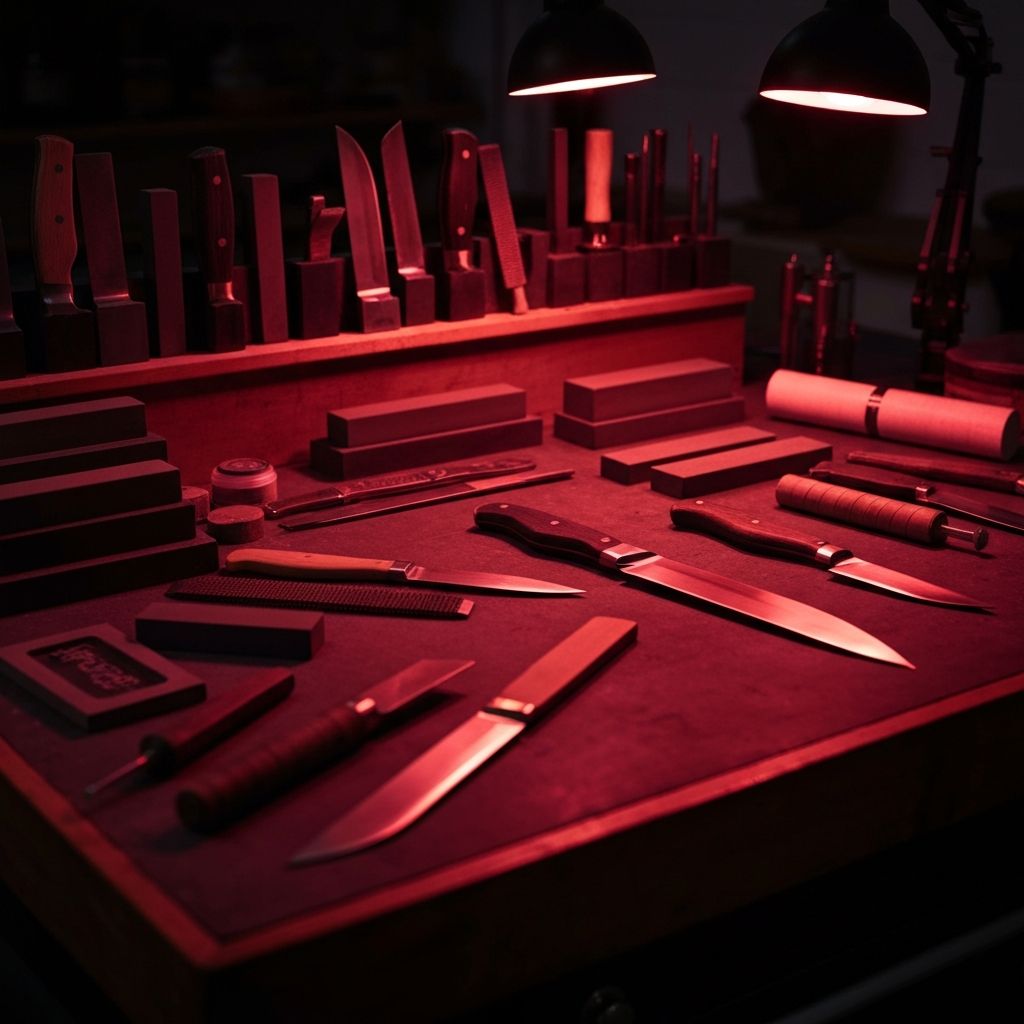
Introduction to Blade Customization
Blade customization is both an art and a craft that has been practiced for centuries. From the ornate swords of medieval Europe to the intricately decorated Japanese katanas, humans have always sought to personalize their bladed tools and weapons. Today, blade customization encompasses a wide range of techniques and modifications that can transform a standard knife or blade into a unique, personalized instrument that reflects its owner's style, preferences, and functional requirements.
The world of blade customization has expanded significantly in recent years, driven by growing interest in custom knives, the maker movement, and online communities dedicated to knife collecting and modification. Whether you are a professional chef looking to personalize your kitchen knives, an outdoor enthusiast who wants a custom survival blade, or a collector who appreciates the artistry of custom cutlery, there are numerous ways to customize a blade to make it truly your own.
Blade customization can range from simple, DIY modifications that require minimal tools and experience to complex, professional-level work that demands specialized equipment and years of skill development. This guide explores the full spectrum of blade customization options, from handle replacements and blade coatings to engraving, etching, and beyond.
Handle Customization and Replacement
The handle, or grip, is one of the most impactful areas for blade customization. Replacing or modifying a knife's handle can dramatically change its appearance, feel, and functionality. Handle materials span a vast range of natural and synthetic options, each offering unique aesthetic and performance characteristics.
Natural handle materials include various hardwoods (such as walnut, rosewood, ebony, and bocote), bone, antler, horn, leather, and stabilized wood (wood that has been infused with resin to enhance durability and moisture resistance). Each natural material brings its own grain patterns, colors, and textures, making every handle one-of-a-kind. Exotic woods and materials like mammoth ivory, meteorite, and petrified wood are prized by collectors for their rarity and visual impact.
Synthetic handle materials offer advantages in durability, consistency, and weather resistance. Popular synthetic options include G-10 (a fiberglass laminate), Micarta (layers of linen, canvas, or paper bonded with resin), carbon fiber, titanium, aluminum, and various polymers like FRN (fiberglass-reinforced nylon) and Zytel. These materials are available in a wide range of colors and textures and can be machined to precise specifications.
For those who want to replace their knife's handle at home, the process typically involves removing the existing handle scales (the flat pieces that form the grip), selecting and shaping new handle material, drilling holes for the handle fasteners, attaching the new scales with epoxy or screws, and shaping and finishing the handle to achieve the desired contour and surface texture. This process requires basic woodworking or metalworking tools and some patience, but the results can be deeply satisfying.
Blade Coatings and Finishes
The finish on a knife blade affects both its appearance and its performance. Blade coatings and finishes protect the steel from corrosion, reduce friction during cutting, and create distinctive visual effects that set a custom blade apart from production models.
Cerakote is one of the most popular blade coatings available today. This thin-film ceramic coating is applied via spray and cured in an oven, creating a durable, corrosion-resistant finish that is available in a virtually unlimited range of colors and patterns. Cerakote can be applied in solid colors, camouflage patterns, or custom designs, making it a versatile choice for blade customization. The coating also reduces friction, which can improve cutting performance.
DLC (Diamond-Like Carbon) coating is a premium finish that deposits a thin layer of carbon material onto the blade surface using a vapor deposition process. DLC coatings are extremely hard and durable, providing excellent scratch and corrosion resistance with a distinctive dark gray or black appearance. Many high-end custom knives feature DLC-coated blades for their combination of performance and aesthetics.
Acid etching and stonewashing are finishing techniques that create distinctive surface textures. Acid etching involves exposing the blade to an acidic solution that selectively removes material from the surface, creating patterns that can range from a uniform matte gray to intricate Damascus-like designs. Stonewashing involves tumbling the blade with abrasive media (often small stones or ceramic pieces) to create a distressed, pre-worn appearance that also helps hide scratches and wear marks that accumulate through use.
Engraving and Etching
Engraving and etching are among the most personal and artistic forms of blade customization. These techniques allow for the addition of text, designs, logos, patterns, and artwork directly onto the blade or handle, creating a truly one-of-a-kind piece.
Hand engraving is the most traditional and prestigious form of blade decoration. A skilled engraver uses specialized tools called gravers or burins to cut designs into the metal surface. Hand engraving can produce incredibly detailed and intricate designs, from scrollwork and filigree to portraits and scenes. However, hand engraving is a highly skilled craft that requires years of practice to master, and commissioning hand-engraved work from a professional engraver can be expensive.
Laser engraving uses a focused laser beam to etch designs into the blade surface. Computer-controlled laser engravers can reproduce virtually any design with high precision and consistency. Laser engraving is more accessible and affordable than hand engraving, and it allows for the incorporation of complex designs, photographs, and text that would be extremely difficult to achieve by hand. Many knife shops and online services offer laser engraving as a customization option.
Chemical etching, also known as acid etching, uses a resistant mask and an acid solution to selectively remove metal from the blade surface. The mask protects the areas that should remain unaffected while the acid eats into the exposed areas, creating a contrasting design. This technique can be done at home with relatively simple materials, including vinyl stickers or nail polish as a resist and ferric chloride or muriatic acid as the etchant. Chemical etching produces a softer, more subtle effect than engraving but is accessible to DIY enthusiasts.
Edge Geometry and Blade Profiling
Customizing the edge geometry and blade profile is a functional modification that can significantly affect a knife's cutting performance. The edge angle, bevel type, and blade grind all influence how a knife cuts, slices, and maintains its sharpness.
Common blade grinds include the flat grind (the blade tapers evenly from the spine to the edge, creating a thin, efficient cutting geometry), the hollow grind (the blade has a concave profile that creates a very thin edge, ideal for slicing and shaving tasks), the convex grind (the blade has a slightly convex profile that creates a strong, durable edge, popular for heavy-duty cutting and chopping), and the Scandinavian grind (a single-bevel grind that extends from the spine to the edge without a secondary bevel, favored by bushcraft enthusiasts for its versatility and ease of sharpening).
Reprofiling a blade, or changing its existing grind to a different geometry, is a more advanced customization that requires grinding equipment, skill, and knowledge of blade dynamics. Many custom knife makers offer reprofiling services, and experienced knife enthusiasts may undertake this modification themselves using belt grinders, bench grinders, or even whetstones.
Edge angle is another customizable parameter. A lower edge angle (around 15 degrees per side) creates a sharper but more fragile edge suited for delicate cutting tasks, while a higher angle (around 20-25 degrees per side) creates a more durable edge suited for harder cutting tasks and outdoor use. The optimal edge angle depends on the blade's intended use, the steel's hardness, and the user's maintenance preferences.
Jimping, Choils, and Ergonomic Modifications
Jimping refers to the small notches or serrations cut into the spine of a blade near the handle, on the thumb ramp, or on the finger choil. These grooves provide improved grip and control, especially when using the knife in wet or slippery conditions. Adding or modifying jimping is a popular customization that can be done with a file or rotary tool.
Finger choils are the curved recesses at the base of the blade where it meets the handle, designed to provide a secure grip for precision work. Some knives come with finger choils, while others can have them added through grinding. A well-placed finger choil improves control and allows the user to choke up on the blade for detailed cutting tasks.
Ergonomic modifications to the handle shape, contouring, and texture can significantly improve the comfort and usability of a knife. Reshaping a handle to better fit the user's hand, adding finger grooves, rounding sharp corners, and modifying the surface texture for better grip are all customizations that prioritize function alongside form.
Lanyard Holes, Clips, and Accessories
Accessories and hardware modifications are practical customizations that enhance the usability and carry options of a knife. Adding a lanyard hole allows the attachment of a paracord lanyard, wrist strap, or decorative bead, providing a secure tether and an additional point of personalization. Lanyard holes can be drilled into the handle of most knives, though care must be taken to avoid weakening the handle structure.
Pocket clip customization is popular among everyday carry (EDC) knife enthusiasts. Aftermarket pocket clips are available in a wide range of materials, including titanium, stainless steel, and carbon fiber, and in various designs from sleek and minimalist to bold and decorative. Some clips are designed for specific knife models, while others are universal. Anodized titanium clips in custom colors are particularly popular for adding a pop of color to a folding knife.
Backspacers and standoffs on folding knives are another area ripe for customization. Aftermarket backspacers in titanium, copper, brass, or carbon fiber can replace the factory originals, changing the knife's appearance and sometimes adding functionality like a glass-breaking tip or a bottle opener.
Damascus Steel and Pattern Welding
For those seeking the ultimate in blade aesthetics, Damascus steel and pattern-welded blades represent the pinnacle of blade customization. Damascus steel is created by forge-welding together layers of different types of steel, then folding and forging the billet multiple times to create a blade with hundreds or even thousands of layers. When the blade is etched in acid, the different steels react differently, revealing the characteristic swirling, wavy patterns that make Damascus blades so visually striking.
Pattern welding allows bladesmiths to create specific patterns in the steel by manipulating the layers through cutting, stacking, twisting, and forging. Common patterns include ladder, raindrop, twist, random, feather, and mosaic Damascus. Each pattern requires different techniques and produces a unique visual effect, making every Damascus blade a work of art.
Commissioning a custom Damascus blade from a skilled bladesmith is one of the most exclusive and expensive blade customizations available. The process involves extensive consultation about the blade's design, steel composition, pattern, dimensions, and handle materials. The result is a unique, handcrafted blade that combines exceptional beauty with functional cutting performance.
Conclusion
Blade customization offers a vast world of creative and functional possibilities. Whether you are making simple modifications like replacing a handle or adding a lanyard, or pursuing advanced customizations like Damascus forging and hand engraving, the process of personalizing a blade is deeply rewarding. Each customization reflects the owner's personality, preferences, and intended use, transforming a standard tool into a personalized expression of craftsmanship and individuality. With the techniques and options described in this guide, you have a roadmap for making any blade uniquely your own.
