
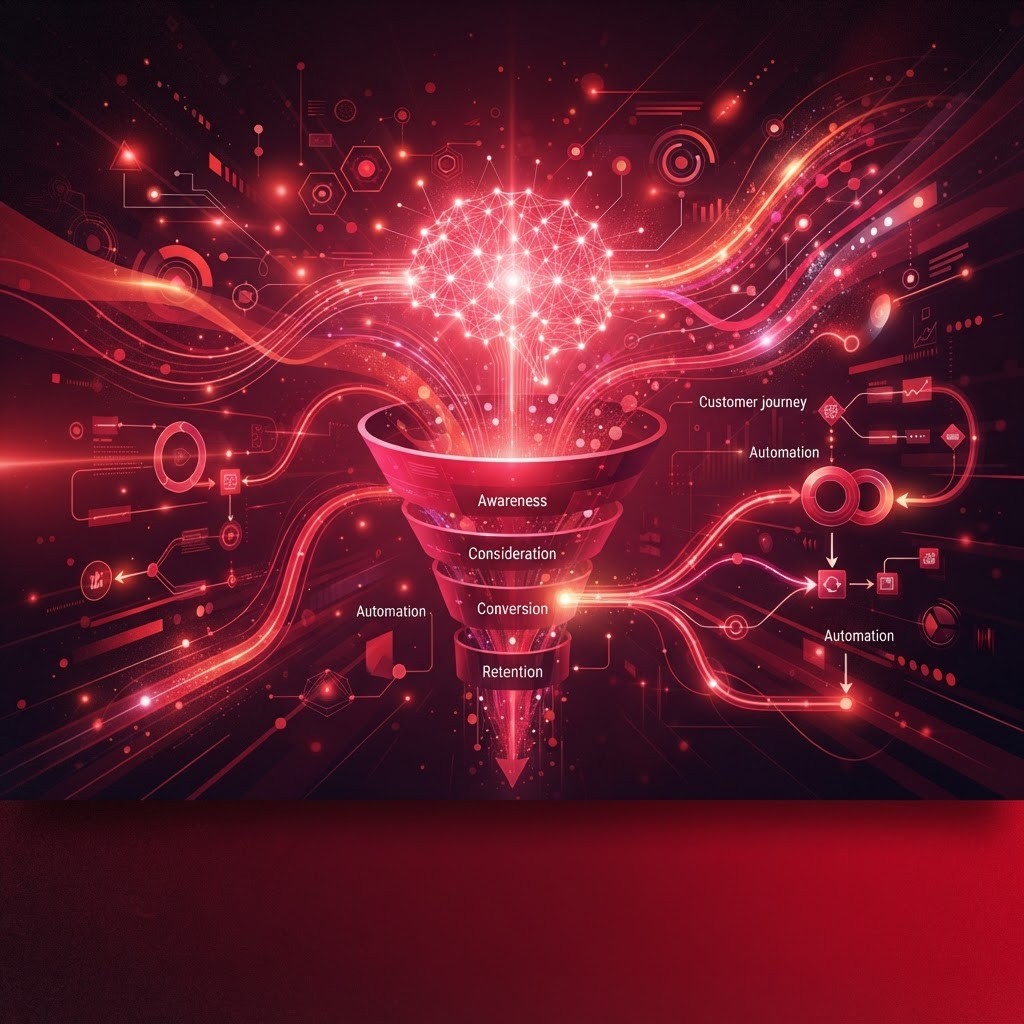
How to Use AI for Digital Marketing
Artificial intelligence is revolutionizing digital marketing by enabling personalization at scale, automating repetitive tasks, and providing deeper customer insights than ever before. Companies that effectively implement AI in their digital marketing strategies gain significant competitive advantages—from improved targeting and higher conversion rates to better customer retention and enhanced brand loyalty. Whether you're managing email campaigns, running social media initiatives, optimizing advertising spend, or analyzing customer data, AI offers powerful capabilities to amplify your results. This practical guide explores concrete ways to implement AI across all aspects of your digital marketing, from strategy to execution to measurement.
Understanding AI's Role in Modern Digital Marketing
AI isn't a replacement for traditional digital marketing—it's an amplifier and optimizer of marketing efforts. AI excels at analyzing vast datasets, identifying patterns, personalizing content, automating routine tasks, and predicting customer behavior. Machine learning algorithms improve continuously as they process more data and interactions. Natural language processing enables AI to understand customer intent and sentiment. Computer vision allows AI to analyze images and video content. By understanding these capabilities, you can identify specific areas where AI can maximize your marketing impact. The key is strategically applying AI where it adds the most value—where it's either impossible or inefficient to do with human effort alone.
AAMAX.CO: Your Partner in AI-Powered Digital Marketing
AAMAX.CO offers comprehensive digital marketing solutions that incorporate advanced AI technologies and strategic expertise. From AI-powered content creation and optimization to predictive analytics and customer segmentation, they help businesses unlock the full potential of artificial intelligence in their marketing. Their worldwide team understands diverse markets and customer behaviors, enabling them to customize AI implementations for maximum effectiveness. Whether you're launching your first AI initiative or scaling existing implementations, AAMAX.CO provides the strategic guidance, technical expertise, and proven frameworks to ensure your AI investment delivers measurable business results.
AI-Powered Customer Segmentation and Targeting
One of AI's most powerful marketing applications is sophisticated customer segmentation. Instead of manually creating a few audience segments, AI algorithms analyze hundreds of customer data points to create detailed, dynamic segments. These segments evolve as new customer data arrives, ensuring your targeting remains accurate and current. AI-powered segmentation considers behavior, demographics, purchase history, browsing patterns, engagement levels, and predictive indicators. For each segment, you can develop highly targeted marketing messages that resonate with that specific audience. Advanced segmentation dramatically improves campaign performance by ensuring marketing messages reach the right people at the right time with the right content.
Personalization at Scale with Machine Learning
Personalization has become a customer expectation, yet delivering truly personalized experiences to millions of customers would be impossible without AI. Machine learning algorithms analyze individual customer behavior to deliver personalized product recommendations, content suggestions, and messaging. E-commerce sites use AI recommendation engines to suggest products each customer is most likely to purchase. Email marketing platforms use AI to determine optimal send times for individual subscribers based on their historical engagement patterns. Website personalization engines dynamically adapt content based on visitor behavior and characteristics. This level of personalization dramatically improves engagement, conversion rates, and customer lifetime value.
Predictive Analytics for Customer Behavior
AI-powered predictive analytics allow you to forecast future customer behavior with remarkable accuracy. Identify which customers are most likely to purchase, which are at risk of churning, and which represent the highest lifetime value. Predict seasonal trends, demand fluctuations, and emerging market opportunities. Use churn prediction models to identify at-risk customers before they leave, enabling targeted retention campaigns. Lifetime value prediction helps you understand which customer segments are most valuable, informing budget allocation decisions. Propensity modeling identifies customers most likely to respond to specific offers or campaigns. These predictive insights transform marketing from reactive to proactive, enabling you to anticipate customer needs and market changes.
Automating Content Creation and Optimization
AI-powered content generation tools create draft content, headlines, email subject lines, and ad copy based on your specifications and performance data. These tools learn from high-performing content to generate new variations that likely perform well. AI can analyze your top-performing blog posts, social media updates, and emails to identify patterns and generate similar content. Generative AI models can create product descriptions, marketing copy, and promotional content at scale. While AI-generated content requires human review and editing, it dramatically accelerates content creation, allowing your team to produce more content more quickly. This is particularly valuable for email campaigns, social media content, and advertising copy.
Optimizing Paid Advertising Campaigns
AI dramatically improves the efficiency and effectiveness of paid advertising across platforms like Google Ads, Facebook Ads, and LinkedIn Ads. AI algorithms optimize bid strategies, adjusting bids in real-time to maximize ROI. Audience targeting becomes more sophisticated as AI identifies the most valuable audience segments for your specific campaigns. AI analyzes which ad creative, copy variations, and landing pages perform best for different audience segments and continuously optimizes toward winning combinations. Attribution modeling powered by AI helps you understand the contribution of each touchpoint in the customer journey, improving budget allocation. Predictive analytics identify which campaigns will perform best before full launch, allowing you to adjust strategy early.
Enhancing Email Marketing Effectiveness
AI transforms email marketing from batch-and-blast to highly sophisticated, personalized communication. AI algorithms determine the optimal send time for each individual subscriber based on their past email engagement patterns. Subject line optimization uses AI to test and identify most effective subject line approaches for different segments. Email content adapts dynamically based on subscriber preferences, behavior, and demographics. Predictive analytics identify which subscribers are most likely to engage with which types of content, enabling targeted segmentation. AI identifies the best frequency to contact each subscriber—too many emails and they unsubscribe, too few and they forget about your brand. These optimizations significantly improve open rates, click rates, and conversion rates.
Implementing Conversational AI and Chatbots
Conversational AI through chatbots and virtual assistants provides 24/7 customer engagement and support. These systems use natural language processing to understand customer questions and provide relevant answers or recommendations. AI chatbots can qualify leads, answer FAQs, guide customers through your website, recommend products, and escalate to humans when needed. They gather valuable data about customer questions, pain points, and preferences. Chatbots improve customer experience by providing instant support while reducing your support team's workload. Advanced chatbots learn from interactions, continuously improving their responses and accuracy. This technology is particularly valuable for e-commerce sites, SaaS platforms, and service businesses.
Leveraging Social Media Intelligence and Listening
AI-powered social listening tools monitor millions of social media conversations to understand what people are saying about your brand, competitors, and industry. Sentiment analysis determines whether mentions are positive, negative, or neutral. Topic modeling identifies which issues, products, and features generate the most conversation. Influencer identification surfaces key voices in your industry who could amplify your message. Trend detection identifies emerging topics relevant to your industry before they go mainstream, enabling proactive content strategies. This intelligence helps you understand customer sentiment, identify opportunities and threats, and develop more relevant marketing strategies.
Measuring and Optimizing Marketing Performance
AI analytics platforms provide deeper insights into marketing performance than traditional analytics tools. These systems can correlate marketing activities with business outcomes, showing the direct impact of specific campaigns on revenue and customer metrics. Multi-touch attribution models powered by AI understand the contribution of each marketing touchpoint in driving conversions. Predictive analytics forecast campaign performance and ROI before full launch. Anomaly detection identifies unusual patterns that might indicate problems or opportunities. Marketing mix modeling optimizes the allocation of budget across different channels and tactics. These advanced analytics enable continuous optimization of your marketing strategy based on data-driven insights.
Conclusion: Embracing AI for Marketing Excellence
The integration of AI into digital marketing is no longer optional—it's becoming essential for competitive success. By strategically implementing AI across customer segmentation, personalization, predictive analytics, automation, and optimization, you can dramatically improve marketing efficiency and effectiveness. Start with your highest-impact opportunities, learn from results, and scale successful implementations. Consider partnering with experienced providers who understand both AI capabilities and marketing strategy. With the right approach and tools, AI becomes a powerful lever for driving customer acquisition, engagement, and lifetime value. The future of digital marketing is increasingly AI-driven, and the time to embrace it is now.
