
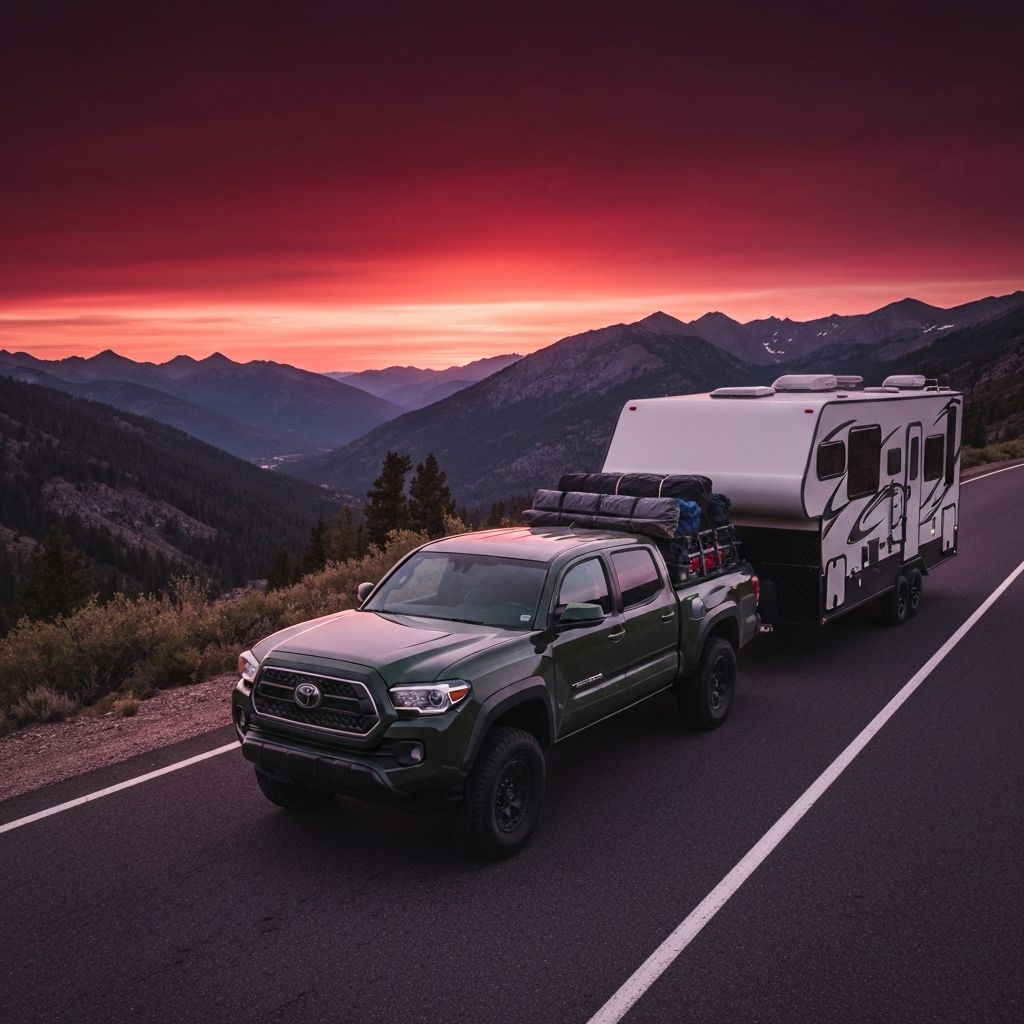
Toyota Tacoma: A Trusted Mid-Size Truck
The Toyota Tacoma has been one of the best-selling mid-size pickup trucks in the United States for decades. Known for its exceptional reliability, rugged off-road capability, and strong resale value, the Tacoma has earned a devoted following among truck enthusiasts, outdoor adventurers, and everyday drivers alike. One of the key questions potential Tacoma buyers and current owners frequently ask is about the truck's towing capacity, as towing is an important capability for many pickup truck owners.
Whether you need to tow a small utility trailer for weekend projects, a boat for lake trips, a camper trailer for family vacations, or equipment for work, understanding your Tacoma's towing capacity is essential for safe and efficient towing. Exceeding the manufacturer's specified towing capacity can lead to dangerous situations, including reduced braking effectiveness, loss of vehicle control, transmission overheating, and accelerated wear on critical drivetrain components.
The towing capacity of the Toyota Tacoma varies depending on the model year, engine, drivetrain configuration, cab size, and whether the vehicle is equipped with the optional Tow Package. In general, the Tacoma offers competitive towing capacity for its class, making it a versatile choice for owners who need a truck that can handle both daily driving and occasional towing duties.
Towing Capacity by Model Year and Configuration
The current generation Toyota Tacoma offers a range of towing capacities depending on the specific configuration. The most recent models equipped with the standard 2.4-liter turbocharged four-cylinder engine and the tow package can achieve a maximum towing capacity of up to 6,500 pounds. This places the Tacoma competitively within the mid-size truck segment, though it trails some competitors like the Chevrolet Colorado and Ford Ranger in maximum towing capability.
Previous generation Tacomas (2016-2023) equipped with the 3.5-liter V6 engine and the Tow Package had a maximum towing capacity of 6,800 pounds. The base 2.7-liter four-cylinder engine in these models was rated for a maximum towing capacity of approximately 3,500 pounds, which was suitable for lighter loads but limited for heavier towing applications.
The drivetrain configuration also affects towing capacity. Generally, two-wheel-drive (2WD) Tacomas have slightly higher towing capacities than their four-wheel-drive (4WD) counterparts. This is because the additional weight of the 4WD system reduces the amount of weight the truck can safely tow within its Gross Combined Weight Rating (GCWR). The difference is typically a few hundred pounds, but it is important to check the specific towing capacity for your exact configuration.
Cab size is another factor that influences towing capacity. Access Cab (extended cab) models generally have slightly higher towing capacities than Double Cab (crew cab) models because they weigh less. The additional weight of the larger cab and seating reduces the available payload and towing capacity. Again, the difference is typically modest, but it is important to reference the specific towing capacity chart for your model to ensure you stay within safe limits.
Understanding Towing Terminology
To fully understand your Tacoma's towing capabilities, it is important to familiarize yourself with several key towing terms. Towing capacity refers to the maximum weight of a trailer and its contents that the vehicle can safely pull. This figure is determined by the manufacturer based on extensive testing and takes into account the vehicle's engine power, transmission, brakes, suspension, frame strength, and cooling system capacity.
Gross Vehicle Weight Rating (GVWR) is the maximum total weight of the vehicle, including passengers, cargo, fuel, and accessories. This figure represents the maximum weight the vehicle's chassis, suspension, and braking system are designed to handle. Exceeding the GVWR, even without towing, can compromise vehicle safety and performance.
Gross Combined Weight Rating (GCWR) is the maximum total weight of the vehicle plus the trailer and its contents. This figure includes the weight of the truck itself, all passengers and cargo in the truck, the weight of the trailer, and everything loaded on or in the trailer. The GCWR is a critical safety limit that should never be exceeded.
Payload capacity is the maximum weight that can be carried in the truck's cab and bed, including passengers, cargo, and the tongue weight of any trailer being towed. Tongue weight is the downward force exerted on the hitch by the trailer coupling. Proper tongue weight, typically 10 to 15 percent of the total trailer weight, is essential for stable towing. Too little tongue weight can cause the trailer to sway, while too much can overload the rear axle and reduce steering effectiveness.
The Toyota Tow Package
The optional Tow Package is an important upgrade for Tacoma owners who plan to tow regularly. This package typically includes several components that enhance the truck's towing capability and safety. The specific contents of the Tow Package may vary slightly by model year and trim level, but generally include a transmission oil cooler, a heavier-duty radiator or additional cooling capacity, a four-pin and seven-pin trailer wiring harness, a Class IV trailer hitch receiver, and a trailer brake controller pre-wire or integrated trailer brake controller.
The transmission oil cooler is particularly important for towing, as it helps keep the automatic transmission fluid at a safe operating temperature during the increased load of towing. Transmission overheating is one of the most common issues associated with towing, and an aftermarket or factory-installed cooler can significantly extend the life of the transmission by preventing heat-related damage.
The trailer wiring harness allows the truck's electrical system to communicate with the trailer's lights, including turn signals, brake lights, running lights, and auxiliary power. The seven-pin connector also provides a connection for electric trailer brakes, which are essential for safely towing heavier trailers. Without properly functioning trailer lights, towing is both illegal and extremely dangerous.
Tips for Safe Towing with a Tacoma
Safe towing requires more than just knowing your truck's maximum towing capacity. Proper preparation, loading, driving technique, and maintenance are all essential for a safe and successful towing experience. Before every towing trip, verify that your total trailer weight, including all cargo, is within your Tacoma's specified towing capacity and that the tongue weight falls within the recommended range of 10 to 15 percent of the total trailer weight.
Proper weight distribution is critical for stable towing. Load heavier items in the front of the trailer, near the axle, and distribute weight evenly from side to side. Uneven loading can cause the trailer to sway, lean, or fishtail, creating a dangerous situation that can be difficult to control. If you are towing a travel trailer or camper, make sure all cabinets and storage areas are secured and that no items can shift during transit.
Adjust your driving habits when towing. Reduce your speed, as higher speeds increase the risk of trailer sway and significantly increase stopping distances. Allow extra following distance behind the vehicle in front of you, as the added weight of the trailer means it will take longer to stop. Use lower gears when driving on hills to reduce strain on the engine and transmission, and avoid riding the brakes on long descents; instead, use engine braking by downshifting to control your speed.
Check your trailer's brakes, lights, and tires before every trip. Trailer tires should be properly inflated and in good condition, with adequate tread depth. Brake lights, turn signals, and running lights should all be functioning correctly. If your trailer has electric brakes, test them to ensure they engage properly and provide adequate stopping force.
Aftermarket Upgrades for Better Towing
While the Toyota Tacoma is a capable towing vehicle in stock form, several aftermarket upgrades can enhance its towing performance and safety. Aftermarket suspension upgrades, such as air springs or helper springs, can improve the truck's ability to handle heavy tongue weights by preventing rear squat and maintaining a level ride height. This not only improves handling and stability but also keeps the headlights properly aimed, which is important for visibility during nighttime towing.
Aftermarket exhaust systems and performance tuners can provide modest increases in horsepower and torque, which can make towing feel less strained, particularly on hills and during acceleration. However, it is important to note that these modifications do not increase the truck's official towing capacity, as the factory rating accounts for the structural and mechanical limits of the entire vehicle, not just the engine.
Upgraded brake pads and rotors can improve stopping performance when towing, providing shorter stopping distances and greater confidence in emergency braking situations. For frequent heavy towing, consider upgrading to high-performance brake components that are designed to handle the additional heat and stress generated by towing.
The Toyota Tacoma is a versatile and reliable mid-size truck that offers competitive towing capacity for its class. By understanding your specific model's towing ratings, properly equipping your truck with the Tow Package, and following safe towing practices, you can confidently use your Tacoma for a wide range of towing applications, from weekend recreation to daily work needs.
