
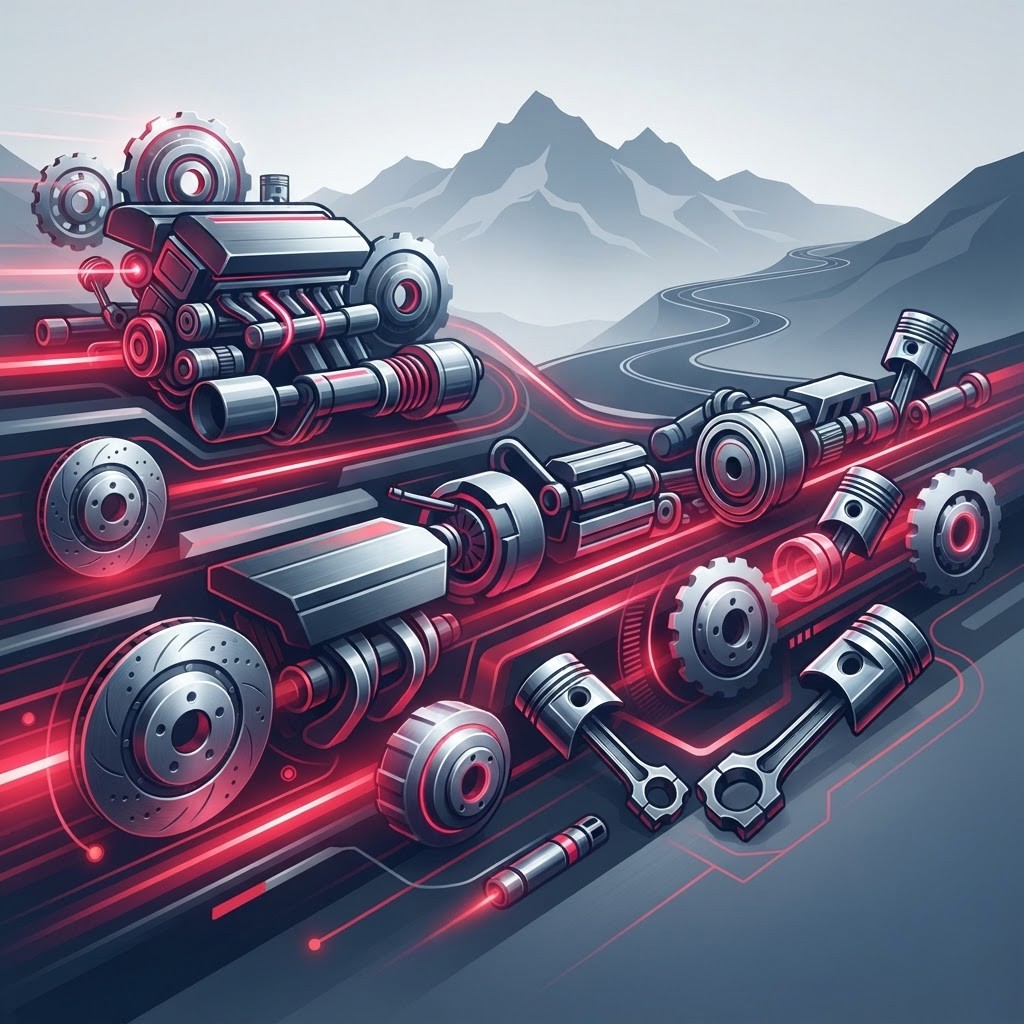
The Backbone of Austria's Automotive Aftermarket
Austria's automotive aftermarket depends on a robust network of auto parts wholesalers that keep independent workshops, franchised dealerships, and retailers stocked with everything from brake components to electronic sensors. With a vehicle fleet that values reliability and longevity, Austrian motorists and repair professionals demand parts that meet strict quality standards. Wholesalers bridge the gap between manufacturers and the front-line businesses that keep vehicles safely on the road.
The country's position within Central Europe gives its wholesalers efficient access to major manufacturing centers across Germany, Italy, and beyond. This connectivity, combined with well-developed logistics, allows Austrian distributors to offer deep inventories and rapid delivery, often multiple times per day to workshops that cannot afford downtime.
What Sets Top Auto Parts Wholesalers Apart
The most successful wholesalers compete on availability, breadth, and speed. Workshops need the right part at the right moment, so same-day or even multiple daily deliveries are a critical differentiator. Leading distributors maintain enormous catalogs covering both original equipment and quality aftermarket parts across a wide range of vehicle makes and model years.
Technical support is another hallmark of excellence. Top wholesalers provide detailed catalog systems that help technicians identify the correct part quickly, reducing errors and returns. Many offer diagnostic support, technical bulletins, and training to help workshops keep up with increasingly complex vehicle technology. This advisory role has become more important as electric and hybrid vehicles introduce new components and service requirements.
Categories of Wholesalers in the Market
The Austrian auto parts wholesale market includes several distinct models. Full-range distributors stock comprehensive inventories spanning wear parts, service components, electrical systems, and body parts. Their scale allows them to serve large numbers of workshops efficiently and negotiate competitive pricing with suppliers.
Specialist wholesalers focus on particular categories such as tires, lubricants, batteries, or performance components. Their deep expertise makes them valuable partners for workshops with specific needs. Brand-focused distributors concentrate on specific vehicle manufacturers, offering original equipment parts and specialized knowledge for particular marques.
Buying groups and cooperative networks also feature prominently, enabling independent workshops and retailers to access competitive pricing and shared logistics. These cooperative structures help smaller businesses compete against larger chains while maintaining their independence.
Quality, Warranties, and Compliance
Quality assurance is fundamental in auto parts distribution because safety is at stake. Reputable wholesalers guarantee that parts meet or exceed original equipment standards and comply with relevant EU regulations. Clear warranty policies protect workshops and their customers, while transparent sourcing ensures that only genuine, properly certified components enter the supply chain.
The rise of counterfeit parts in global markets has made trusted wholesale relationships more valuable than ever. Workshops rely on distributors who can guarantee authenticity and provide the documentation needed for warranty claims and quality accountability.
Technology and the Future of Distribution
Digital transformation is reshaping auto parts wholesale. Sophisticated online ordering platforms integrate with workshop management systems, enabling technicians to identify parts by vehicle identification number, check live availability, and place orders in seconds. Real-time inventory visibility and predictive stocking help wholesalers meet demand while minimizing capital tied up in slow-moving parts.
The shift toward electric mobility is prompting wholesalers to expand into new component categories, from high-voltage batteries to specialized electronic modules. Distributors who invest early in electric-vehicle expertise and inventory are positioning themselves for the next phase of the aftermarket. At the same time, demand for maintenance parts for combustion vehicles will remain strong for many years, ensuring a stable core business.
Choosing the Right Partner
Workshops and retailers selecting a wholesaler should weigh delivery frequency, catalog depth, technical support, and return policies. Reliability during peak periods, accuracy of parts identification, and responsiveness to urgent orders often matter more than marginal price differences. A wholesaler who invests in training and digital tools helps workshops operate more efficiently and profitably.
Serving a Diverse Vehicle Landscape
Austria's vehicle fleet is notably diverse, spanning passenger cars, commercial vans, heavy trucks, agricultural machinery, and an expanding range of hybrids and electric vehicles. This diversity places significant demands on wholesalers, who must stock parts for an enormous variety of makes, models, and generations. Rural regions rely heavily on commercial and agricultural vehicles, while urban centers see growing electric-vehicle adoption, each requiring different inventory strategies. The best wholesalers segment their offering to serve these varied needs, maintaining fast-moving service parts for common vehicles while also sourcing harder-to-find components for older or specialized models. Seasonal factors, such as winter tire demand and cold-weather servicing, add further complexity that experienced distributors manage skillfully. By understanding the full breadth of Austria's vehicle landscape and stocking accordingly, leading wholesalers ensure that workshops can serve virtually any customer that comes through their doors.
Conclusion
Austria's auto parts wholesalers form the dependable backbone of a demanding automotive aftermarket. Through deep inventories, rapid logistics, technical expertise, and strict quality standards, they enable workshops and retailers to serve motorists reliably. As the industry navigates the transition to electric mobility and digital ordering, the best wholesalers will continue to differentiate themselves through service, authenticity, and forward-looking investment.
