
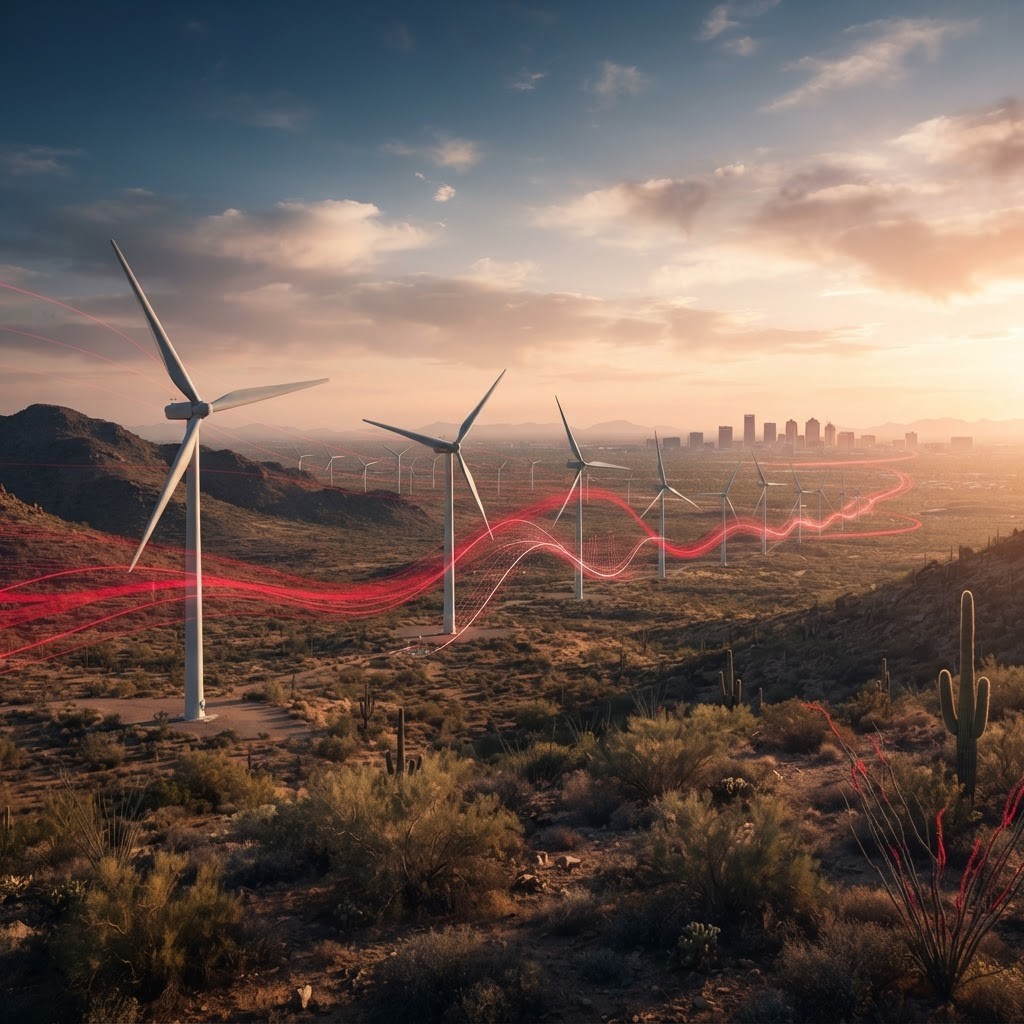
How Wind Power Reaches Phoenix
Solar dominates Phoenix's renewable identity, but wind contributes valuable geographic and hourly diversity to the regional grid. Many wind facilities serving Arizona customers are located outside the metro area where resources are stronger. Phoenix nonetheless hosts utilities, developers, construction firms, engineering talent, and major electricity users that make projects possible. The following companies participate in wind generation, procurement, development, technology, or infrastructure relevant to the Valley.
1. Salt River Project
Salt River Project supplies electricity across much of metropolitan Phoenix and includes wind resources in its generation portfolio. The utility evaluates long-term power purchases, transmission, and reliability alongside customer programs. Wind can complement daytime solar by producing under different weather and seasonal patterns.
2. Arizona Public Service
Arizona Public Service procures renewable electricity and integrates it into the state's largest utility system. Its planning work balances customer growth, affordability, grid stability, and emissions goals. The company's purchasing decisions can support wind projects across the broader Southwest even when turbines are far from Phoenix.
3. NextEra Energy Resources
NextEra Energy Resources is one of North America's largest renewable energy developers and operators, with extensive wind expertise. The company develops projects, manages assets, and supplies power through long-term agreements. Its scale supports sophisticated forecasting, financing, procurement, and operations across regional energy markets.
4. AES Clean Energy
AES Clean Energy develops and operates renewable generation and storage serving utilities and commercial buyers. Its portfolio approach allows wind to be combined with solar and batteries in customer supply strategies. Large energy users increasingly value this ability to structure cleaner electricity across more hours.
5. EDF Renewables
EDF Renewables develops, builds, and operates wind, solar, and storage projects throughout North America. It also offers asset optimization and distributed energy services. Experience across the full project lifecycle is important because wind facilities require years of development followed by decades of maintenance and community engagement.
6. Invenergy
Invenergy is a major privately held developer and operator of sustainable energy infrastructure. Its wind capabilities span site selection, commercial agreements, construction, and long-term operation. The company works with utilities and corporate purchasers seeking dependable large-scale renewable supply.
7. Pattern Energy
Pattern Energy develops and operates wind projects and associated transmission infrastructure. Its projects emphasize long-term relationships with landowners and host communities. That approach is essential in the Southwest, where energy development must account for ranching, wildlife, cultural resources, and local economic goals.
8. Vestas
Vestas is a global wind turbine manufacturer and service provider. It supplies turbine platforms, monitoring, maintenance, and performance expertise used across North American projects. Technology selection matters because turbine design must fit local wind conditions, transportation constraints, and expected operating life.
9. GE Vernova
GE Vernova provides wind turbines, grid technology, and power-system expertise. Its equipment and digital services support generation and the networks that carry renewable electricity to demand centers such as Phoenix. Grid controls and transmission hardware are increasingly important as renewable penetration grows.
10. McCarthy Building Companies
McCarthy maintains a large Phoenix presence and extensive renewable construction capabilities. Although widely recognized for solar work, the company participates in complex energy infrastructure and brings regional expertise in safety, logistics, civil construction, and workforce management. Those skills are foundational to successful utility-scale projects.
What Makes a Strong Wind Company
Wind development begins with years of resource measurements, land agreements, wildlife studies, transmission analysis, and public review. Strong developers communicate with communities early and build realistic plans for roads, equipment delivery, decommissioning, and tax benefits. Manufacturers and service providers must demonstrate reliability, parts availability, and safe maintenance practices.
Wind Trends Affecting Arizona
Taller towers and larger rotors can access resources that older technology could not use economically. Better forecasting helps grid operators schedule generation, while batteries and geographically diverse projects smooth supply. New transmission remains a major constraint because excellent wind locations are often distant from Phoenix load centers.
Organizations buying wind energy should review contract duration, delivery location, environmental attributes, credit strength, and expected generation shape. The most credible companies combine sound engineering with transparent community practices and long-term operational capacity. Wind will likely remain one part of a diverse Arizona portfolio, complementing solar, storage, efficiency, and firm generation as Phoenix continues to grow.
Lifecycle Operations
Wind performance over decades depends on inspection, predictive maintenance, spare-parts planning, and safe technician access. Operators monitor vibration, temperature, power curves, and weather to detect developing faults before they create extended outages. Environmental commitments continue after construction through wildlife monitoring and adaptive practices where required. Landowner payments, road maintenance, emergency coordination, and community communication should remain reliable after construction crews leave. Near the end of service, repowering may replace equipment with newer technology, while decommissioning requires removal and site restoration according to agreements and permits. Electricity buyers should consider this complete lifecycle, along with operator experience and financial strength. Dependable wind generation comes from durable operating systems and responsible relationships, not simply from installing turbines in a location with a promising resource.
