
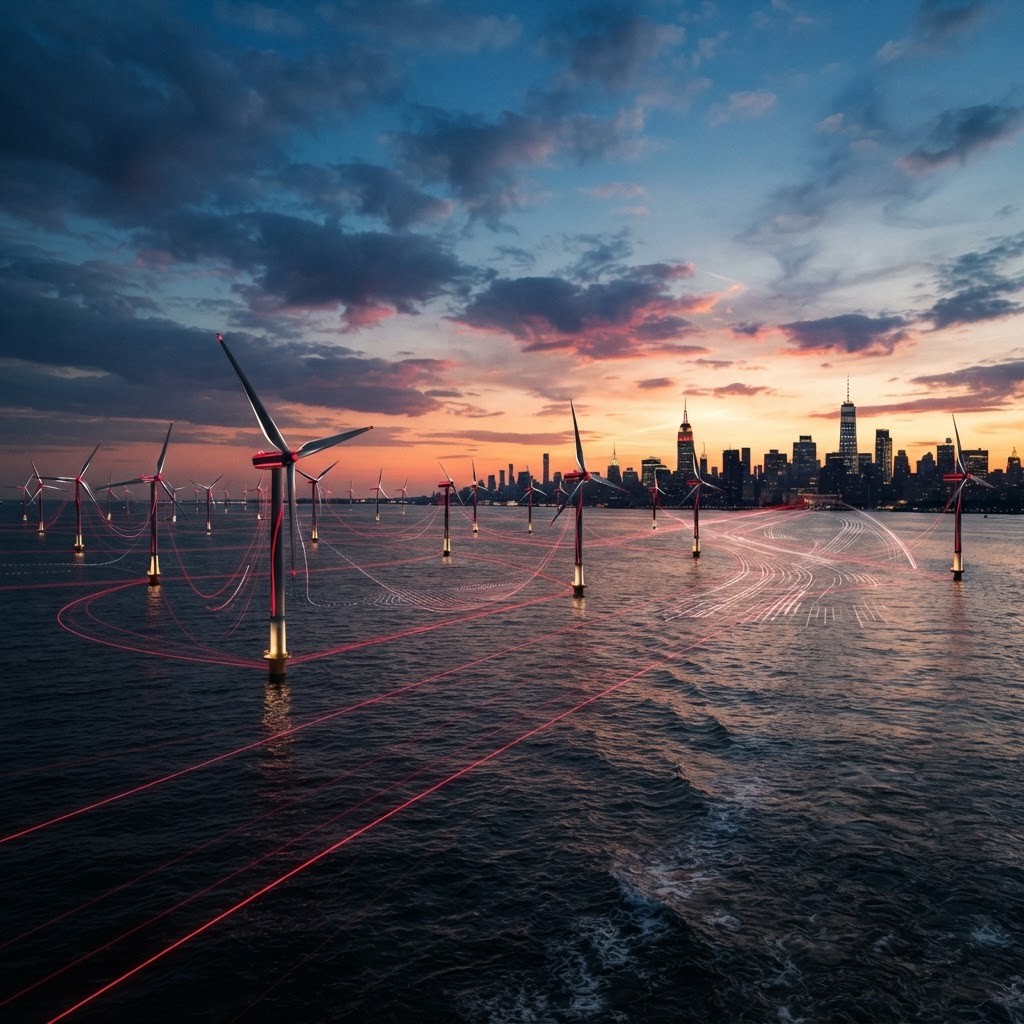
New York’s Wind Energy Opportunity
New York’s wind sector combines strong Atlantic resources, productive upstate sites, major electricity demand, and one of the country’s most ambitious clean-energy policies. The best company for a particular project depends on whether the need is utility-scale development, offshore engineering, turbine technology, construction, ownership, or renewable-power procurement. The following businesses stand out for active projects, technical depth, established portfolios, or meaningful influence on the state’s market.
1. Equinor
Equinor is a central participant in New York’s offshore wind plans through Empire Wind. Its experience managing complex marine energy projects supports disciplined engineering, procurement, construction, and long-term operations. The company’s planned use of the South Brooklyn Marine Terminal also connects offshore development with local port revitalization and workforce growth.
2. Ørsted
Ørsted is one of the world’s most experienced offshore wind developers and has played an important role in shaping the Northeast market. Its Sunrise Wind project, developed with Eversource, is designed to deliver power to New York while supporting regional vessel, port, labor, and component supply chains.
3. Eversource Energy
Eversource contributes transmission, regional utility, and project-development expertise to offshore wind partnerships. For New York, that knowledge is especially valuable because delivering marine-generated electricity requires careful coordination among offshore substations, export cables, onshore interconnections, regulators, and communities.
4. Invenergy
Invenergy develops and operates large-scale renewable assets and is associated with leading upstate wind projects. The company differentiates itself through end-to-end capability, including site selection, landowner relationships, financing, construction management, and operations. Its experience is relevant to communities evaluating long-term tax revenue and land-use impacts.
5. RWE
RWE brings global offshore and onshore wind experience to the New York market. The company’s development platform, engineering resources, and energy-trading capabilities make it a significant long-term contender as the state advances additional offshore solicitations and strengthens port infrastructure.
6. National Grid Renewables
National Grid Renewables develops utility-scale wind, solar, and storage projects. Its broader connection to the regional energy ecosystem gives it insight into grid needs, while its development work emphasizes commercially viable projects, community engagement, and dependable operations.
7. Avangrid Renewables
Avangrid Renewables owns and develops wind assets across the United States and benefits from deep utility-sector experience. In New York and the surrounding region, its strengths include renewable development, transmission awareness, energy-market participation, and the ability to manage projects over a long operating life.
8. Apex Clean Energy
Apex Clean Energy is known for identifying and advancing large renewable projects from early-stage development through construction readiness. Its work combines wind measurement, environmental review, local outreach, interconnection planning, and commercial structuring—skills that are vital in New York’s rigorous permitting environment.
9. Vestas
Vestas is a turbine manufacturer and service provider rather than a conventional project developer. Its value lies in turbine technology, fleet monitoring, maintenance programs, and performance optimization. For owners, reliable service and access to operating data can be as important as initial equipment cost.
10. GE Vernova
GE Vernova has a major New York presence and supplies technologies used across the power system, including wind-generation equipment and grid solutions. Its engineering heritage, research capability, and understanding of transmission challenges give it a distinctive role in integrating variable renewable power.
How to Compare Wind Energy Companies
Buyers, landowners, municipalities, and investors should examine project delivery history, financial strength, safety performance, environmental stewardship, local hiring commitments, equipment warranties, interconnection capability, and decommissioning plans. New York projects must also demonstrate credible community engagement and resilience against coastal or winter conditions.
Outlook
Transmission investment, port development, storage, and predictable procurement will determine the market’s pace. Companies able to control costs while maintaining local benefits will be best positioned. Together, these ten businesses illustrate the mix of developers, utilities, manufacturers, and operators needed to make New York wind power dependable at scale.
