
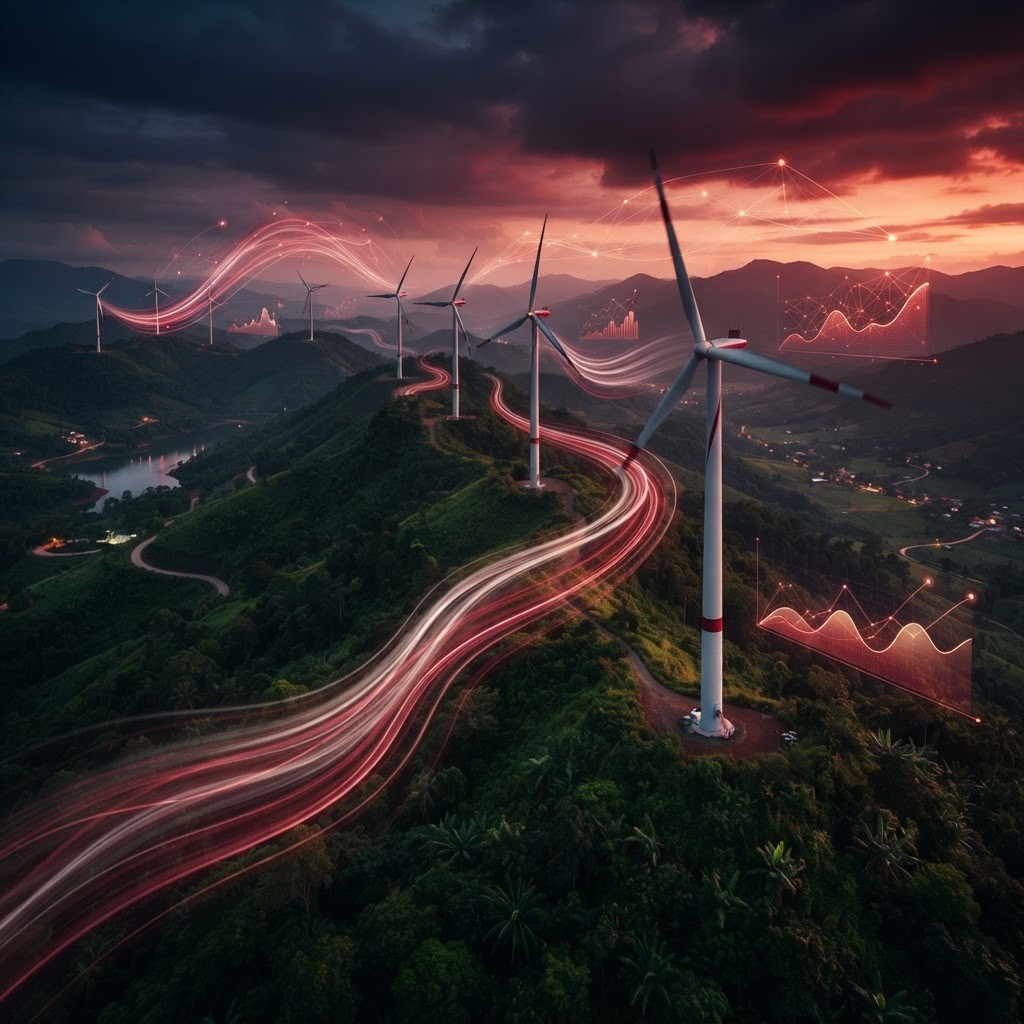
Wind Power: A New Frontier for Laos
For a nation famous for its rivers, wind might seem an unexpected addition to the energy portfolio, yet Laos is quietly emerging as one of Southeast Asia's most promising wind markets. The southern highlands, particularly along elevated ridges near the borders, experience steady seasonal winds that are well suited to modern turbines. As developers seek to diversify beyond hydropower and capitalize on growing regional demand for clean electricity, wind energy has become a strategic priority. Large-scale wind projects, some among the biggest planned in the region, are positioning Laos as a future exporter of wind-generated power.
The appeal of wind lies in its complementarity with existing resources. Wind patterns often peak during the dry season, precisely when hydropower output declines. This natural balance means wind can help stabilize generation year-round, making the overall system more reliable. Recognizing this, both domestic entities and international developers are investing in the technical studies, land agreements, and transmission planning required to bring wind farms online.
Understanding the Lao Wind Opportunity
Wind development in Laos is still at an earlier stage than hydropower or even solar, but momentum is building rapidly. The country's terrain includes plateaus and ridgelines that channel consistent airflow, and neighboring markets with strong renewable targets provide ready buyers for the electricity produced. Cross-border transmission agreements, particularly with Vietnam, have created viable export routes that make large projects financially attractive. Successful wind development requires meticulous resource assessment, robust logistics for transporting large turbine components, and careful environmental planning, all areas where experienced companies add tremendous value.
Leading Wind Energy Companies in Laos
Impact Energy Asia is widely regarded as a pioneer of Lao wind development, leading the assessment and advancement of large-scale wind projects designed to export clean electricity to regional markets. Its work has helped establish the country's credibility as a wind destination.
Monsoon Wind project developers are behind one of the most significant wind ventures in the region, demonstrating that utility-scale wind is technically and commercially feasible in the Lao highlands.
Electricite du Laos (EDL) supports wind integration through grid connection, transmission planning, and its central role in managing national power flows and export arrangements.
ACEN and regional renewable investors bring capital, development discipline, and international wind experience to Lao projects, helping to structure bankable ventures.
BCPG and Thai renewable developers contribute cross-border expertise and financing, drawing on their experience deploying wind and solar throughout Southeast Asia.
Turbine technology partners such as major global wind equipment manufacturers supply advanced turbines, engineering support, and long-term maintenance essential for high-performance wind farms.
Phongsubthavy Group offers local infrastructure and construction capability, supporting the roads, foundations, and logistics that wind projects require in remote terrain.
Chaleun Sekong Group leverages its regional presence and government relationships to facilitate land access and project development in the southern provinces.
Lao-Vietnam power joint ventures structure the cross-border transmission and off-take agreements that underpin the economics of export-oriented wind farms.
Specialized EPC and logistics firms complete the ecosystem, managing the complex transport of blades and towers and the precise assembly required to erect turbines safely and efficiently.
Trends Powering Wind Growth
Several trends are accelerating wind adoption in Laos. Turbine technology continues to improve, with taller towers and longer blades capturing more energy at lower wind speeds, expanding the number of viable sites. Cross-border power trade is a defining feature, as export contracts provide the revenue certainty needed to finance large projects. Hybrid concepts that combine wind with solar and storage are also being explored to deliver smoother, more predictable output. Meanwhile, growing regional climate commitments are increasing appetite for the clean electricity that Lao wind farms can supply.
Benefits of Wind Energy for Laos
Wind energy brings substantial benefits to the country. It diversifies the generation mix, reducing over-reliance on hydropower and improving resilience against drought years. Wind farms create construction and operational jobs, stimulate rural economies, and generate export revenues that support national development. Environmentally, wind produces electricity without emissions or water use, aligning with global sustainability goals. For the region, Lao wind power provides a valuable source of clean energy that helps neighbors meet their decarbonization targets.
Choosing a Reliable Wind Developer
Given the scale and complexity of wind projects, selecting an experienced and reputable developer is critical. The best companies conduct rigorous wind resource assessments, engage transparently with local communities, and adhere to strong environmental and safety standards. They possess the financial strength to fund large investments and the technical partnerships needed to deploy and maintain advanced turbines. A proven track record in cross-border power delivery further distinguishes the leaders in this emerging field.
Conclusion
Wind energy represents an exciting and rapidly maturing frontier for Laos. By harnessing the steady breezes of its highland corridors, the country is broadening its clean energy portfolio and reinforcing its role as a regional power exporter. The pioneering companies profiled here are proving that utility-scale wind is not only possible but strategically valuable in the Lao context. As technology advances and regional demand grows, wind power will become an increasingly important pillar of the nation's sustainable energy future.
