
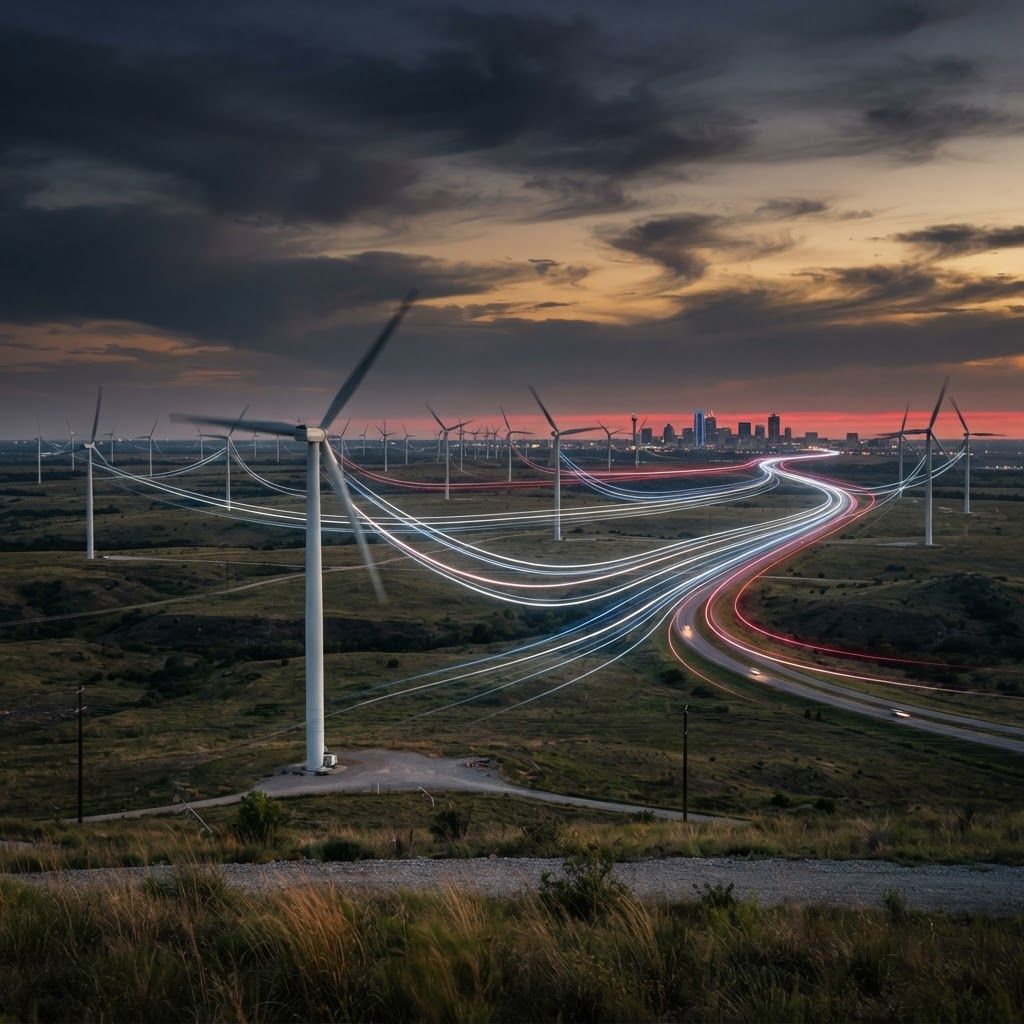
Fort Worth’s Connection to Texas Wind Power
West Texas and the Panhandle contain exceptional wind resources, while Fort Worth supplies finance, legal services, engineering, transportation, and corporate demand. Power reaches North Texas through a vast competitive grid and transmission network. Today’s industry priorities include repowering older turbines, adding storage, improving forecasting, managing congestion, recycling components, and strengthening community relationships. The following companies have regional or statewide importance for Fort Worth businesses and energy professionals, though not every company maintains its headquarters inside the city.
1. Tri Global Energy
Tri Global Energy emerged from the Dallas-Fort Worth region as a developer of large wind projects, often building early relationships with landowners and communities. Its project pipeline helped attract investment into rural Texas. The company demonstrates how local development expertise can connect land, transmission opportunity, capital, and eventual long-term ownership.
2. Leeward Renewable Energy
Leeward Renewable Energy owns and operates wind assets across the United States and has substantial Texas connections. Its capabilities extend from development and acquisitions to operations and repowering. That lifecycle approach is increasingly important as early-generation Texas wind farms evaluate larger turbines, improved controls, and renewed power contracts.
3. NextEra Energy Resources
NextEra Energy Resources is among the largest wind owners and operators in North America, with a major Texas portfolio. Its scale supports sophisticated forecasting, maintenance, financing, and market participation. Fort Worth companies may encounter its projects through renewable procurement, wholesale power, land interests, or infrastructure partnerships.
4. RWE Clean Energy
RWE operates extensive onshore wind capacity and other clean-energy assets in Texas. The company brings global operating experience to ERCOT’s fast-moving market. Its investment in wind, solar, and storage reflects the trend toward diversified portfolios capable of balancing output and serving customer needs across more hours.
5. Ørsted
Ørsted’s United States onshore business includes Texas wind generation. The company applies large-scale development and operating experience to projects far from the coast. Its Texas activity illustrates how international energy businesses have helped expand competition, capital availability, and technical practices in the state.
6. Invenergy
Invenergy develops and operates wind generation as part of a wider portfolio that includes solar, storage, natural gas, and transmission. Texas remains a key market. Its integrated perspective is relevant because successful wind expansion increasingly depends on grid connections, flexible resources, and customized arrangements with large electricity users.
7. Apex Clean Energy
Apex Clean Energy originates and develops utility-scale wind projects and works with corporate buyers seeking renewable energy. Its development capabilities include site control, permitting, interconnection, resource assessment, and commercial structuring. Those disciplines determine whether promising wind resources become financeable operating assets.
8. Pattern Energy
Pattern Energy develops, owns, and operates wind and transmission projects, including significant infrastructure tied to Texas. The company’s attention to long-distance delivery is notable for Fort Worth because transmission constraints can separate low-cost generation from growing urban demand. New lines and careful planning are essential to future expansion.
9. GE Vernova
GE Vernova supplies wind turbines, controls, grid equipment, and energy technology used throughout the industry. Equipment manufacturers influence output, reliability, maintenance strategy, and project economics even when they do not own the wind farm. Operators should weigh turbine performance alongside parts availability, service capability, cybersecurity, and long-term support.
10. Vestas
Vestas is a major global turbine manufacturer and service provider with equipment across the United States, including Texas. Its technology and maintenance expertise support both new development and the aging fleet. Service agreements, condition monitoring, blade care, and component logistics are central differentiators as projects pursue higher availability.
Evaluating Wind Energy Partners
Landowners should examine lease duration, royalties, access roads, crop or grazing impacts, insurance, decommissioning security, and assignment provisions. Corporate buyers should assess contract settlement points, congestion, curtailment, credit, environmental attributes, and accounting treatment. Communities benefit from transparent tax, employment, road-use, and restoration commitments. For Fort Worth, wind remains both an energy resource and a professional-services ecosystem, with future value tied to transmission, storage, repowering, and responsible project operations.
