
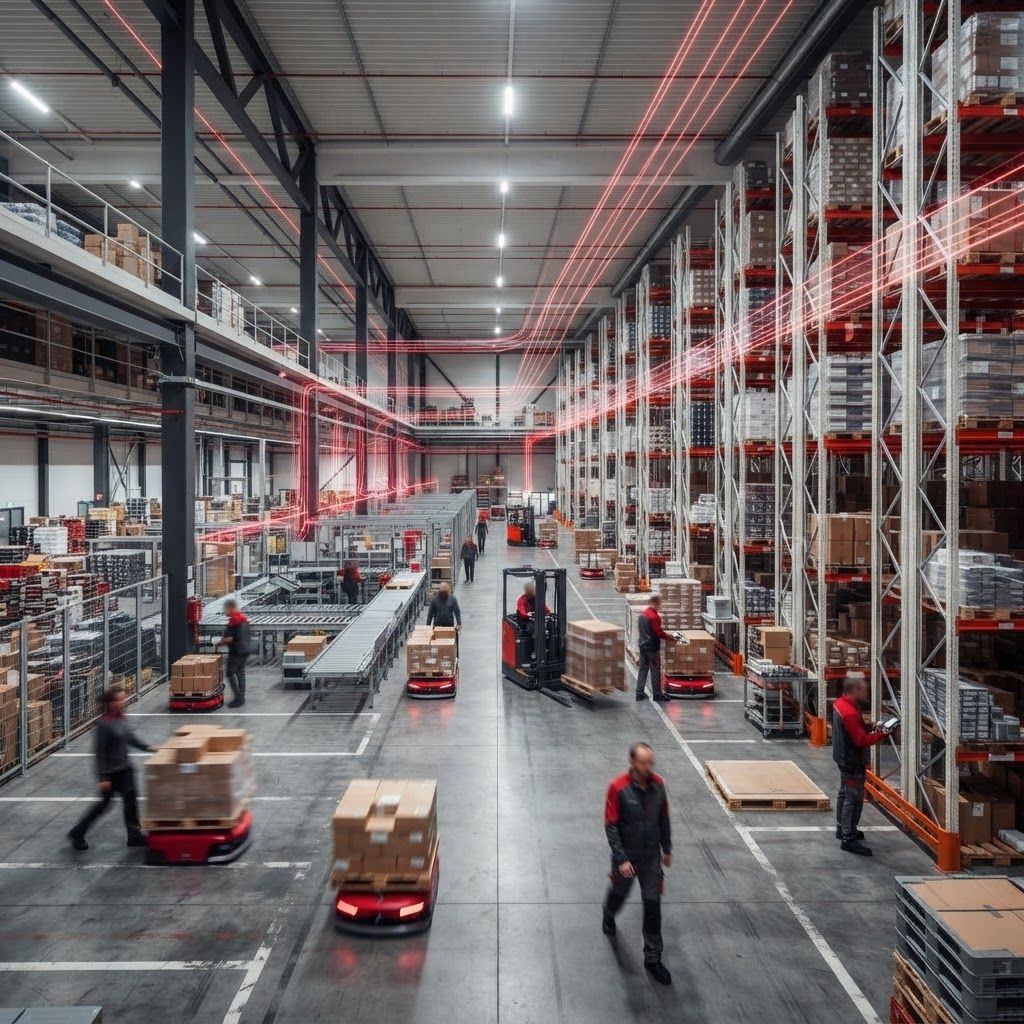
Indianapolis: A Prime Warehousing Location
The same central location that makes Indianapolis a logistics powerhouse also makes it an ideal place for warehousing. Businesses that store goods here can reach a large share of the U.S. population within a short delivery window, making the city a strategic node in national distribution networks. Abundant land, competitive costs, and a skilled workforce have attracted a robust warehousing industry that serves companies of every size.
From massive fulfillment centers to specialized cold storage, the warehousing options in Indianapolis are as diverse as the businesses they support. This depth gives companies the flexibility to find facilities and services precisely matched to their needs.
Types of Warehousing Available
Warehousing in Indianapolis spans a wide range of formats. Public warehouses offer shared space and services for businesses that need flexibility without long-term commitments. Contract and dedicated warehousing provide tailored solutions for companies with steady, high-volume needs. Distribution centers focus on rapid movement of goods, while fulfillment centers cater to the demands of e-commerce with pick, pack, and ship services.
Specialized facilities address specific requirements. Temperature-controlled and cold storage warehouses serve food, pharmaceutical, and other perishable products, while bonded warehouses handle imported goods under customs supervision. This variety ensures that virtually any storage need can be met locally.
Value-Added Services
Modern warehousing extends far beyond simple storage. Leading providers offer inventory management, order fulfillment, kitting and assembly, labeling, and cross-docking that speeds goods from inbound to outbound without lengthy storage. These value-added services allow businesses to outsource complex operations and focus on their core competencies.
Reverse logistics has become increasingly important as well. Handling returns efficiently is critical for e-commerce and retail, and top warehousing companies provide the systems and space to process returns, inspect products, and restock or dispose of items appropriately.
Technology in the Warehouse
Technology has transformed warehousing into a highly efficient, data-driven operation. Warehouse management systems track inventory in real time, optimize storage layouts, and streamline order processing. Automation, including conveyor systems, robotics, and automated storage and retrieval, boosts throughput and reduces errors. Barcode and RFID scanning provide accuracy and visibility throughout the facility.
These innovations translate into faster order fulfillment, lower costs, and greater reliability for the businesses that rely on them. The best warehousing companies continually invest in technology to stay ahead of rising customer expectations.
Choosing the Right Partner
Selecting a warehousing company involves weighing location, capacity, service offerings, and technological capabilities. Proximity to transportation networks and target markets affects delivery speed and cost, while the range of value-added services determines how much a provider can do on your behalf. Scalability is also key, ensuring the partner can grow with your business.
Security, cleanliness, and a strong track record round out the criteria for a dependable warehousing partner. Facilities with robust safety protocols and experienced staff protect both inventory and reputation.
Supporting Business Growth
For companies navigating the demands of modern commerce, the right warehousing partner is a powerful asset. Indianapolis offers an exceptional combination of location, infrastructure, and expertise that helps businesses store and distribute goods with confidence. By choosing a provider aligned with their goals, companies can build resilient, efficient supply chains that support long-term success.
Ten Warehousing Providers to Research
Businesses seeking Indianapolis-area capacity may consider Langham Logistics, FedEx Supply Chain, DHL Supply Chain, Ryder Supply Chain Solutions, Penske Logistics, Kenco, GXO Logistics, CEVA Logistics, Venture Logistics, and MD Logistics. These organizations range from locally rooted providers to global contract-logistics companies. Their strengths may include life-sciences handling, retail distribution, transportation integration, fulfillment, or dedicated operations. Facility locations and available space change over time, so a buyer should confirm that a provider currently has the required geography, certifications, capacity, and service model.
Conducting Warehouse Due Diligence
A site review should cover building condition, fire protection, pest control, security, backup power, loading capacity, yard management, and business-continuity plans. For regulated goods, examine licenses, temperature mapping, monitoring, sanitation, training records, and audit history. Technology review is equally important: confirm how the warehouse management system exchanges orders, inventory, shipment confirmations, and lot or serial data with the customer's systems.
Commercial comparisons should look beyond storage price. Include inbound handling, minimums, order fees, packaging, special projects, account management, technology, peak labor, and outbound transportation. Agree on definitions for inventory accuracy, dock-to-stock time, order cycle time, on-time shipment, and damage before signing. A controlled implementation with cycle counts and sample orders can expose gaps early. When expectations, data, and improvement routines are clear, an Indianapolis warehouse becomes more than rented space—it becomes a dependable engine for customer service and growth.
Indianapolis occupancy decisions should account for transportation as well as rent. A facility near interstates, parcel hubs, and labor pools may lower total operating cost even when its building rate is higher. Model inbound and outbound mileage, carrier cutoffs, workforce availability, taxes, and expansion space over several years. Companies with strong seasonality should also confirm how temporary labor, overflow storage, and peak-hour dock appointments will be managed before the first surge arrives.
