
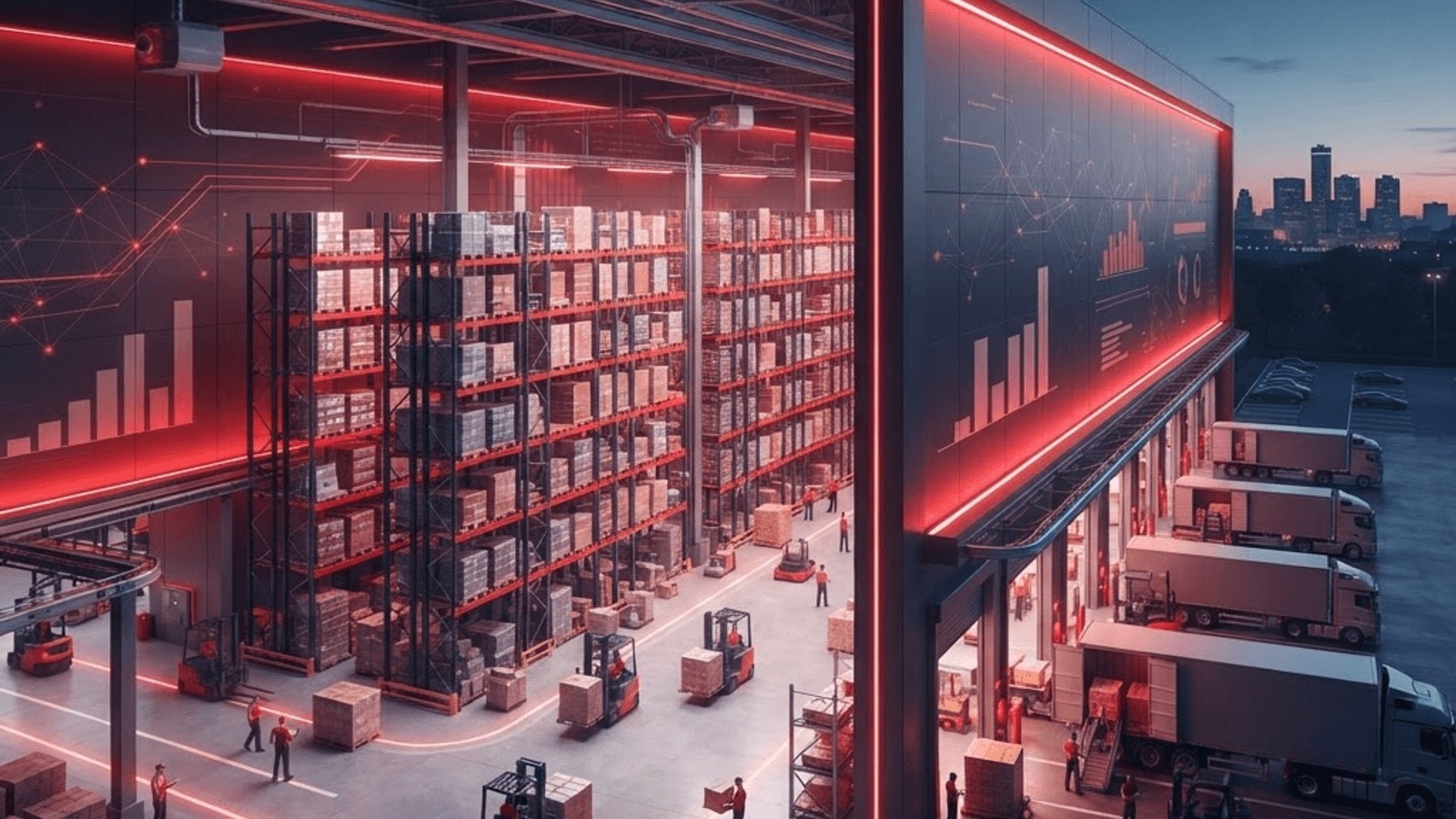
Why Detroit Is a Warehousing Powerhouse
Detroit sits at one of the most strategically valuable logistics crossroads in North America. The city is anchored by the busiest commercial crossing on the United States and Canada border, connected by three interstate corridors, served by four Class I railroads, and supported by deep-water port facilities on the Detroit River. That combination allows a warehouse in Wayne, Oakland, or Macomb County to reach roughly half of the population and manufacturing capacity of both countries inside a single day of trucking.
The result is a warehousing market with unusual depth. Detroit does not simply store pallets; it runs sequencing centers that feed assembly plants on a minute-by-minute schedule, cross-docks that consolidate freight from hundreds of Tier 1 and Tier 2 suppliers, bonded facilities that handle cross-border inventory, and increasingly, high-velocity fulfillment centers built for direct-to-consumer retail. Understanding that range is the first step to selecting the right partner.
What Separates a Great Warehouse Partner From an Average One
Square footage is the least interesting number in a warehousing proposal. The operators that consistently earn long-term contracts in Detroit compete on five things: inventory accuracy, dock-to-stock speed, systems integration, labor stability, and the ability to scale during a launch or a seasonal peak. A modern facility should offer a real warehouse management system with electronic data interchange or API connectivity, barcode or RFID scanning at every touch, cycle-count discipline, and reporting that a client can audit without a phone call.
Certifications matter as well. Automotive shippers look for quality-management alignment and clean audit histories. Food and pharmaceutical shippers require temperature validation and food-safety programs. Companies handling cross-border freight benefit from Customs Trade Partnership Against Terrorism participation and customs-bonded space. Finally, ask about ceiling height, column spacing, sprinkler class, trailer parking, and power capacity, because those physical characteristics determine whether a building can actually support your growth.
1. Universal Logistics Holdings
Headquartered in the Detroit area, Universal Logistics Holdings is one of the region's most recognizable asset-light logistics organizations. Its value-added services group specializes in the sequencing, sub-assembly, and kitting work that automotive plants depend on, along with intermodal drayage and dedicated transportation. For manufacturers that need a warehouse partner willing to perform light production inside the four walls, Universal is a natural shortlist candidate.
2. Penske Logistics
Penske Logistics operates a substantial warehousing and distribution footprint across southeast Michigan, backed by a global engineering and continuous-improvement organization. The company is known for lean process design, disciplined key-performance-indicator reporting, and integrated dedicated fleets, which allows shippers to hand off both storage and outbound transportation to a single accountable provider.
3. Ryder Supply Chain Solutions
Ryder brings multi-client and dedicated warehousing to the Detroit market along with one of the most mature technology stacks in the industry, including e-commerce fulfillment platforms and network-optimization modeling. Its shared-space model is especially useful for mid-market brands that want enterprise-grade systems without committing to an entire building.
4. GEODIS
GEODIS pairs contract logistics with freight forwarding and customs brokerage, a combination that suits Detroit importers moving containers inland from coastal ports or across the Canadian border. Clients typically cite the company's engineered onboarding process and its ability to stand up omnichannel fulfillment operations quickly.
5. NFI Industries
NFI is a large privately held logistics provider with distribution capacity in the Midwest and a growing emphasis on sustainable operations, including electric drayage equipment and energy-efficient building design. Retail and consumer-goods shippers appreciate its port-to-shelf capability and real-time visibility tools.
6. DSV Solutions
DSV combines global scale with disciplined warehouse execution and is a strong fit for industrial and automotive aftermarket clients in metro Detroit. The organization's standardized operating model means processes, safety programs, and reporting formats look consistent whether inventory sits in Michigan or overseas.
7. CEVA Logistics
CEVA has deep automotive DNA, which shows up in its inbound-to-manufacturing programs, line-side delivery, and aftermarket parts distribution. For original equipment manufacturers and suppliers that need a partner comfortable with engineering change orders and premium-freight avoidance, CEVA is a credible option.
8. Total Distribution Systems
Regional providers still win a large share of Detroit business, and Total Distribution Systems is a good example of the category. Smaller operators frequently deliver faster decision-making, direct access to ownership, and flexible short-term storage arrangements that national accounts teams struggle to match, making them ideal for project inventory and overflow needs.
9. Kenco Logistics
Kenco is an employee-focused third-party logistics provider recognized for warehouse-innovation labs, robotics pilots, and strong retention rates among hourly associates. Because labor turnover is the single biggest driver of warehousing quality problems, a provider with above-average retention often produces measurably better inventory accuracy.
10. Kuehne + Nagel Contract Logistics
Kuehne + Nagel rounds out the list with integrated warehousing, air and ocean forwarding, and customs expertise. The company is particularly effective for Detroit businesses running international inbound programs that need a single provider to manage the shipment from the overseas supplier all the way to a domestic pick face.
Trends Reshaping Detroit Warehousing
Three forces are changing the local market. First, electric-vehicle and battery investment across Michigan is creating demand for facilities with heavier floor loading, higher power capacity, and specialized hazardous-materials handling. Second, e-commerce continues to pull warehousing closer to residential density, which increases competition for infill space near the city core. Third, automation is spreading beyond conveyors into autonomous mobile robots, goods-to-person systems, and machine-vision quality checks, and providers that pilot these tools tend to hold their pricing better as wages rise.
How to Run a Smart Selection Process
Build a request for proposal around your real data: stock-keeping-unit count, units per order, receipts per week, seasonality curve, and service-level expectations. Tour every finalist building unannounced if possible and watch the receiving dock, because that is where discipline is visible. Ask for references from clients of similar size, request the last twelve months of inventory-accuracy results, and confirm exactly who will manage your account day to day. Finally, negotiate a startup plan with milestones, not just a rate card. The best warehousing relationships in Detroit are built on transparent measurement and a shared willingness to solve problems before they reach the customer.
Final Thoughts
Detroit offers a rare mix of geographic advantage, industrial expertise, and logistics talent. Whether you need automotive sequencing, cross-border storage, cold chain capacity, or fast-turn e-commerce fulfillment, the region has providers capable of delivering it. Match the provider's core competency to your actual freight profile, insist on measurable performance, and you will find a warehousing partner that becomes a genuine competitive advantage.
