
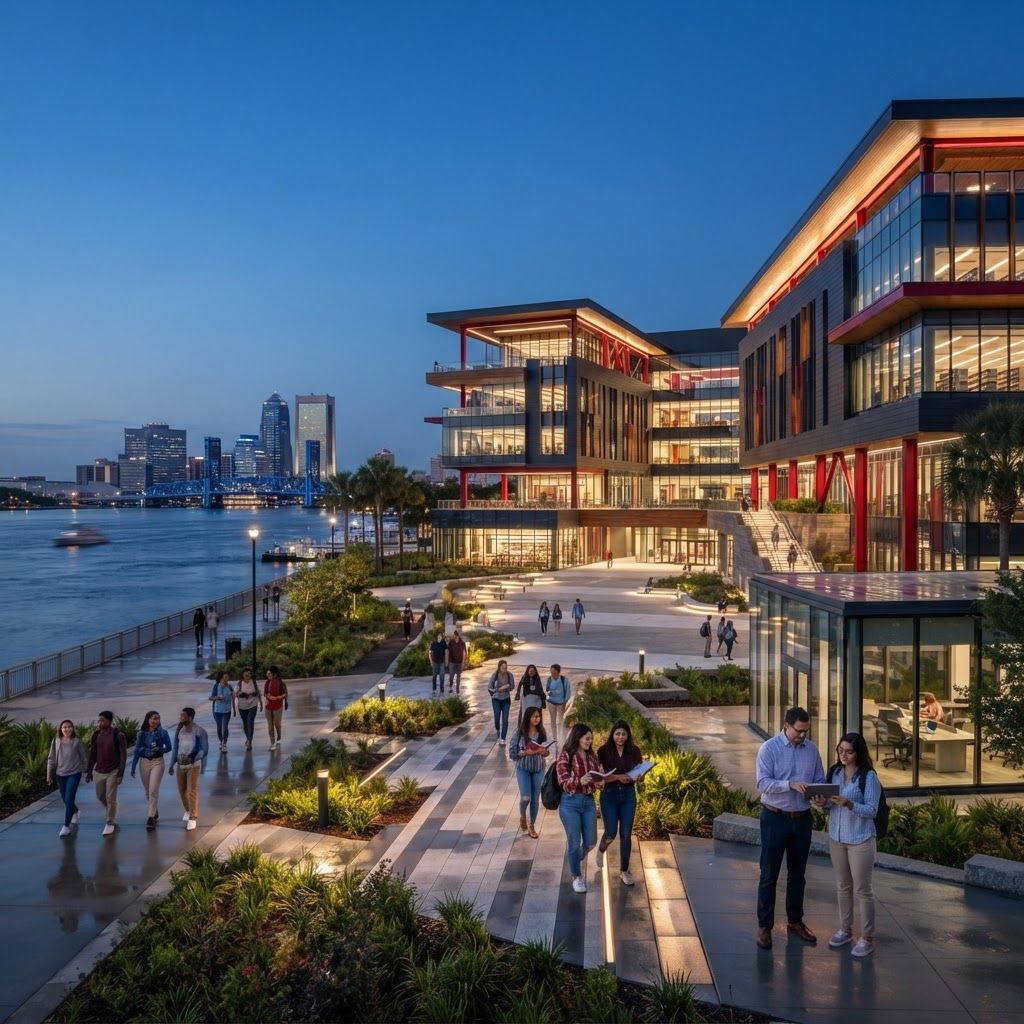
Jacksonville's University Landscape
Jacksonville has developed into a serious hub for university-level education in northeast Florida. The city blends established private universities with well-funded public options, giving students access to bachelor's, master's, and doctoral programs across a wide spectrum of disciplines. This breadth is particularly valuable for a growing city where healthcare, finance, logistics, and technology continue to create demand for skilled graduates.
What distinguishes Jacksonville's universities is their practical orientation. Many programs are designed in close consultation with regional employers, meaning students often graduate with experience, professional networks, and credentials that are immediately relevant to the local economy.
Prominent Universities in the Region
Jacksonville University is among the most recognized private institutions in the area. It has earned a strong reputation for its nursing, business, aviation, and marine science programs. Its riverfront campus and small student-to-faculty ratio create an environment where undergraduates receive meaningful mentorship and research opportunities that are often reserved for graduate students elsewhere.
The University of North Florida, a public institution, serves as one of the largest and most influential universities in the region. It is known for well-regarded programs in business, engineering, education, and the sciences, along with a beautiful nature-preserve campus. UNF's emphasis on transformational learning experiences, including internships and undergraduate research, has helped it build a solid academic reputation statewide.
Edward Waters University, while smaller, has expanded its academic offerings and campus profile in recent years. As a historically Black university, it provides a supportive and culturally rich environment that resonates with students seeking community alongside academic growth.
Graduate and Professional Programs
Jacksonville's universities increasingly cater to graduate students and working professionals. Master's programs in business administration, healthcare administration, education, and public policy are widely available, often with flexible evening or online formats. These offerings make it possible for professionals to advance their careers without stepping away from the workforce.
Health sciences are a particular strength, reflecting Jacksonville's status as a major medical center. Programs in nursing, physical therapy, and allied health fields are well-supported by partnerships with area hospitals and clinics.
Campus Life and Student Support
Beyond academics, Jacksonville universities invest heavily in student support. Robust advising, tutoring centers, career services, and mental health resources help students succeed and persist toward graduation. Athletics, student organizations, and cultural events also enrich campus life, giving students opportunities to build leadership skills and lasting friendships.
Choosing the Right University
When evaluating universities, students should consider program reputation, faculty expertise, internship pipelines, and the availability of financial aid. Visiting campuses, speaking with current students, and reviewing graduate outcomes can provide valuable insight beyond published rankings.
How to Compare Jacksonville Universities
A university's name recognition is only one part of its value. Students should compare class size, faculty access, graduation rates, career outcomes, and the total cost after scholarships and grants. Jacksonville's large geographic footprint also makes campus location important. A manageable commute can support attendance and participation, while residence halls may provide a more immersive experience for students who want traditional campus life.
Academic fit deserves careful attention. Prospective students can review degree requirements, internship expectations, and elective choices to see whether a program supports their ambitions. They should also ask how frequently courses are offered and whether required classes are available online, in the evening, or during summer terms. These practical details can influence both the time and cost required to graduate.
Questions for a Campus Visit
A thoughtful campus visit reveals details that brochures cannot. Students can sit in on a class, tour laboratories and libraries, speak with current learners, and explore the surrounding neighborhood. Useful questions include how advising works, when students begin internships, which employers recruit on campus, and how career services support alumni after graduation. Financial aid offices should be able to explain costs clearly and identify institutional scholarships.
Support is particularly important during the first year. Ask about tutoring, mentoring, accessibility services, mental health resources, and programs for first-generation students. A university that invests in these areas demonstrates that enrollment is not its only objective; it also wants students to persist and succeed.
Building Value Beyond the Classroom
The strongest university experience combines academics with purposeful involvement. Jacksonville students can join professional associations, participate in research, volunteer with local organizations, and seek internships in the city's major industries. These activities build practical skills and relationships that can shape a career. Students who establish clear goals, meet regularly with advisors, and use campus resources are better positioned to receive lasting value from their education.
Looking Ahead
Jacksonville's universities are positioned for continued growth as the city expands. Ongoing investments in facilities, technology, and industry partnerships suggest that these institutions will play an even larger role in shaping the regional workforce. For students seeking a balance of quality academics, affordability, and career relevance, Jacksonville's universities offer a genuinely compelling proposition.
