
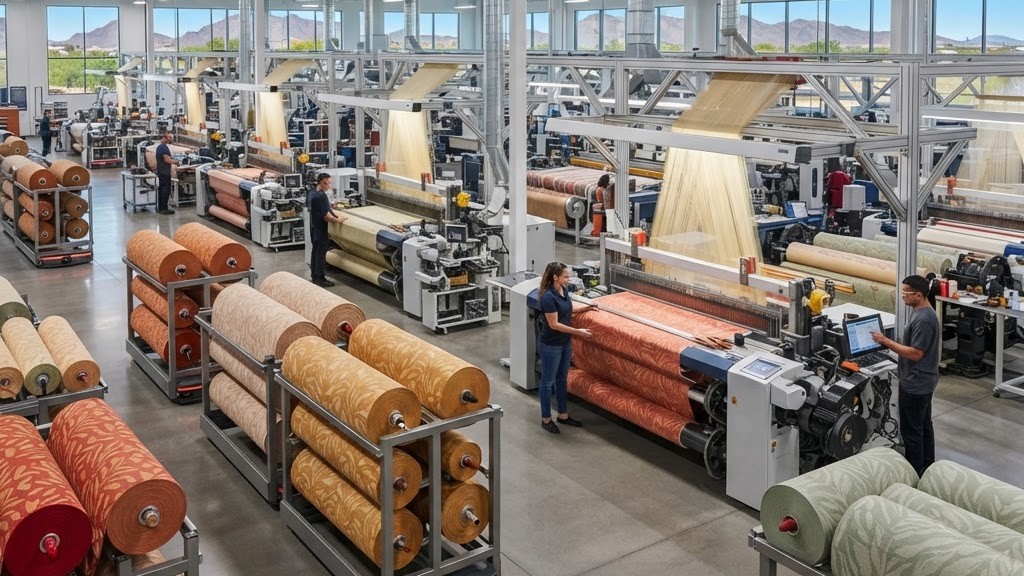
Phoenix's Diverse Textile Production Market
Textile manufacturing in Phoenix is less concentrated than in historic East Coast or Southern mill regions, but the Valley supports a practical mix of cut-and-sew operations, technical textile suppliers, uniform specialists, promotional product producers, and interior-fabrication shops. Fast regional growth creates demand from construction, hospitality, healthcare, sports, aerospace, and consumer brands. Local production can offer shorter lead times, easier sampling, lower freight costs, and direct quality oversight. The businesses below represent different parts of that ecosystem, so buyers should match a company's equipment and minimum quantities to the intended product.
1. Arizona Fashion Source
Arizona Fashion Source supports apparel entrepreneurs with product development and domestic manufacturing services. Its value lies in helping clients move from an early concept through patterns, samples, sourcing, and production. That end-to-end guidance is especially useful for emerging labels that do not yet have a technical design team. Brands should arrive with a clear customer profile, target price, desired materials, and realistic production volume to make development more efficient.
2. FABRIC
FABRIC, based in Tempe, combines fashion resources, education, workspace, technology, and small-batch manufacturing support. It has become a visible part of Arizona's fashion ecosystem by lowering barriers for designers and encouraging responsible local production. Its collaborative environment is a differentiator for startups seeking mentorship and access to specialized tools. Small-batch capability also enables market testing before a brand commits to larger inventory.
3. Tyndale USA's Arizona Operations
Tyndale specializes in flame-resistant clothing and managed apparel programs for workers in utilities, energy, and industrial environments. Its presence in the Phoenix area connects the region to a technically demanding segment of the textile market. Protective apparel requires careful attention to fabric certification, garment construction, traceability, and consistent sizing. Buyers in safety-sensitive industries should prioritize documented compliance and program management as strongly as price.
4. Unifirst
UniFirst serves Phoenix organizations with workwear, uniforms, facility textiles, laundering, and managed rental programs. Although its model combines manufacturing and service, it is highly relevant to local businesses that need dependable textile supply rather than a one-time apparel order. Program consistency, garment durability, pickup schedules, repair practices, and inventory controls are key strengths to evaluate. Hospitality, automotive, food processing, and industrial teams can benefit from a managed approach.
5. Cintas
Cintas operates in the Phoenix market with uniforms, workplace apparel, mats, towels, and related facility services. Its national scale supports broad product availability and standardized programs for multi-location organizations. The company is often considered when a buyer needs recurring service, brand consistency, and account management across a workforce. Local managers should review garment replacement terms, wearer changes, service frequency, and total contract cost.
6. Phoenix Tent and Awning
Architectural fabric and shade products are especially important in the Sonoran Desert. Phoenix Tent and Awning represents the region's long-standing expertise in fabricated canvas, awnings, covers, and shade-oriented products. These applications demand textiles that tolerate ultraviolet exposure, dust, wind, and intense heat. Commercial buyers should compare fabric weight, colorfastness, seam construction, frame materials, engineering requirements, and warranty coverage.
7. Arizona Uniform & Apparel
Arizona Uniform & Apparel serves organizations that need customized uniforms, embroidery, screen printing, and branded garments. Local decoration and fulfillment can shorten turnaround for schools, teams, public agencies, and growing businesses. A supplier's ability to maintain color, placement, and garment consistency across repeat orders is a major differentiator. Buyers should request stitched or printed samples when exact brand presentation matters.
8. Anton Sport
Tempe-based Anton Sport is known for decorated apparel and promotional merchandise. Its regional roots and broad catalog make it relevant for corporate programs, events, and organizations requiring branded textile products. Production planning is particularly important for event-driven orders, where deadlines cannot shift. Customers can improve outcomes by providing vector artwork, confirmed garment sizes, Pantone references, and approval authority early in the process.
9. Tuft & Needle
Phoenix-founded Tuft & Needle helped reshape direct-to-consumer sleep products with simplified mattress design and a digitally focused customer experience. While its production network extends beyond the city, the brand remains an important example of textile-related product innovation from Phoenix. Its success illustrates how material engineering, compressed shipping, transparent merchandising, and customer-friendly trials can differentiate a home-goods company.
10. Local Motorsports and Marine Upholstery Specialists
Phoenix has a deep network of independent upholstery shops producing custom automotive interiors, boat covers, outdoor cushions, and commercial seating. Collectively, these specialists are an important manufacturing resource even when individual shops remain small. Their work combines patterning, foam fabrication, sewing, and installation. Buyers should inspect portfolios for the exact application and ask about UV-resistant thread, outdoor-rated foam, abrasion performance, and material warranties.
What Buyers Should Compare
Textile sourcing decisions begin with application. Fashion labels need pattern accuracy, grading, sourcing, and repeatable construction; industrial users may require certified performance; hospitality customers need cleanability and replacement availability. Ask each manufacturer about minimum order quantities, sampling fees, material lead times, production capacity, inspection procedures, packaging, and intellectual-property protections. Phoenix businesses should also consider heat and sunlight. Fabrics used outdoors or in vehicles need stronger UV, fade, and temperature performance than products intended for climate-controlled interiors.
Industry Trends in the Valley
Nearshoring, on-demand decoration, digital pattern tools, recycled fibers, and smaller inventory commitments are influencing local production. Customers increasingly expect transparency about material origin and labor practices. At the same time, durable performance remains essential; a sustainable product that fails early creates more waste. Phoenix's proximity to California, Mexico, and major Southwest logistics routes gives the region strategic potential for hybrid supply chains that combine local development with scalable regional production.
Making the Right Choice
The best partner is the one whose specialty aligns with the project. Arizona Fashion Source and FABRIC are strong starting points for developing apparel, while managed uniform providers support recurring workforce needs. Awning, decoration, bedding, and upholstery businesses serve very different technical requirements. Before placing a production order, approve a physical sample, document tolerances, confirm deadlines, and define how defects will be handled. That disciplined process protects quality while helping Phoenix buyers build durable supplier relationships.
