
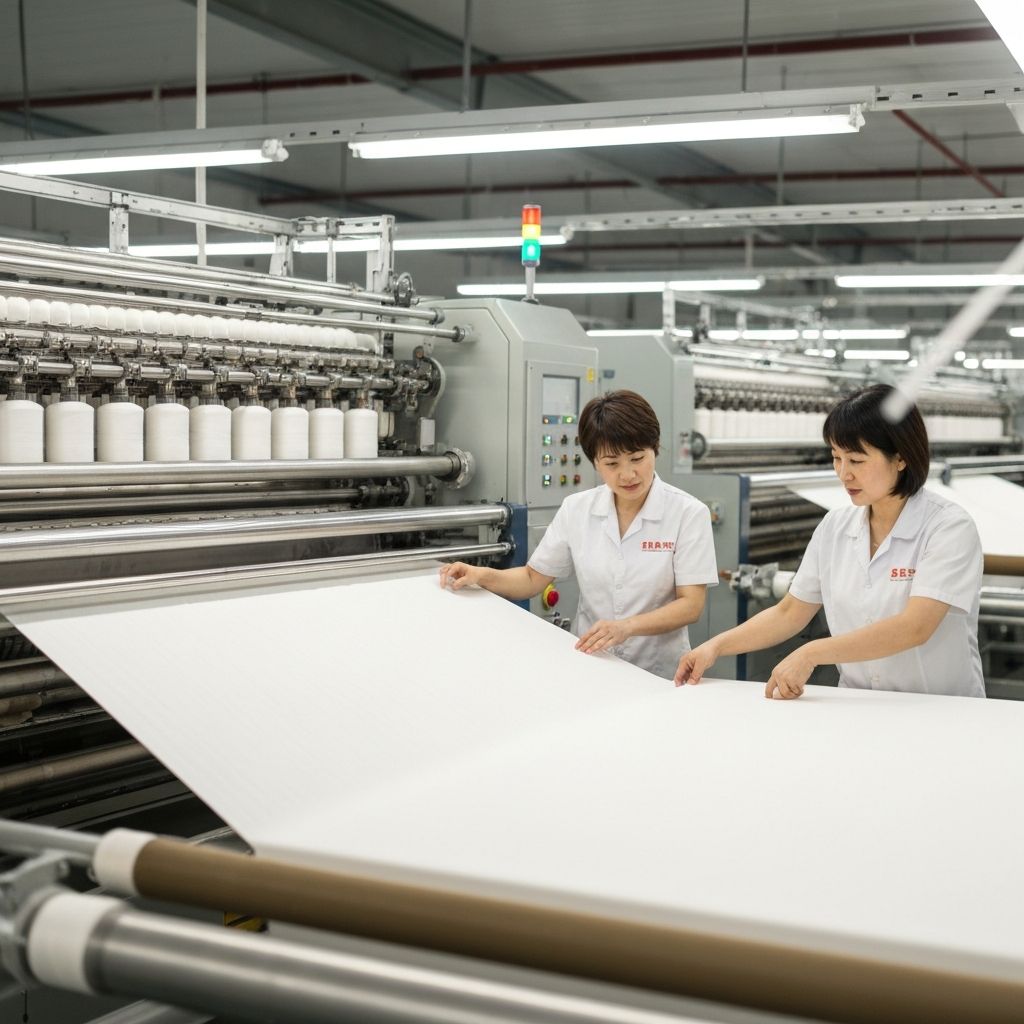
China's Textile Manufacturing Powerhouse
China has maintained its position as the world's largest textile manufacturer for decades, producing everything from basic cotton fabrics to advanced technical textiles. The country's textile industry employs millions of workers and generates substantial export revenues through sales to markets worldwide. Chinese textile manufacturers have evolved from low-cost producers to sophisticated manufacturers capable of meeting demanding quality and sustainability requirements. These companies operate at every stage of the textile value chain, from fiber production through spinning, weaving, finishing, and garment manufacturing.
1. Shenghong Holding Group
Shenghong Holding Group has grown into one of China's largest textile and petrochemical conglomerates through vertical integration and continuous expansion. The company's operations span from crude oil refining through polyester production to fabric manufacturing and garment production. Shenghong's polyester fiber capacity ranks among the world's largest, supplying both internal operations and external customers. Their integrated approach provides cost advantages and supply chain control that competitors struggle to match. The company continues investing in advanced technologies and sustainability improvements across their operations.
2. Hengli Petrochemical
Hengli Petrochemical operates one of China's most sophisticated integrated refining and chemical complexes, producing essential materials for textile manufacturing. The company's polyester production capacity has grown dramatically, making them a dominant supplier of synthetic fibers. Hengli's investments in purified terephthalic acid production ensure supply security for downstream polyester operations. Their quality systems and technical capabilities serve demanding customers requiring consistent, high-grade materials. Hengli's vertical integration from oil refining through fiber production exemplifies modern Chinese industrial development.
3. Tongkun Group
Tongkun Group specializes in polyester filament yarn production, ranking among the world's largest manufacturers in this category. The company's products serve diverse applications from apparel fabrics to industrial textiles and home furnishings. Tongkun's manufacturing efficiency and scale provide competitive advantages in global markets. Their research capabilities have developed specialty yarns addressing specific customer requirements. The company's focus on synthetic fiber excellence has built a formidable market position.
4. Weiqiao Textile Company
Weiqiao Textile Company operates one of China's largest cotton textile operations, producing yarns, fabrics, and finished textile products. The company's integrated operations span from cotton processing through spinning, weaving, and dyeing. Weiqiao's scale enables competitive pricing while maintaining quality standards demanded by international brands. Their facilities incorporate modern equipment and environmental controls addressing sustainability requirements. Weiqiao's cotton textile expertise serves both apparel and home textile markets globally.
5. Lu Thai Textile
Lu Thai Textile has established leadership in high-quality shirt fabric production, serving prestigious fashion brands worldwide. The company's products range from classic cotton shirtings to innovative performance fabrics incorporating advanced technologies. Lu Thai's dyeing and finishing capabilities achieve the aesthetic qualities and performance characteristics brands require. Their investments in automation and quality systems ensure consistent excellence across production runs. Lu Thai's reputation for quality has secured long-term relationships with leading global brands.
6. Huafu Fashion
Huafu Fashion dominates yarn-dyed fabric production, creating colorful textiles through dyeing yarn before weaving rather than finished fabrics. The company's capabilities in color matching and pattern creation serve fashion brands requiring distinctive materials. Huafu's integrated operations include spinning, dyeing, and weaving under unified quality control. Their international facilities in Vietnam provide supply chain flexibility for customers. Huafu's creative capabilities and technical expertise make them preferred suppliers for fashion-forward brands.
7. Bosideng International Holdings
Bosideng International Holdings has built China's most recognized down apparel brand while operating substantial manufacturing capabilities. The company's design and manufacturing expertise extends from material selection through finished garment production. Bosideng's brand presence spans domestic retail and international distribution channels. Their product development capabilities respond quickly to fashion trends while maintaining quality standards. Bosideng demonstrates successful integration of manufacturing excellence with brand building.
8. Shandong Ruyi Technology Group
Shandong Ruyi Technology Group has transformed from domestic textile producer to international fashion conglomerate through strategic acquisitions. The company controls multiple international fashion brands alongside substantial manufacturing operations. Ruyi's wool processing capabilities rank among the world's most advanced. Their integrated approach connects raw material supply with brand-driven product development. Ruyi's ambitions to build a global fashion enterprise represent bold vision for Chinese textile companies.
9. Texhong Textile Group
Texhong Textile Group specializes in cotton textile production with facilities across China and Vietnam serving global apparel brands. The company's vertical integration spans spinning, knitting, dyeing, and finishing operations. Texhong's quality systems meet demanding requirements from premium fashion and sportswear brands. Their capacity investments respond to customer growth while maintaining service excellence. Texhong's balanced geographic footprint provides supply chain resilience and flexibility.
10. Pacific Textiles Holdings
Pacific Textiles Holdings leads in circular knit fabric production, particularly stretch fabrics used in intimate apparel, sportswear, and athleisure. The company's technical capabilities address demanding performance requirements including moisture management, stretch recovery, and durability. Pacific Textiles' vertical integration includes yarn production, knitting, dyeing, and finishing. Their sustainability initiatives include recycled material usage and environmental management systems. Pacific Textiles' focused expertise has built strong positions in high-value fabric categories.
Innovation and Sustainability Trends
Chinese textile manufacturers are increasingly focusing on sustainability, developing recycled materials, reducing water consumption, and improving energy efficiency. Technical textiles for medical, automotive, and construction applications represent growing opportunities beyond traditional apparel markets. Automation and digitalization are transforming manufacturing operations, improving efficiency and quality consistency. These trends create opportunities for leading manufacturers to differentiate through innovation while addressing evolving customer and regulatory requirements.
