
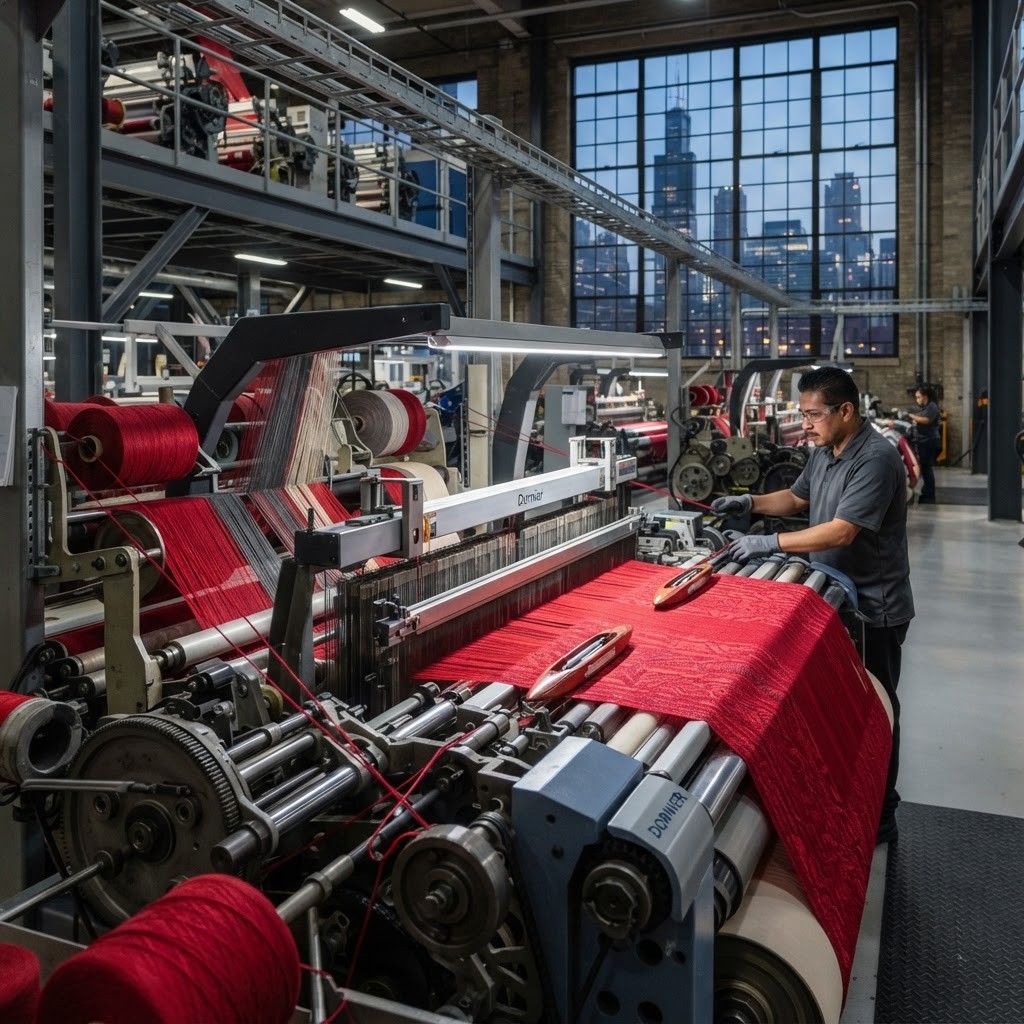
Chicago's Diverse Textile Manufacturing Base
Chicago's manufacturing heritage extends well beyond heavy industry. The metropolitan area supports textile mills, converters, fabric printers, interior brands, uniform specialists, and technical material producers. Access to transportation, designers, commercial customers, and a skilled workforce helps local companies serve markets across the country. The organizations below represent different specialties, so buyers should compare them according to material performance, order volume, customization, certifications, lead times, and the intended end use.
1. The Chicago Lighthouse Industries
The Chicago Lighthouse Industries manufactures products while creating employment opportunities for people who are blind or visually impaired. Its operations include textile-related and sewn products for institutional and government customers. The organization's combination of quality manufacturing and social mission is a powerful differentiator for buyers considering both performance and responsible procurement.
2. Standard Textile
Standard Textile maintains a significant presence serving Chicago's healthcare and hospitality industries. The company develops sheets, towels, patient textiles, window treatments, and related solutions designed for demanding commercial use. Product engineering, laundering performance, supply reliability, and service for large facilities distinguish it from consumer-oriented fabric providers.
3. Brentano
Brentano is a Chicago-area textile company known for interior fabrics used in hospitality, workplace, healthcare, and residential design. Its collections balance aesthetics with durability and performance requirements. Designers value its range of colors, textures, patterns, and technical options, including materials created for high-traffic environments.
4. Mayer Fabrics
Mayer Fabrics serves the commercial interiors market and has a strong Chicago design-community presence. Its upholstery and panel textiles are used in offices, education, healthcare, hospitality, and public spaces. Performance testing, cleanability, coordinated collections, and options supporting sustainability goals are important features for specification professionals.
5. E. Burnham
E. Burnham is associated with Chicago's long tradition of trimmings, decorative materials, and specialty textile supply. Companies in this niche support costume, apparel, interiors, and creative production with ribbons, cords, fringe, and related components. Deep product knowledge and access to unusual materials can matter more than mass-market scale for specialized projects.
6. Chicago Canvas & Supply
Chicago Canvas & Supply provides industrial fabrics and fabricated products for construction, transportation, events, agriculture, and facility use. Tarps, curtains, covers, and protective materials must withstand demanding conditions, making material selection and fabrication quality essential. Custom dimensions and application knowledge are key differentiators.
7. Fabric Images
Fabric Images, based in the Chicago area, creates printed fabric architecture, displays, and experiential installations. The company combines textile printing, sewing, engineering, and frame systems for trade shows, branded environments, and events. Its ability to turn digital concepts into large, precisely finished physical structures demonstrates the increasingly technical nature of textile production.
8. Aurora Specialty Textiles Group
Aurora Specialty Textiles Group operates in the greater Chicago manufacturing region and produces coated, finished, and printable fabrics. Its materials support digital printing and industrial applications where surface treatment determines performance. Technical finishing expertise and the ability to develop materials for specialized equipment set the company apart.
9. Bearse USA
Bearse USA manufactures sewn textile products in the Chicago area, including bags and custom items for military, medical, industrial, and consumer applications. Domestic production, pattern development, material sourcing, and contract sewing capabilities make it a useful partner for organizations moving from prototype to repeatable production.
10. Apparel Redefined
Apparel Redefined is a Chicago-area custom apparel decorator and producer serving schools, teams, businesses, and organizations. Services such as screen printing, embroidery, fulfillment, and online program support turn blank garments into managed apparel programs. Operational reliability and consistent decoration are especially important for recurring multi-location orders.
Trends Affecting Textile Buyers
Customers increasingly ask for recycled content, safer chemistry, traceable sourcing, lower-waste production, and credible environmental documentation. Performance remains equally important: healthcare textiles need rigorous cleaning capability, hospitality products must endure repeated laundering, and commercial upholstery must meet durability and fire standards. Digital printing enables shorter runs and personalization, while automation improves cutting and repeatability without eliminating the need for skilled sewing and finishing.
How to Select a Manufacturing Partner
Begin with a detailed specification covering fiber content, dimensions, color tolerance, testing standards, packaging, forecast volume, and delivery location. Request samples or prototypes and test them under actual use conditions. Ask which operations are performed locally, how subcontractors are managed, and what quality checks occur before shipment. Buyers should also clarify minimum order quantities, setup charges, ownership of patterns or artwork, and procedures for defective goods. Chicago's textile ecosystem offers both technical specialization and creative capability, allowing customers to find a partner aligned with the scale and precision their project requires.
