
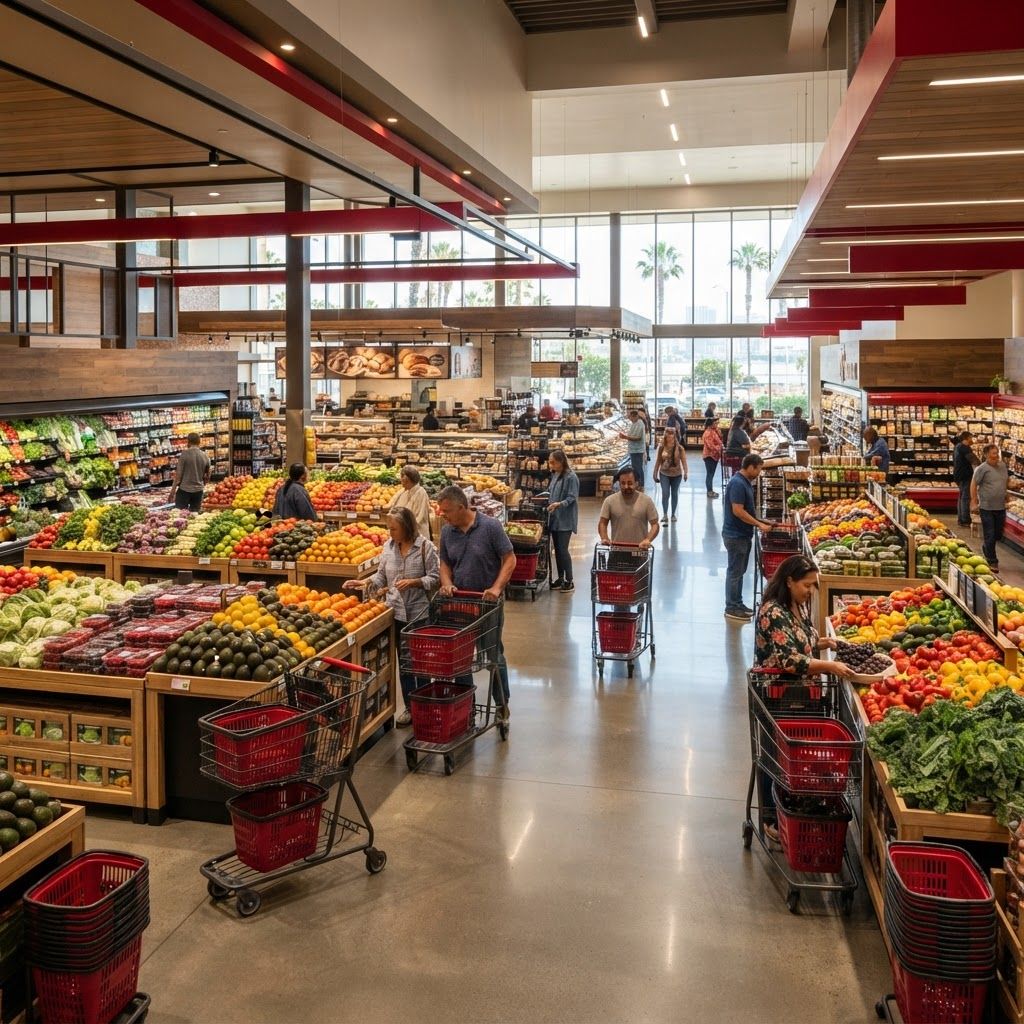
Finding the Right San Diego Supermarket
San Diego’s grocery landscape reflects the region itself: health conscious, multicultural, budget aware, and strongly connected to fresh food. A household in La Jolla may prioritize organic produce and prepared meals, while a family in Chula Vista may seek value packs, Latin American ingredients, and a full-service meat counter. The best supermarket therefore depends on more than price. Store location, private-label quality, specialty diets, parking, delivery options, and the freshness of frequently purchased foods all matter.
The following ten chains stand out for broad usefulness, distinctive assortments, or a particularly strong fit with San Diego lifestyles. They are not presented as a rigid ranking; each excels for a different type of shopper.
1. Jimbo’s
Jimbo’s is a homegrown natural-foods favorite with a reputation for organic produce, carefully screened products, and an approachable neighborhood-market atmosphere. Its focus on ingredient standards appeals to shoppers who read labels closely, while prepared foods help busy professionals assemble a wholesome meal quickly. The chain’s local roots and community-minded identity make it especially relevant to San Diego.
2. Sprouts Farmers Market
Sprouts combines farmers-market-inspired produce displays with bulk foods, supplements, natural groceries, and competitively priced weekly promotions. Its compact layout is often easier to navigate than a conventional superstore. San Diegans who want plant-based items, functional foods, or better-for-you snacks without committing to premium pricing often find a practical middle ground here.
3. Trader Joe’s
Trader Joe’s earns loyalty through distinctive private-label products, frozen meals, snacks, cheeses, and seasonal releases. Stores are smaller and the assortment is edited, which makes routine trips efficient but may require a second stop for highly specific items. For students, small households, and adventurous home cooks, the balance of convenience, flavor, and price is hard to overlook.
4. Whole Foods Market
Whole Foods Market remains a leading destination for organic groceries, specialty diets, premium seafood, artisan cheese, and polished prepared-food departments. Locations near major employment and residential centers make it useful for grab-and-go lunches as well as larger shops. Prices can be higher, but private-label staples and promotions help customers shop more strategically.
5. Ralphs
Ralphs offers the range expected from a full-service supermarket: national brands, private labels, pharmacies at selected stores, bakeries, meat counters, and digital savings. Its broad San Diego presence supports convenient weekly shopping. Loyalty pricing and personalized coupons can deliver meaningful value for customers willing to plan around promotions.
6. Vons
Vons is another dependable neighborhood option, known for familiar brands, strong bakery and deli departments, and convenient pickup or delivery services. Its stores serve many coastal and inland communities, making it a sensible choice when proximity matters most. The loyalty program can improve value on routine purchases, especially during multi-item promotions.
7. Albertsons
Albertsons provides a traditional one-stop experience with substantial fresh departments and household essentials. Shoppers appreciate the ability to complete a large list in one trip, while digital deals reward comparison and planning. Store experience varies by location, so customers may want to identify the nearby branch whose produce turnover and service best match their expectations.
8. Northgate Market
Northgate Market is an outstanding choice for Mexican and Latin American foods, from fresh tortillas and pan dulce to marinated meats, salsas, tropical produce, and prepared specialties. Its lively food-market character offers both practicality and discovery. For San Diego’s binational culinary culture, Northgate provides relevance that conventional chains cannot easily duplicate.
9. Grocery Outlet
Grocery Outlet suits flexible shoppers who enjoy finding closeouts, changing inventory, and deep discounts. The treasure-hunt format can yield excellent values on natural foods, beverages, pantry goods, and household products, although a fixed shopping list may not always be completed. It works best as a savings-focused supplement to a primary supermarket.
10. Smart & Final
Smart & Final bridges household grocery shopping and warehouse-style purchasing without requiring a membership. Larger package sizes, food-service supplies, beverages, and party essentials make it useful for families, small businesses, and gatherings. San Diego hosts frequently appreciate the ability to buy substantial quantities while still picking up conventional grocery basics.
How to Choose
Start with the categories that drive your bill. Produce-focused shoppers should compare freshness and weekly specials at Jimbo’s, Sprouts, and Northgate. Fans of convenient private-label meals may favor Trader Joe’s, while shoppers managing a broad household list may prefer Ralphs, Vons, or Albertsons. Whole Foods serves premium and specialty needs, Grocery Outlet rewards flexibility, and Smart & Final is strongest for volume.
San Diego residents can often get the best combination of quality and price by using two complementary stores: one reliable weekly supermarket and one specialist for produce, cultural ingredients, or bargains. Evaluating travel time and food waste alongside shelf price leads to a more realistic measure of value.
Making a Confident Final Choice
A shortlist is most useful when it leads to informed comparison. Before deciding, identify three nonnegotiable needs, two desirable extras, and a realistic budget. Compare candidates on evidence that relates to those priorities rather than reputation alone. Recent examples, knowledgeable staff, transparent processes, consistent quality, and candid answers are stronger signals than broad claims. San Diego’s neighborhoods and industries are diverse, so convenience and local relevance should also influence the decision. When possible, begin with a store visit, product trial, consultation, or clearly scoped initial engagement. Record what worked, what did not, and whether the experience matched expectations. This simple evaluation method reduces impulse decisions and makes it easier to recognize the option that offers lasting value, dependable service, and the right fit for a specific situation.
