
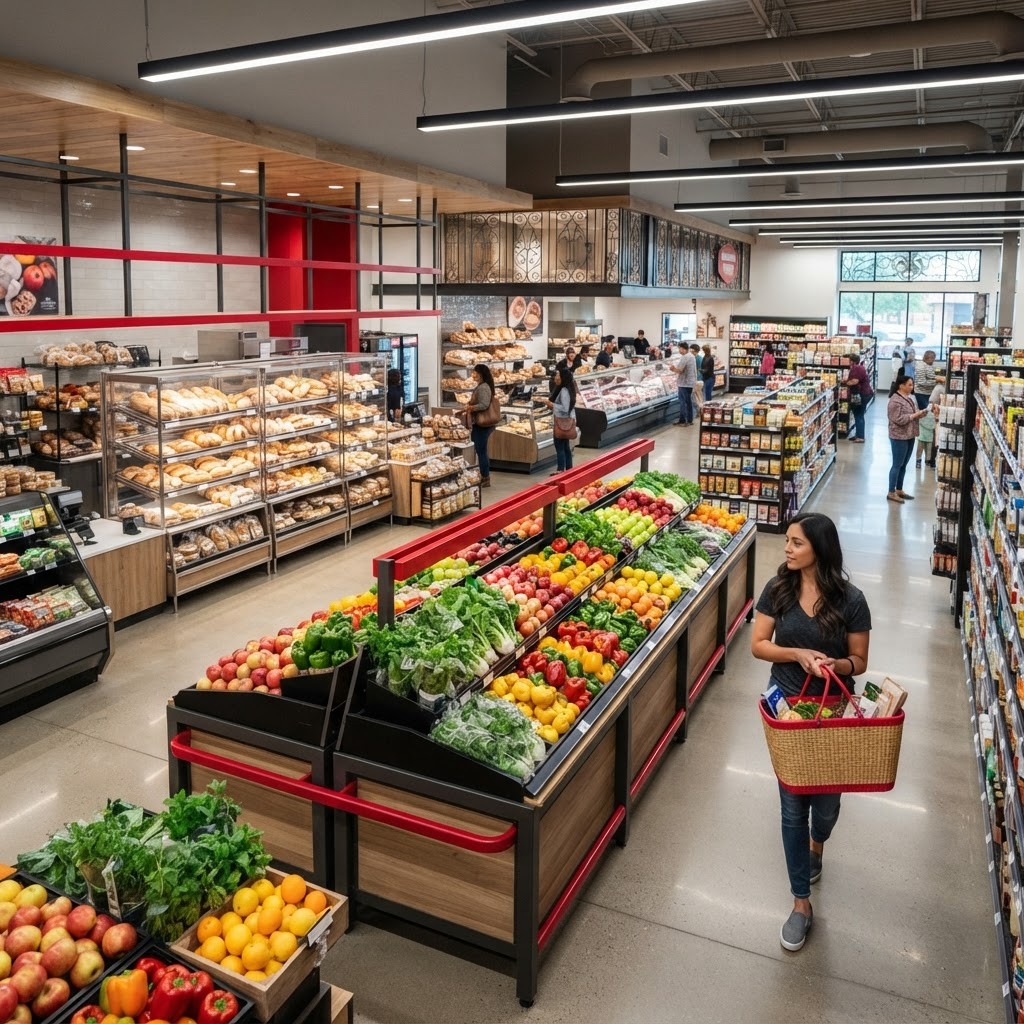
Grocery Shopping in a Food-Loving City
San Antonio's food culture blends Tex-Mex traditions, barbecue, regional produce, family recipes, and global influences. That diversity shapes what residents expect from supermarkets: fresh tortillas and chiles, dependable staples, international ingredients, quality meat, prepared meals, and competitive prices. No single chain wins every category. The best strategy is often to use a primary weekly grocer and one specialist for bulk goods, premium items, or hard-to-find ingredients.
1. H-E-B
H-E-B is deeply connected to San Antonio and South Texas. Its stores combine strong private-label products, fresh food, local preferences, pharmacy services, and community familiarity. Many locations provide extensive produce, meat, bakery, tortilla, and prepared-food departments. The company differentiates itself by tailoring assortments to neighborhoods rather than treating every market identically. For most residents, H-E-B offers the strongest balance of regional relevance, range, value, and convenience.
2. Central Market
Central Market, part of the H-E-B family, focuses on culinary discovery. Expansive produce displays, specialty cheese, bakery goods, seafood, meat, prepared foods, international pantry items, and chef-oriented ingredients make it ideal for ambitious meals. Prices can be higher than a conventional weekly shop, so customers may reserve it for specialty purchases. Its real value lies in depth, freshness, and inspiration rather than bargain staples.
3. Walmart
Walmart serves households seeking grocery and general merchandise in one trip. Supercenters cover produce, meat, pantry goods, frozen food, household supplies, and personal care at value-oriented prices. Pickup services can make large weekly orders more manageable across San Antonio's spread-out neighborhoods. Quality and department depth can vary by location, so selective shoppers may buy staples here while sourcing specialty meat or produce elsewhere.
4. Costco
Costco's warehouse model suits larger households, entertainers, and shoppers with storage space. Bulk pantry goods, meat, produce, prepared foods, bakery products, and household supplies can deliver strong unit value. The main risk is waste: a low per-ounce price is not a bargain if food expires. San Antonio families should plan freezer capacity and meal use before buying. The curated assortment also limits brand choice but simplifies comparisons.
5. Sam's Club
Sam's Club provides bulk groceries, snacks, beverages, meat, bakery items, and household essentials through membership. It is practical for family gatherings, small businesses, and households that repeatedly use the same staples. Convenient scan-and-go and pickup options can reduce friction. As with any warehouse club, shoppers should compare unit prices, resist oversized impulse purchases, and divide or freeze perishables immediately.
6. Trader Joe's
Trader Joe's is known for compact stores, private-label products, frozen meals, snacks, seasonal discoveries, and approachable specialty foods. Its limited assortment makes the trip feel different from a conventional supermarket. It is especially useful for convenient meals and entertaining items, though customers may need another store for broad brand choice or household staples. Seasonal products create excitement but should not distract from nutritional and budget goals.
7. Whole Foods Market
Whole Foods Market emphasizes natural and organic products, ingredient standards, premium produce, specialty diets, prepared food, and responsibly positioned meat and seafood. It serves shoppers who prioritize sourcing criteria or need plant-based, gluten-aware, and wellness-oriented options. Prices vary widely by category. A targeted list, private-label staples, and seasonal produce can make the experience more cost-conscious without giving up the store's quality-focused strengths.
8. Sprouts Farmers Market
Sprouts combines a produce-forward layout with bulk foods, vitamins, natural products, meat, and grocery staples. Its stores are useful for shoppers who want flexible quantities of grains, nuts, spices, or snacks. Promotions on produce and wellness categories can be competitive. The brand occupies a middle ground between conventional and specialty grocery, making it a practical supplement for households seeking fresh ingredients and dietary variety.
9. La Michoacana Meat Market
La Michoacana Meat Market brings strong Mexican and Latin American relevance through marinated meats, fresh produce, tortillas, pantry goods, spices, and prepared foods. It is an important option in a city where regional cooking traditions are part of everyday life. Customers can find cuts, seasonings, and ready-to-cook products not always emphasized by national chains. The experience delivers cultural specificity as well as grocery convenience.
10. Natural Grocers
Natural Grocers focuses on organic produce, supplements, natural grocery products, and nutrition-conscious standards. The stores tend to be smaller than full-scale supermarkets, which can make focused trips easier. It appeals to customers who read ingredient lists closely or want specialized wellness products. Buyers should still compare evidence, dosage, and value when shopping supplements; natural positioning does not replace informed health guidance.
Building a Better Grocery Routine
Plan meals around what will realistically be cooked, check pantry inventory, and compare unit prices rather than package totals. San Antonio's heat makes cold-chain planning important, so shop for refrigerated products last and avoid leaving groceries in a parked vehicle. H-E-B can anchor weekly needs, Central Market or La Michoacana can provide culinary depth, and Costco or Sam's Club can handle proven bulk staples. A deliberate multi-store strategy can improve quality without turning grocery shopping into a costly tour.
