
Why Houston Is Built for New Ventures
Houston gives founders direct access to global energy companies, the world’s largest medical complex, NASA’s human-spaceflight ecosystem, a major port, advanced manufacturing, and a diverse customer base. The city’s challenge has historically been connecting these assets into a visible startup network. Incubators and accelerators now play a central role by introducing entrepreneurs to mentors, corporate partners, laboratories, investors, and peers.
The organizations below use different models. Some accept early ideas, while others expect validated technology or revenue. Some invest capital, and others offer programs, community, or specialized facilities. Founders should evaluate fit, equity terms, time commitment, sector access, and alumni outcomes rather than applying based on prestige alone.
1. The Ion
The Ion is a major hub for Houston’s innovation district. It brings together startups, corporations, investors, universities, and community programs in a centrally located facility. Founders can benefit from events, workspace, partner programming, and frequent opportunities for cross-sector connection. Its broad ecosystem role makes it a useful entry point for entrepreneurs who need to understand the city’s startup landscape.
2. Greentown Labs Houston
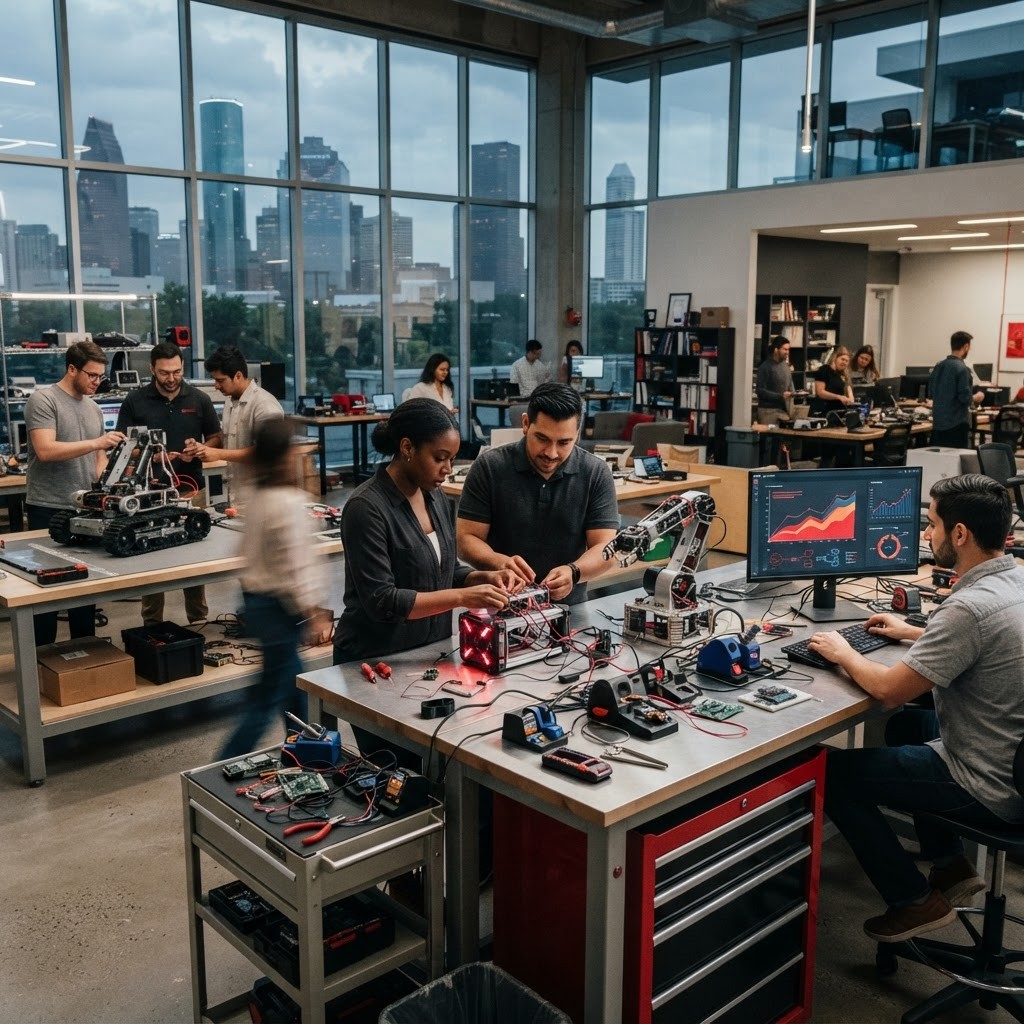
Greentown Labs Houston is dedicated to climate technology and provides specialized prototyping space, laboratories, community, and corporate connections. Its sector focus is a natural fit for Houston’s energy expertise and growing transition economy. Startups working in power, buildings, transportation, carbon, water, or industrial decarbonization can gain access to peers and partners who understand hardware-intensive commercialization.
3. Halliburton Labs
Halliburton Labs supports early-stage companies developing cleaner, affordable energy technologies. Participants can access technical expertise, laboratory capabilities, facilities, and mentorship from an experienced industrial organization. The program is particularly relevant to ventures that must test physical technology, validate performance, and navigate long enterprise sales cycles.
4. Rice Alliance for Technology and Entrepreneurship
The Rice Alliance connects entrepreneurs with education, investors, competitions, and industry networks. Its programs and events span energy, life sciences, technology, and other innovation areas. The organization’s relationship with Rice University and the investment community makes it valuable for founders refining commercialization plans and building credible connections.
5. Rice Business Plan Competition
Although structured as a competition rather than a traditional incubator, the Rice Business Plan Competition is a powerful venture-development platform. Student-led startups receive feedback, exposure, mentorship, and opportunities to compete for significant prizes and investment. Houston founders affiliated with eligible university teams can use the process to sharpen their narrative, economics, and fundraising readiness.
6. TMC Innovation
TMC Innovation serves healthcare and life-science entrepreneurs within the Texas Medical Center ecosystem. Programs connect startups with clinicians, institutions, mentors, and commercialization resources. For digital health, medical device, and therapeutics companies, proximity to real clinical environments can help teams understand workflows, evidence requirements, procurement, and regulatory pathways.
7. MassChallenge
MassChallenge has operated Texas-focused accelerator programming that connects startups to mentors, corporate partners, and a global entrepreneurial network. Its model is known for supporting founders without taking equity in traditional accelerator fashion. Program availability and format can evolve, so applicants should review the current cohort focus and participation expectations.
8. Impact Hub Houston
Impact Hub Houston supports entrepreneurs and initiatives addressing social and community challenges. It offers programming, events, partnerships, and a collaborative network focused on inclusive innovation. Founders building purpose-driven ventures may benefit from a community that considers impact measurement and stakeholder engagement alongside financial sustainability.
9. Founder Institute Houston
Founder Institute’s structured pre-seed program helps aspiring and early-stage founders validate ideas, establish companies, and build disciplined milestones. The Houston chapter connects a global curriculum with local mentors. It can be useful for professionals transitioning into entrepreneurship who need accountability and a step-by-step process for moving from concept to a fundable venture.
10. gener8tor
gener8tor operates accelerator and skills programs in multiple markets and has participated in Houston’s innovation ecosystem through focused initiatives and partnerships. Its accelerator approach emphasizes mentorship, customer development, investor preparation, and concentrated execution. Founders should confirm which current Houston programs align with their sector and stage.
What Houston Incubators Offer
The most valuable benefit is often access rather than office space. A warm introduction to a hospital, refinery, engineering expert, or experienced founder can shorten months of searching. Specialized facilities matter for hardware and life-science ventures, while software companies may prioritize customer discovery, hiring, and capital connections.
Houston’s startup trends increasingly center on climate technology, industrial software, healthcare, aerospace, and logistics. These sectors offer large opportunities but can involve long validation cycles and regulated buyers. Founders need patient milestone planning, clear intellectual-property strategy, and evidence that their product can integrate into existing operations.
Choosing the Right Program
Founders should ask what stage the program serves, how alumni have progressed, and who provides weekly mentorship. Review equity or fee terms carefully and calculate the opportunity cost of mandatory activities. Confirm whether promised corporate access leads to genuine pilots and whether technical resources match the venture’s needs.
A program should accelerate learning, not simply add meetings. The best Houston incubator will help a team test its riskiest assumptions, meet relevant decision-makers, and develop a repeatable path to customers or funding. Founders who enter with specific goals and actively contribute to the community are most likely to capture lasting value.
