
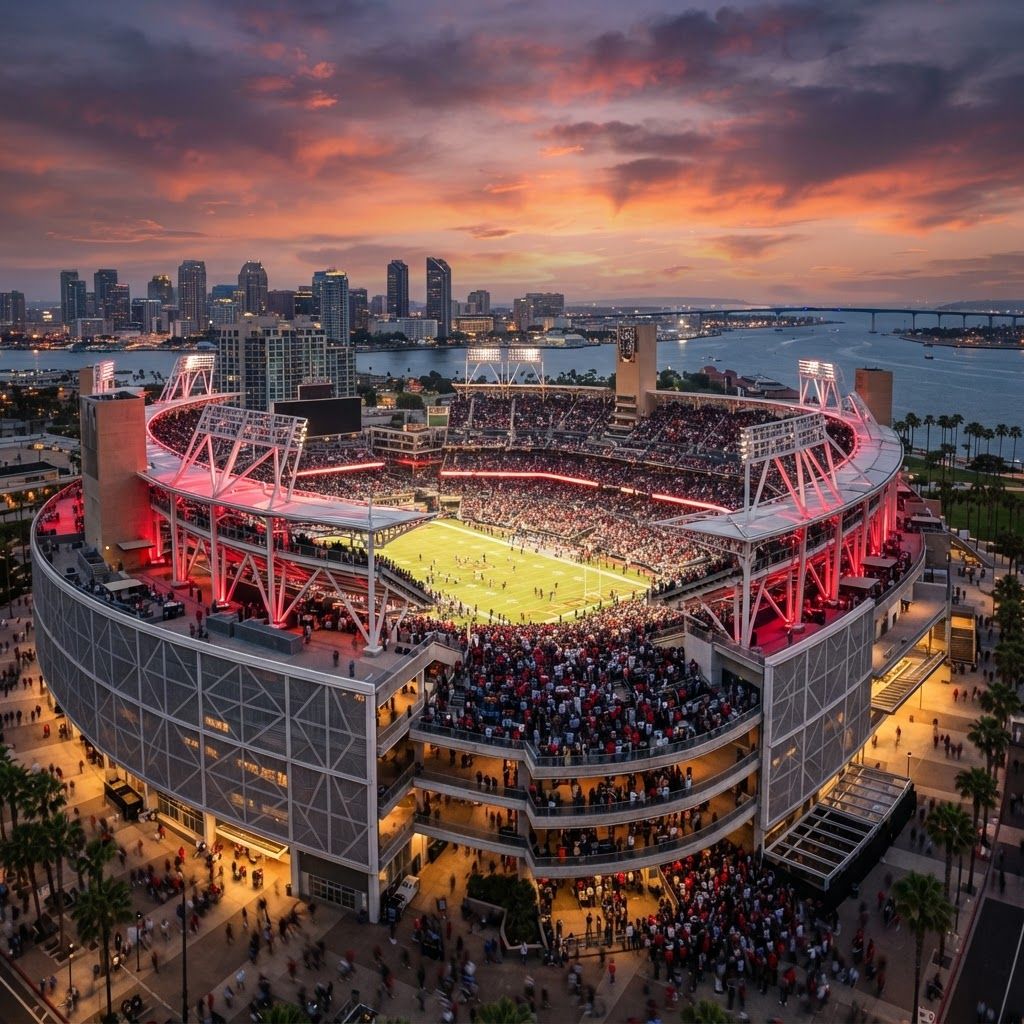
A City Built for Outdoor Sports
San Diego’s mild climate, active communities, and strong college and professional traditions create a diverse venue landscape. The city’s best stadium experiences are not defined by capacity alone. Setting, sightlines, history, neighborhood access, fan atmosphere, and the range of events all matter. This list includes conventional stadiums alongside major arenas and specialized sporting venues that play a comparable role in local culture.
1. Petco Park
Petco Park is the region’s signature stadium and home of the San Diego Padres. Its downtown location connects baseball with the Gaslamp Quarter, East Village, and waterfront. Views of the skyline, varied seating environments, local food influence, and integration of the historic Western Metal Supply building give it a sense of place that few modern ballparks achieve. The surrounding public spaces also help the venue function beyond game days.
2. Snapdragon Stadium
Snapdragon Stadium in Mission Valley represents the newest generation of San Diego sports infrastructure. It hosts San Diego State football, professional soccer, rugby, concerts, and major special events. The open design reflects the local climate, while flexible programming makes the venue important to the broader region. Transit access is a notable advantage for large crowds.
3. Pechanga Arena San Diego
Pechanga Arena is an indoor venue with decades of sports and entertainment history. It accommodates hockey, indoor soccer, lacrosse, concerts, and touring productions. Although older than newer regional facilities, its event variety and central location maintain its relevance. Fans often value the compact indoor atmosphere, where crowd energy can feel immediate.
4. Viejas Arena
Viejas Arena on the San Diego State University campus is best known for college basketball and concerts. Steep seating and an enclosed configuration create a lively environment for Aztecs games. The venue’s campus setting reinforces the connection between student traditions, alumni, and the broader San Diego fan base.
5. Torero Stadium
Torero Stadium at the University of San Diego offers an intimate setting for soccer and football. Its smaller scale brings spectators close to the field and provides views influenced by the attractive hillside campus. The venue has hosted collegiate competition and professional teams, demonstrating how a well-designed compact stadium can support several levels of sport.
6. Tony Gwynn Stadium
Tony Gwynn Stadium honors one of San Diego baseball’s most important figures and serves San Diego State baseball. Its identity is deeply tied to player development, collegiate competition, and the legacy of Tony Gwynn. For baseball enthusiasts, the venue offers a more relaxed and close-up experience than a major-league park.
7. Jenny Craig Pavilion
Jenny Craig Pavilion is the University of San Diego’s indoor home for basketball and volleyball. Clean sightlines and a campus-arena scale make it accessible for families and dedicated college fans. It exemplifies the valuable middle ground between a large commercial arena and a small gymnasium.
8. Triton Soccer Stadium
Triton Soccer Stadium at the University of California San Diego supports high-level collegiate soccer in La Jolla. The venue reflects the region’s deep participation in the sport and provides a direct, field-focused spectator experience. Its campus context makes it a natural destination for fans interested in emerging athletes and competitive university play.
9. Balboa Stadium
Balboa Stadium carries exceptional historical significance. The site has hosted generations of football, track, civic gatherings, and notable events near Balboa Park and downtown. Though its present form differs from the enormous historic facility, it remains an important community venue and a reminder that San Diego’s stadium history predates its current professional franchises.
10. Del Mar Racetrack
Del Mar Racetrack is a specialized sporting venue rather than a field stadium, but its importance to San Diego sports culture is undeniable. The seaside setting, seasonal tradition, and distinctive architecture turn racing into a major regional occasion. Visitors experience not only competition but also a social ritual tied closely to summer in Del Mar.
What Makes a Great San Diego Venue
Local identity is the recurring theme. Petco Park frames downtown; Snapdragon embraces a multipurpose future; campus venues carry traditions; and Del Mar connects sport to the coast. Practical factors also shape the visit. Fans should consider transit, parking, bag rules, sun exposure, seat location, and event-specific policies. Outdoor afternoon events may require shade planning even when temperatures feel moderate.
The Future of the Fan Experience
San Diego venues increasingly prioritize flexible spaces, diverse food, mobile entry, premium hospitality, and year-round programming. At the same time, intimate college and community stadiums prove that technology is not a substitute for proximity and atmosphere. Whether watching major-league baseball, international soccer, college basketball, or a local track event, visitors can find a venue scaled to the occasion. Together these destinations tell the story of a sports city whose greatest architectural advantage remains its climate and landscape. Visitors can improve any outing by arriving early and exploring the surrounding district or campus. Public transportation is especially worthwhile for high-attendance events, while advance accessibility planning helps guests identify suitable entrances, seating, and services. Event calendars change seasonally, giving each venue a different personality throughout the year.
