
How Las Vegas Became a Major League Sports City
For most of its modern history, Las Vegas was considered off limits to professional sports leagues because of its gambling industry. That thinking collapsed remarkably quickly. Within a single decade the valley gained a National Hockey League franchise that reached a Stanley Cup Final in its first season and later won a championship, a relocated National Football League team, a Women's National Basketball Association dynasty, a Formula One street circuit running past the Strip, and a growing calendar of college championships, international soccer, boxing, mixed martial arts and rodeo.
The infrastructure behind that transformation is genuinely world class. Las Vegas now offers a density of large venues that few cities of comparable population can match, because the visitor economy supports capacity far beyond local demand. On any given weekend, arenas and stadiums here can fill with a mix of residents and tourists that makes even neutral site events commercially viable.
The Top 10 Stadiums and Arenas in Las Vegas
1. Allegiant Stadium
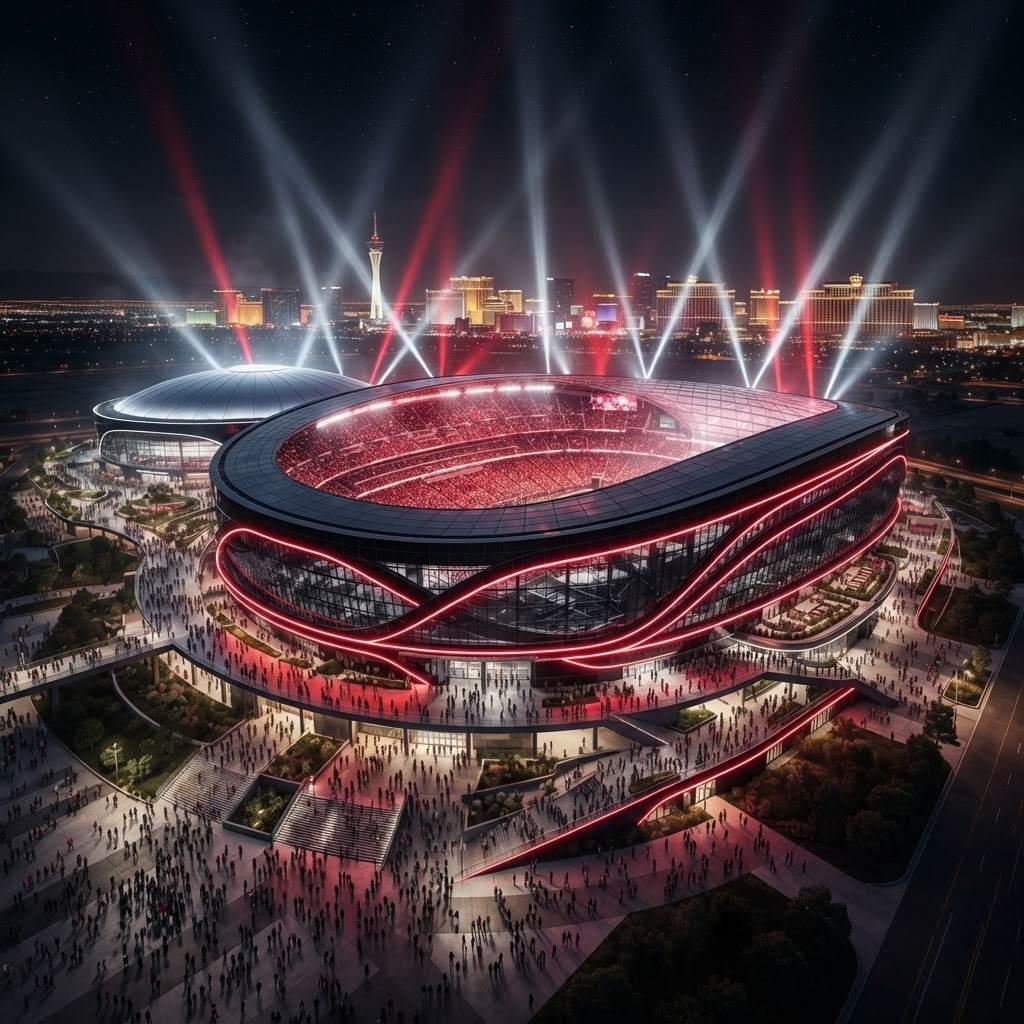
The defining sports structure of modern Las Vegas, Allegiant Stadium is a fully enclosed, climate controlled venue seating roughly sixty five thousand. Its sleek black translucent exterior, retractable field tray that allows natural grass to sit outside in the sun, enormous end zone doors framing a Strip view, and a torch honoring Al Davis make it instantly recognizable. Beyond professional football it hosts college bowl games, international soccer, championship events and major stadium concerts, and its air conditioned interior solves the fundamental problem of summer outdoor events in the Mojave.
2. T Mobile Arena
The valley's premier indoor arena seats around twenty thousand and serves as home ice for professional hockey. Its intimate sight lines, exceptional acoustics and location at the heart of the Strip make it a favorite for concerts, championship boxing, mixed martial arts and awards shows. The adjacent outdoor plaza creates a pre event gathering space that few arenas can replicate.
3. Michelob ULTRA Arena
Located inside a major resort complex, this arena seats roughly twelve thousand and has become closely associated with championship women's professional basketball. The scale is well suited to the sport, producing loud, dense crowds, and the venue also hosts arena football, concerts, awards programming and convention events.
4. MGM Grand Garden Arena
A legendary fight venue, MGM Grand Garden has hosted some of the most significant boxing matches of the last thirty years along with countless residencies and concerts. Its flexible floor configuration, seating for roughly seventeen thousand and deep history give it a cultural weight that newer buildings have not yet accumulated.
5. Las Vegas Ballpark
Home to the valley's Triple A baseball franchise, this ballpark seats about ten thousand and is widely regarded as one of the finest minor league facilities in the country. Shaded seating, a synthetic field engineered for desert conditions, an outfield swimming pool, expansive suites and abundant food options make it a comfortable family destination even during hot months.
6. Thomas and Mack Center
The university's longtime arena seats around eighteen thousand and remains central to college basketball in the region. It is also the traditional home of a major national rodeo finals event each December, which fills the entire city, and it hosts high school championships, graduations and touring shows.
7. Dollar Loan Center
Located in Henderson, this modern arena seats roughly six thousand for hockey and serves as home to a professional minor league hockey team and an indoor football franchise. Its suburban location, easier parking and intimate scale offer a very different experience from Strip venues, and it has become a genuine community anchor.
8. Sam Boyd Stadium
The valley's original large outdoor stadium seated more than thirty five thousand and for decades hosted college football, international soccer, motorsports and one of the largest rugby sevens tournaments in the world. Although its primary tenants have moved to newer facilities, its role in establishing Las Vegas as a viable large event market is historically significant.
9. Las Vegas Motor Speedway
A massive motorsports complex north of the city, the speedway accommodates well over one hundred thousand spectators across its main superspeedway and supporting facilities including a drag strip and dirt track. It hosts premier stock car racing weekends, national drag racing events and one of the largest electronic music festivals in the country.
10. Sphere
Rounding out the list, Sphere is not a traditional stadium but has redefined what a large venue can be. Seating roughly eighteen thousand inside the highest resolution wraparound display ever built, with beamforming audio and haptic seating, it hosts residencies, immersive films and, increasingly, sports adjacent spectacle programming. It represents the next step in venue design and has become an architectural landmark visible across the valley.
What Makes the Las Vegas Venue Market Unique
Three characteristics set this market apart. First, climate forces innovation. Enclosed and climate controlled design is not a luxury but a requirement for summer events, and shade engineering shapes every outdoor facility. Second, the visitor economy underwrites capacity. Neutral site championships, conference tournaments and one off spectacles work here because hotel inventory and air access can absorb enormous crowds. Third, venue density enables clustering, so a single weekend can host a football game, a championship fight, a hockey game and a major concert within a few miles.
Trends in Venue Design and Fan Experience
Modern Las Vegas venues emphasize technology and hospitality over raw seat count. Mobile ticketing, cashless concessions, in seat ordering, dynamic wayfinding and high density wireless networks are standard. Premium hospitality has expanded well beyond traditional suites into field level clubs, social lounges and standing room social decks that appeal to younger attendees. Sustainability is also a growing priority, with water efficient landscaping, high efficiency cooling systems, solar generation and waste diversion programs reflecting the realities of operating large facilities in a water constrained desert.
Practical Tips for Attending Events
Plan transportation carefully. Strip area venues face heavy congestion, and rideshare pickup zones can involve long waits after major events, so allow extra time or consider the monorail and pedestrian routes. Buy parking in advance where available. For outdoor venues in warm months, hydrate aggressively, use sun protection and note shaded seating sections when selecting tickets. Check clear bag policies before arriving, since most large venues now restrict bag size.
Final Thoughts
Las Vegas has assembled one of the most compelling venue portfolios in North America in a remarkably short time. From a climate controlled football stadium and a Strip centered arena to a technology defining spherical venue and a sprawling motorsports complex, the valley now supports nearly any event at nearly any scale. For residents and visitors alike, that means world class sports and entertainment is available year round within a compact geographic area.
