
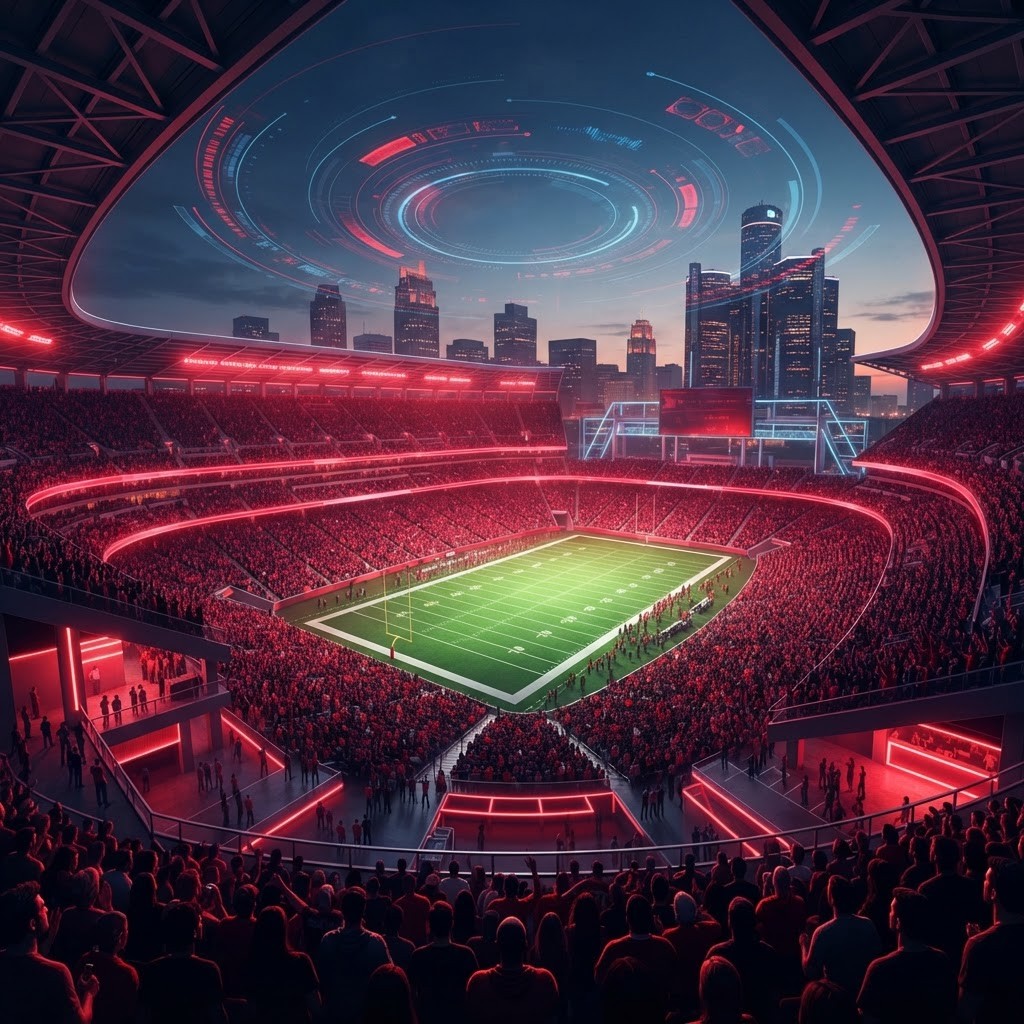
A Sports City Built Around Its Venues
Detroit's identity is inseparable from its stadiums. Few metropolitan areas concentrate professional football, baseball, basketball, and hockey venues within a compact downtown district, and fewer still surround them with the kind of multigenerational fan culture that defines southeast Michigan. Game day here is a neighborhood event: bars along Woodward Avenue fill hours before first pitch, and crowds spill between venues during overlapping seasons.
The District Detroit concept accelerated that clustering, linking arena, ballpark, and football stadium into a walkable entertainment corridor. The result is a venue landscape that serves everyone from suite holders to college students and youth tournament families.
The Top 10 Stadiums and Arenas in Detroit
1. Ford Field is the region's premier indoor venue, home to the Detroit Lions and a regular host for major concerts, college football, basketball championships, and international soccer. Its fixed roof guarantees January events regardless of weather, and its downtown placement keeps it connected to hotels and restaurants.
2. Comerica Park anchors baseball downtown with one of the more distinctive ballpark experiences in the league, including a carousel, Ferris wheel, and sightlines framing the city skyline beyond the outfield. The park is widely praised for family accessibility and food variety.
3. Little Caesars Arena serves as the shared home for hockey and basketball, a dual-tenant design featuring a wide concourse gallery and an attached year-round entertainment deck. Its acoustics have also made it a preferred stop for large touring productions.
4. Michigan Stadium in nearby Ann Arbor is the largest stadium in the country by capacity and a bucket-list destination for college football fans throughout the Detroit region. Autumn Saturdays there function as a regional holiday.
5. Keyworth Stadium in Hamtramck delivers one of the most atmospheric soccer experiences in American lower-division play, with a restored 1930s grandstand and supporter sections known for continuous singing and smoke displays.
6. Wayne State University's Tom Adams Field provides a compact collegiate football and track environment in Midtown, valued for affordability and proximity to campus culture.
7. Jimmy John's Field in Utica hosts independent professional baseball in a modern, intimate park where nearly every seat sits close to the action, making it a favorite for family outings.
8. USA Hockey Arena in Plymouth showcases elite junior and development hockey, a fitting venue for a region that produces professional talent at an unusually high rate.
9. Hurley Field and the surrounding Berkley athletic complex represent the strength of the area's high school sports infrastructure, with Friday night crowds that rival small colleges.
10. Adams Butzel Complex stands out among community facilities, supporting youth football, track, and recreational leagues that feed the city's competitive pipeline.
What Modern Venues Are Getting Right
Detroit's stadium operators have invested heavily in the parts of the experience that occur outside of gameplay. Mobile ticketing and digital entry have shortened gate lines dramatically. Cashless concessions and app-based ordering reduce time away from seats. Wider concourses with sightlines to the field mean fans no longer miss action while walking, a design principle now standard in renovations.
Food programs have also localized. Rather than generic stadium fare, venues increasingly feature regional operators and Detroit-style specialties, turning concessions into a draw rather than a necessity. Premium offerings have diversified too, with loge boxes, standing-room social clubs, and field-level lounges replacing the single-tier suite model.
Attending Games Efficiently
Downtown parking fills quickly on overlapping event nights, so many regulars use the QLINE streetcar or the People Mover, or park slightly north in Midtown and walk. Arriving early has become genuinely worthwhile: pregame programming, open batting practice, and plaza entertainment now start well before scheduled first pitch or puck drop.
For indoor venues, seat selection matters more than section prestige. Upper-level corners at Ford Field and Little Caesars Arena often deliver superior sightlines to lower-level end zones or corners at a fraction of the price. At Comerica Park, third-base-side seats offer the best skyline views, while first-base sections receive more late-afternoon shade in summer.
Economic and Community Impact
These venues function as economic anchors. Concentrated event traffic supports restaurants, hotels, retail, and transit ridership, while arena and stadium employment provides thousands of seasonal jobs. Community programming extends the impact further, with youth clinics, school partnerships, and public skating or field access filling calendars between professional events.
That impact is not without debate, and residents continue to discuss public financing, parking pressure, and neighborhood displacement around expanding districts. Those conversations are part of what makes Detroit's sports geography actively evolving rather than settled.
Final Thoughts
From cathedral-scale college football to a restored grandstand in Hamtramck, the Detroit region offers a venue for nearly every taste and budget. The stadiums on this list earn their reputations through atmosphere, accessibility, and the passion of the crowds that fill them. Visitors planning a sports weekend can realistically experience several within a single walkable district, something few American cities can genuinely claim.
