
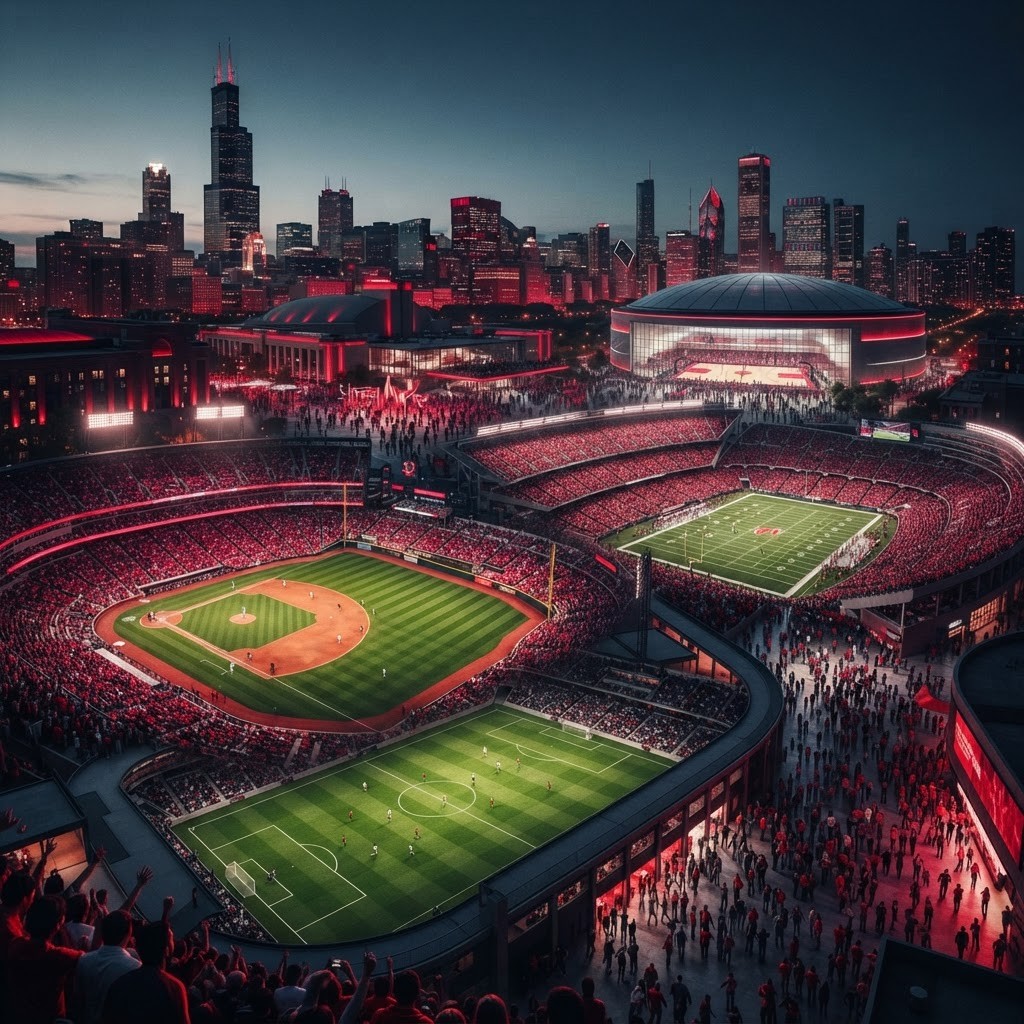
A City Defined by Sports Venues
Chicago’s sports identity is inseparable from its stadiums. Some are internationally recognized landmarks, while others build community through college athletics, soccer, racing, and neighborhood events. The best venue depends on what a visitor values: history, sightlines, atmosphere, amenities, transit, or architectural character. This guide highlights ten stadiums and arenas that illustrate the breadth of the Chicago sports experience.
1. Wrigley Field
Wrigley Field, home of the Chicago Cubs, is celebrated for its ivy-covered outfield walls, hand-operated scoreboard, neighborhood setting, and more than a century of baseball history. Recent renovations improved facilities while preserving the park’s intimate character. Arriving by rail and walking through Wrigleyville is part of the experience. Fans should explore different seating areas, as columns and upper-deck geometry create varied views in this historic structure.
2. Soldier Field
Soldier Field hosts the Chicago Bears and major soccer, concert, and civic events. Its classical colonnades honor the venue’s memorial origins, while the modern seating bowl creates a distinctive architectural contrast. The lakefront location provides dramatic skyline and water views. Visitors should plan transportation carefully because large events concentrate traffic around Museum Campus, and changing weather can be pronounced beside Lake Michigan.
3. United Center
The United Center is home to the Chicago Bulls and Chicago Blackhawks. It delivers the scale and production expected of a major indoor arena while celebrating the legacies of both franchises. Strong transit planning, extensive concessions, premium hospitality, and event technology support basketball, hockey, and concerts. The shared history of championship teams gives the building an energy few multipurpose arenas can replicate.
4. Rate Field
Rate Field is the home ballpark of the Chicago White Sox. It offers broad concourses, varied food, family areas, and skyline views from portions of the park. Improvements over the years have made the venue more welcoming and connected to team history. Its South Side location and easy rail access make it straightforward for many fans, while parking remains an option for regional visitors.
5. Wintrust Arena
Wintrust Arena is a modern venue near McCormick Place that hosts DePaul basketball, Chicago Sky games, concerts, and conventions. Its relatively intimate seating bowl keeps spectators close to the action. Contemporary amenities and a South Loop location support an efficient event experience. The arena demonstrates how a well-scaled urban venue can serve professional sports, college athletics, and business events without feeling oversized.
6. SeatGeek Stadium
SeatGeek Stadium in Bridgeview is a soccer-specific venue known for close views and an energetic supporter atmosphere. It has hosted professional soccer, rugby, lacrosse, music festivals, and community competitions. The compact design suits field sports particularly well. Because it is outside the central rail grid, visitors should account for transportation and event-specific access when planning a trip.
7. NOW Arena
NOW Arena in Hoffman Estates hosts the Windy City Bulls, concerts, family entertainment, and regional events. Its suburban setting offers convenient access for audiences beyond Chicago’s core. The venue provides the amenities of a multipurpose arena at a more approachable scale. It is especially valuable to the regional sports ecosystem, giving developmental basketball and community events a professional stage.
8. Credit Union 1 Arena
Credit Union 1 Arena on the University of Illinois Chicago campus supports college basketball, concerts, and special events. Its location near downtown and established neighborhoods makes it accessible to students and city residents. The building’s role extends beyond athletics by providing a large gathering place for ceremonies and performances. College venues like this offer spirited crowds without the pricing and scale of major professional arenas.
9. Northwestern Medicine Field
Northwestern Medicine Field in Geneva is home to the Kane County Cougars. The ballpark delivers a classic minor-league experience with close seating, family entertainment, and a relaxed pace. It is a destination for suburban families who want professional-quality baseball in a smaller environment. Theme nights and between-inning activities are part of the appeal, but the field itself remains central to the experience.
10. Impact Field
Impact Field in Rosemont is home to the Chicago Dogs and stands out for modern amenities, intimate baseball views, and proximity to a major entertainment district. Its independent-league format encourages creative promotions and accessible family outings. The contemporary park feels polished without losing the informal interaction that makes smaller-scale baseball engaging.
How to Choose the Best Game-Day Experience
Consider the sport, season, neighborhood, transportation, and desired atmosphere. Historic venues reward early arrival and exploration; modern arenas emphasize convenience and production; minor-league parks offer affordability and family interaction. Review bag policies and accessibility needs before leaving, use public transit where practical, and prepare for lakefront weather. Concessions increasingly feature local flavors, but traditions differ from one venue to another.
Why Chicago Stadiums Matter
These buildings are civic stages where generations share rituals, heartbreak, and celebration. They also influence neighborhood business, transit patterns, tourism, and architecture. Chicago’s venue landscape succeeds because it is not uniform: an ivy-lined afternoon, a roaring indoor playoff game, a cold lakefront kickoff, and a relaxed suburban baseball night each express a different side of the region. Together, these ten stadiums make Chicago one of North America’s essential sports cities.
