
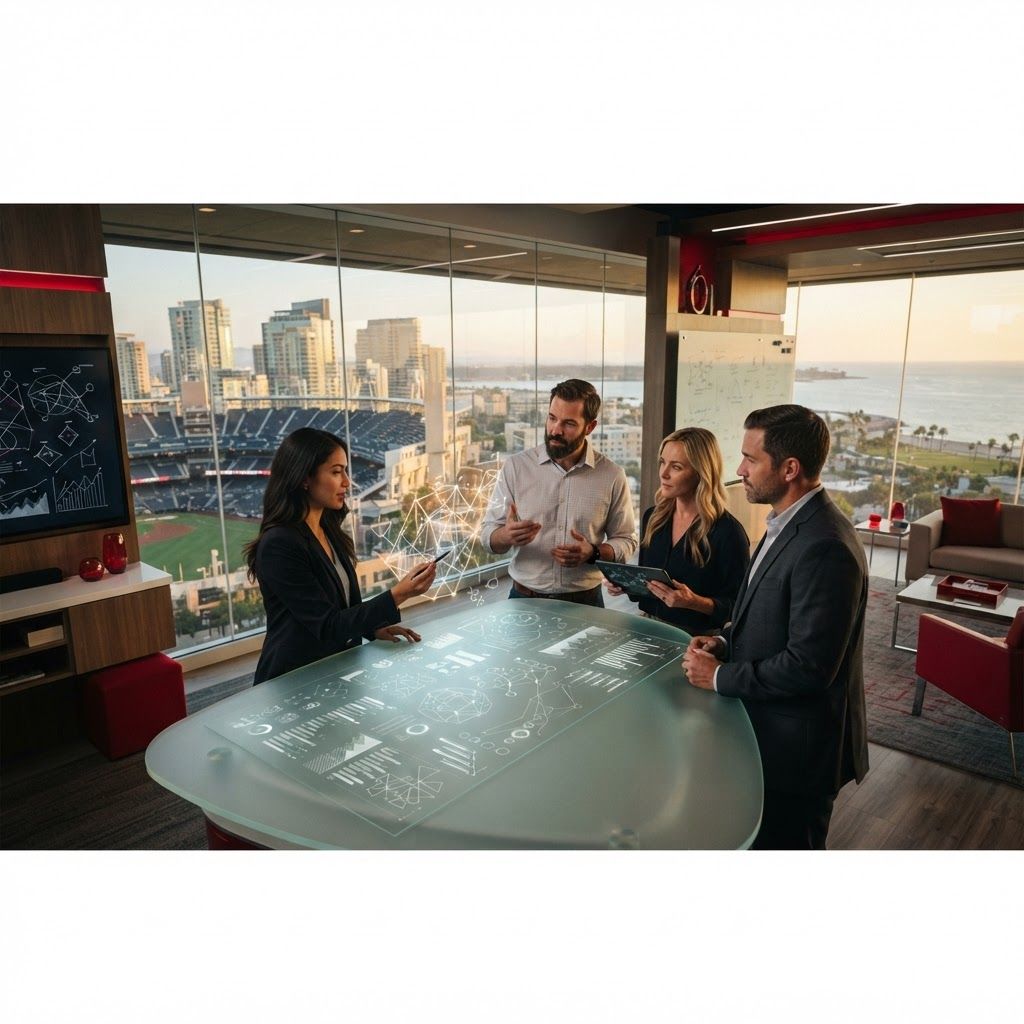
Expertise Behind San Diego Sports
Sports consulting covers far more than team strategy. Franchises, universities, venues, events, athletes, sponsors, and public agencies need help with finance, facilities, operations, branding, partnerships, law, performance, and audience growth. San Diego’s mix of professional teams, collegiate athletics, action sports, golf, endurance events, and tourism creates demand for both local specialists and global firms with regional experience. The organizations below represent different parts of that advisory landscape rather than interchangeable services.
1. Legends
Legends operates across venue development, premium experiences, sponsorship, hospitality, and commercial strategy. Its relevance to major sports organizations lies in connecting physical venues with long-term revenue and fan engagement. Clients considering a new facility or major repositioning need rigorous demand analysis and an experience concept that works on event and non-event days.
2. CAA Sports
CAA Sports is a major force in athlete representation, property sales, sponsorship, media, and brand strategy. For San Diego organizations or talent seeking national and global reach, its scale can open complex commercial opportunities. The firm’s breadth is most suitable when rights, content, endorsements, and long-term positioning must be coordinated.
3. Wasserman
Wasserman has deep Southern California roots and advises athletes, brands, and sports properties across representation, marketing, and partnerships. Its work reflects the convergence of sport, entertainment, culture, and digital media. San Diego’s action-sports and lifestyle identity makes that integrated perspective particularly relevant.
4. Excel Sports Management
Excel Sports Management is known for talent representation, brand work, and property consulting. Its expertise can support athletes and organizations seeking disciplined commercial growth. Strong advisory relationships should consider career stage, audience fit, category conflicts, and reputation—not simply the highest immediate offer.
5. JMI Sports
JMI Sports has San Diego roots and specializes in collegiate multimedia rights, venue development, and sports marketing. This focus is a major differentiator in a region with prominent universities and complex campus stakeholders. Collegiate consulting requires sensitivity to institutional identity, alumni, students, sponsors, and changing rules around athlete opportunities.
6. AECOM Sports
AECOM brings planning, design, infrastructure, and program-management capabilities to sports and entertainment projects. Its value is strongest where a stadium or district must fit transportation, utilities, sustainability, public space, and surrounding development. Large venues are civic systems as well as buildings, and multidisciplinary planning can reveal risks early.
7. Gensler Sports
Gensler advises on sports architecture, experience design, workplace, hospitality, and mixed-use environments. For teams and venue owners, its design research can connect fan behavior with spatial decisions. In San Diego, successful facilities often need shade, natural ventilation, indoor-outdoor transitions, and a character grounded in the local climate.
8. Elevate
Elevate focuses on sports and entertainment strategy, ticketing, partnerships, premium sales, and venue solutions. The firm is relevant when an organization wants to strengthen revenue without weakening the fan relationship. Effective pricing and premium strategy should segment demand carefully while preserving accessible entry points and atmosphere.
9. Huddle Up Group
Huddle Up Group works with destinations and sports organizations on tourism, event recruitment, and strategic planning. San Diego is naturally positioned for sports tourism because of its weather, accommodations, beaches, and facilities. Advisory work can help quantify economic potential, identify suitable events, and align organizers with community capacity.
10. Procopio
Procopio is a San Diego-based law firm rather than a conventional management consultancy, but its sports, business, intellectual-property, labor, and transactional knowledge can be critical. Teams, athletes, startups, and event operators often need legal strategy integrated with commercial decisions. Contracts, licensing, trademarks, employment, governance, and regulatory questions all shape sports ventures.
Choosing the Right Consulting Specialty
Begin by defining the decision, not the desired consultant. A venue feasibility study requires different expertise from sponsorship sales, athlete branding, ticketing optimization, sports tourism, or contract negotiation. Ask firms for comparable case studies, named team members, methods, deliverables, data ownership, conflicts, and implementation support. Large firms bring reach and benchmarks; specialized firms may offer more senior attention and local context.
Trends Reshaping the Industry
Women’s sports investment, athlete-led media, mixed-use venue districts, dynamic ticketing, sports betting, international events, and direct fan data are changing advisory priorities. Sustainability and accessibility are becoming core operational criteria rather than optional messaging. Collegiate sports continue to evolve around athlete compensation and media economics. Consultants must translate these shifts into durable decisions instead of chasing short-lived attention.
Why Local Context Still Matters
San Diego combines a large market with a cross-border region, military community, tourism economy, and distinctive outdoor identity. Strategies that work elsewhere may need adjustment for dispersed geography, transportation patterns, coastal constraints, and competition for leisure time. The best sports consultant pairs specialized expertise with careful listening. Whether advising a startup event or a major stadium district, the goal should be measurable value for the organization and a stronger experience for athletes, fans, partners, and the surrounding community. A focused pilot can be more informative than a broad transformation launched without benchmarks. Clients should agree on success measures, reporting cadence, decision rights, and handoff requirements before work begins. That discipline turns outside advice into organizational capability instead of a presentation that is quickly forgotten.
