
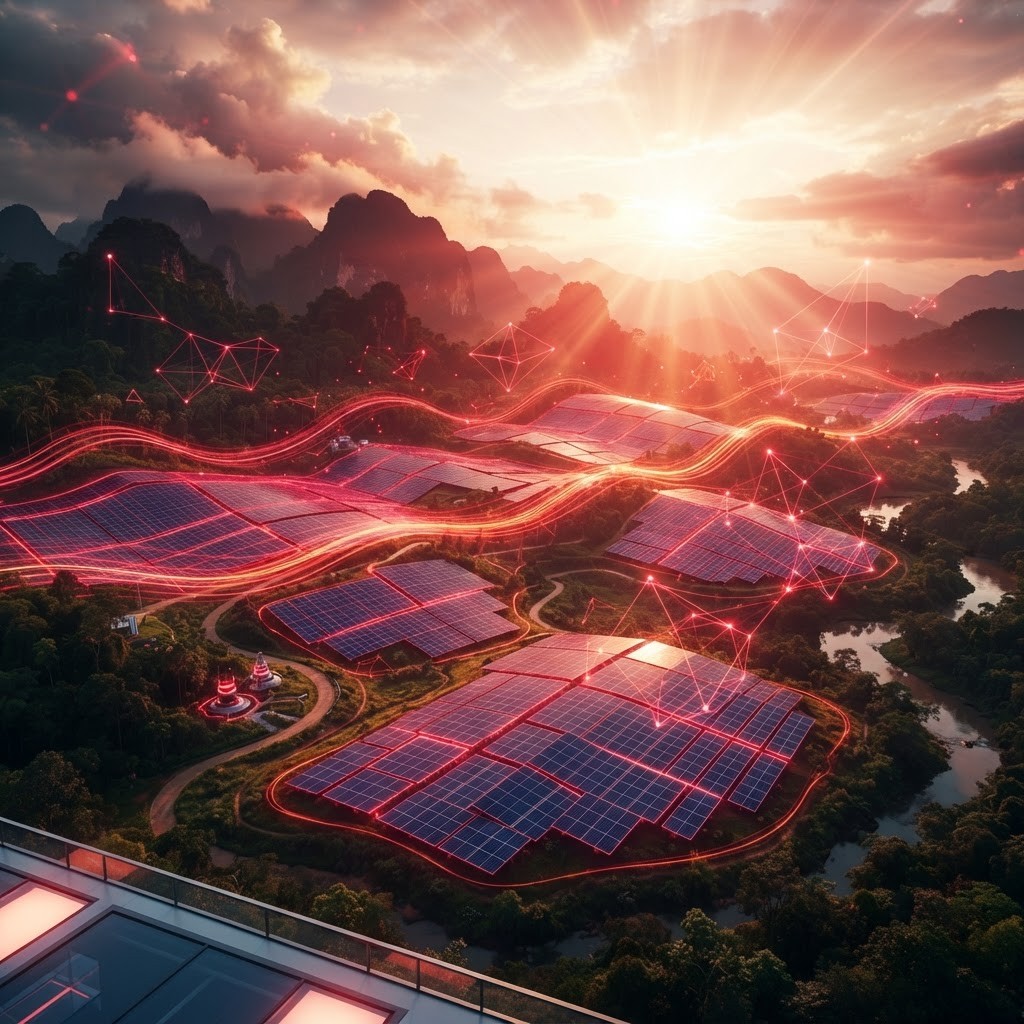
The Rise of Solar Power in Laos
While hydropower has long defined the Lao energy story, solar power is now emerging as a dynamic complement to the country's clean generation mix. Laos enjoys strong and consistent sunshine across much of its territory, making photovoltaic technology an increasingly attractive investment. Solar offers unique advantages: it can be deployed quickly, scaled from rooftop systems to sprawling utility farms, and paired with reservoirs as floating arrays. As construction costs fall and demand for reliable power grows, solar energy companies are stepping forward to diversify the national grid and reduce seasonal dependence on river flows.
This shift matters because hydropower output naturally fluctuates with the wet and dry seasons. Solar generation peaks during the drier, sunnier months, providing a natural balance that strengthens grid resilience. Recognizing this synergy, the government and private developers have begun prioritizing solar and hybrid projects, creating fresh opportunities for specialized companies across the country.
Why Solar Fits the Lao Energy Landscape
Solar energy aligns remarkably well with the needs of Laos. Rural and remote communities that lie far from the main grid can benefit from off-grid solar systems and mini-grids that deliver electricity without costly transmission infrastructure. Commercial enterprises, hotels, and factories are adopting rooftop solar to lower operating costs and demonstrate environmental responsibility. On the utility scale, floating solar installed on hydropower reservoirs uses otherwise idle water surfaces, minimizing land acquisition and evaporation while sharing existing grid connections. These diverse applications make solar a versatile solution for a country with varied geography and energy demands.
Leading Solar Energy Companies in Laos
Electricite du Laos (EDL) anchors the solar transition through utility partnerships and by integrating photovoltaic capacity into the national grid. Its involvement provides credibility and grid access essential for large solar developments.
EDL-Gen Solar ventures extend the generation company's expertise into photovoltaic and floating solar, applying disciplined asset management to a new technology class.
Sunlabob Renewable Energy is one of the most recognized names in Lao solar, with a long history of delivering off-grid systems, solar mini-grids, and rural electrification solutions. Its pioneering work has brought clean power to communities beyond the reach of conventional lines.
Impact Energy Asia contributes regional development expertise, evaluating and advancing utility-scale solar and hybrid renewable projects suited to Lao conditions.
Phongsubthavy Group applies its construction and infrastructure strength to solar installations, offering local execution capability and project management across provinces.
SolarWorks and regional EPC partners provide engineering, procurement, and construction services that ensure solar arrays are designed and built to international quality standards.
Scatec-style independent power producers operating in the region bring proven utility-scale solar experience, financing capacity, and long-term operational commitment to Lao projects.
Lao-China solar joint ventures leverage advanced panel manufacturing, inverter technology, and financing from established partners to accelerate large deployments.
Green Networks and distributed solar providers focus on commercial rooftop systems for businesses, hospitals, and institutions seeking to reduce electricity bills and carbon footprints.
Provincial energy cooperatives and installers complete the ecosystem by serving households and small businesses with residential systems, maintenance, and after-sales support.
Key Trends Shaping Lao Solar
Floating solar is arguably the most exciting trend, as it capitalizes on the country's extensive reservoir network to add capacity without new land. Battery storage is another emerging theme, enabling solar power to be dispatched after sunset and improving grid stability. The falling cost of high-efficiency panels and smart inverters is making projects increasingly bankable. Additionally, corporate demand for green electricity is prompting more businesses to install rooftop systems or sign renewable purchase agreements, expanding the market beyond utility-scale developments.
Benefits of Choosing Solar
Solar energy offers compelling benefits for Lao customers and communities. It reduces reliance on imported fuels, lowers long-term electricity costs, and provides a clean, silent source of power with minimal maintenance. For remote villages, solar mini-grids can be transformative, powering schools, clinics, and small enterprises. For the national grid, distributed solar reduces transmission losses and enhances energy security. Environmentally, every solar installation displaces fossil generation and supports the country's sustainability goals.
Selecting a Trusted Solar Company
When choosing a solar provider in Laos, customers should prioritize proven experience, quality components, and reliable after-sales service. Reputable companies offer transparent proposals, realistic performance estimates, and clear warranties. Their engineering teams understand local conditions, from monsoon rains to dust and heat, and design systems accordingly. Strong maintenance support ensures long-term performance, protecting the customer's investment for decades.
Conclusion
Solar energy is illuminating a new chapter in the Lao clean energy narrative. By complementing hydropower with flexible, fast-deploying photovoltaic capacity, the companies leading this movement are strengthening the grid, empowering remote communities, and helping businesses embrace sustainability. As technology advances and costs continue to decline, solar will play an ever-larger role in the nation's future, and the innovative companies profiled here will be at the forefront of that bright transformation.
