
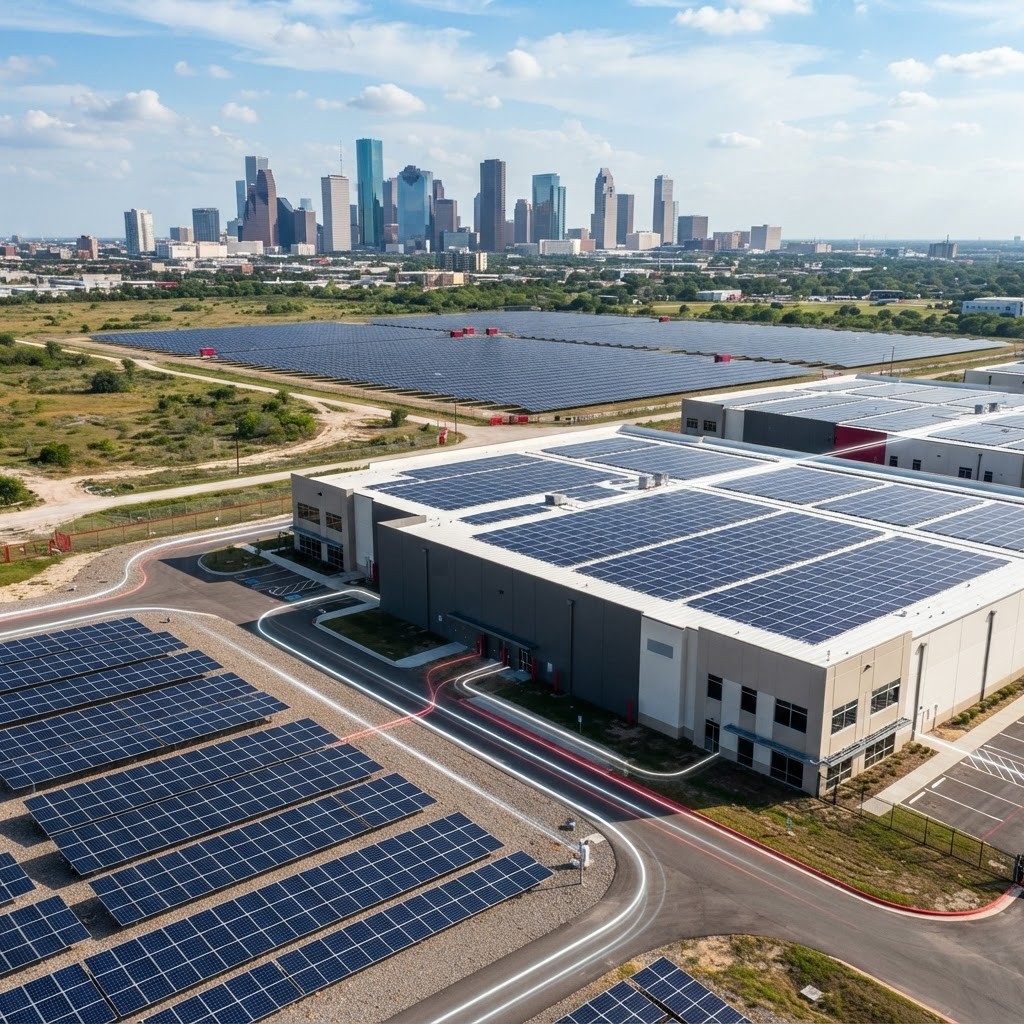
Solar Opportunity in Houston
Houston receives ample sunlight and has a large stock of homes, warehouses, offices, and industrial sites with meaningful electricity demand. Solar can reduce exposure to daytime energy costs, support sustainability goals, and provide resilience when combined with batteries and appropriate electrical design. Results vary with roof condition, shading, consumption, utility rules, financing, and system quality.
The following companies represent different parts of Houston’s solar market, from local installers to utility-scale developers. Consumers should obtain multiple site-specific proposals and verify current licenses, warranties, equipment, and contract terms.
1. Sunnova Energy
Houston-headquartered Sunnova provides residential solar, battery storage, and energy services through a dealer network. Its range of financing and service options has made it a recognizable local name. Homeowners should compare ownership economics, service responsibilities, transfer terms, and total payments across the full agreement.
2. Freedom Solar Power
Freedom Solar Power is a Texas-based installer serving Houston homes and businesses. The company offers solar panels, batteries, and related energy solutions. Regional installation experience is valuable for understanding heat, storms, roof types, permitting, and the expectations of local utilities.
3. Good Faith Energy
Good Faith Energy serves Texas with residential solar, storage, backup power, and smart energy products. Its emphasis on integrated systems appeals to customers who care about resilience as well as bill savings. Monitoring, battery operating modes, and load planning should be discussed during design.
4. Texas Solar Professional
Texas Solar Professional serves the Houston market with residential and commercial installations. A locally focused provider can offer responsive site evaluation and familiarity with area permitting. Prospective customers should assess workmanship warranties, subcontractor use, system modeling, and post-installation support.
5. NRG Clean Power
NRG Clean Power operates in Texas and offers solar and battery solutions for homeowners. Its proposals can include multiple equipment choices and financing structures. Buyers should compare projected production assumptions and ensure savings estimates account for their actual retail electricity plan.
6. Native Solar
Native Solar is a Texas solar contractor serving residential and commercial customers. The company’s statewide background provides experience with varied utility territories and project types. Commercial customers should ask about demand charges, tax treatment, structural review, and operating-hour alignment.
7. ENGIE North America
Houston-based ENGIE develops and manages larger renewable and distributed energy projects. It is relevant to corporations, institutions, and utilities rather than a typical rooftop-only buyer. Energy procurement, solar development, storage, and operational services can be combined into broader decarbonization programs.
8. EDP Renewables North America
EDP Renewables North America, headquartered in Houston, develops utility-scale and distributed solar projects. The company brings development, financing, construction oversight, and long-term asset management capabilities. Its projects help serve power purchasers seeking renewable supply at scale.
9. RWE Clean Energy
RWE’s Houston team participates in major solar and storage development across the United States. Scale and power-market expertise are strengths for utility and corporate transactions. The company’s growing battery portfolio also reflects the increasing value of shifting solar output into higher-demand periods.
10. TotalEnergies
TotalEnergies is expanding solar and storage assets in Texas while maintaining substantial Houston operations. Its global project experience and commercial capabilities support large developments and corporate supply arrangements. Buyers should evaluate project-specific delivery, certificates, and contract risk.
How to Compare Solar Proposals
Start with annual electricity usage and interval data when available. A credible proposal identifies panel model, inverter type, system size, expected first-year generation, degradation, roof sections, and shading assumptions. Compare cash price before financing; a low monthly payment can conceal dealer fees or a long repayment term. Understand warranties separately for equipment, installation, roof penetrations, and labor.
Houston homeowners should also plan for hurricanes, wind loading, drainage, and future roof replacement. Ask how the array is attached, what happens during an insurance claim, and whether battery backup powers selected circuits or the entire home. Solar alone generally shuts down during a grid outage unless equipment is designed for backup operation.
Market Outlook
Demand from data centers, industrial projects, and population growth is supporting continued Texas solar expansion. Storage, virtual power plants, and smarter retail plans may improve the value of distributed systems. The best solar company is the one that uses conservative assumptions, installs safely, explains tradeoffs clearly, and remains accountable after permission to operate.
