
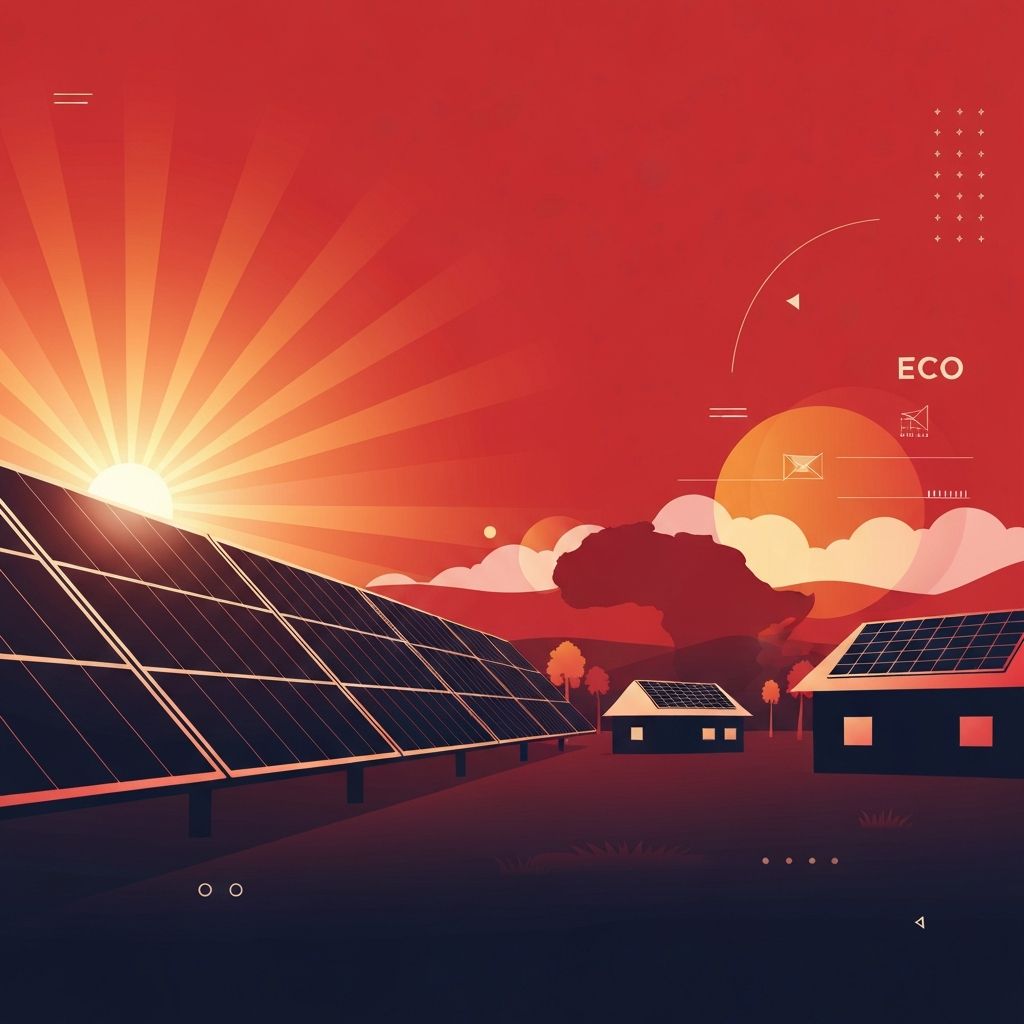
The Solar Energy Boom in DR Congo
With abundant sunshine throughout the year, the Democratic Republic of Congo is one of Africa's most promising markets for solar energy. The country's solar irradiation levels are excellent, making solar an ideal solution for both grid-connected urban areas and off-grid rural regions. Solar energy companies are at the heart of this transformation, providing solar home systems, mini-grids, rooftop installations, and large utility-scale projects.
Why Solar Matters in DR Congo
Solar power offers a unique combination of reliability, scalability, and affordability that fits the Congolese context. With electrification rates still far below regional averages, solar is helping bridge the energy gap quickly. It supports households, schools, health centers, mining operations, and telecommunications towers while reducing dependence on costly diesel generators. The leading solar companies are not only selling products — they are building local capacity through training, after-sales service, and innovative financing.
1. Nuru
Nuru leads the development of large solar mini-grids in DR Congo, including some of the biggest in Sub-Saharan Africa. Their projects provide reliable, affordable electricity to thousands of households and small businesses.
2. Bboxx DRC
Bboxx offers solar home systems through pay-as-you-go financing. They are known for their data-driven approach, robust after-sales service, and commitment to rural electrification.
3. Altech
Altech is a homegrown success story, distributing solar lanterns and home systems across the country. With a strong distribution network, they bring solar to even the most remote regions.
4. Congo Solar Solutions
Congo Solar Solutions specializes in commercial and industrial solar installations, including rooftop systems for offices, factories, and healthcare facilities in major urban centers.
5. Kivu Green Energy
Kivu Green Energy designs hybrid solar systems for industrial and mining clients, combining solar power with battery storage and backup generators to ensure continuous operation.
6. SolaireDirect Congo
SolaireDirect Congo focuses on engineering, procurement, and construction services for utility-scale solar projects, contributing to large-scale grid expansion.
7. PowerGen Congo
PowerGen Congo develops mini-grid systems integrating solar, storage, and smart metering. They support sustainable rural development by powering productive activities such as cold storage and small workshops.
8. Solar23 DRC
Solar23 DRC provides solar pumping systems for agriculture and clean water supply, as well as solar lighting and home systems. Their work supports food security and public health.
9. Husk Power DRC
Husk Power develops community mini-grids that combine solar and biomass to deliver reliable, 24-hour electricity to underserved areas, supporting local entrepreneurs and small businesses.
10. ENGIE Energy Access DRC
Closing the list, ENGIE Energy Access offers solar home systems and mini-grid solutions to households and SMEs, leveraging its global expertise to expand clean energy access across DR Congo.
Solar Market Segments
The solar market in DR Congo can be divided into pico-solar products (lanterns and small kits), solar home systems, commercial and industrial rooftops, mini-grids, and utility-scale projects. Each segment has different customer profiles, financing models, and regulatory considerations. Together, they form a vibrant ecosystem that is transforming energy access.
Financing and Business Models
Pay-as-you-go (PAYGo) financing has revolutionized the rural solar market, allowing customers to pay for solar systems in small daily or weekly installments. Mini-grid developers use blended finance combining grants, debt, and equity, often supported by international donors and impact investors. Commercial customers use power purchase agreements (PPAs) or direct ownership models for rooftop systems.
Impact on Communities
Solar electrification improves education by enabling students to study after dark, supports healthcare by powering clinics and vaccine refrigeration, and boosts livelihoods through better lighting, communication, and productive uses such as milling and refrigeration. It also empowers women, who often manage household energy use.
Trends and Innovations
Innovations include smart meters, mobile money integration, modular battery storage, and remote monitoring. Solar companies are also expanding into clean cooking, e-mobility, and productive use appliances. Partnerships with telecom operators and microfinance institutions are accelerating adoption.
Conclusion
Solar energy is a cornerstone of DR Congo's clean energy future. The companies featured in this list are transforming sunshine into opportunity, helping to deliver light, productivity, and economic growth across the country. Their continued innovation and dedication will be crucial to achieving universal energy access.
