
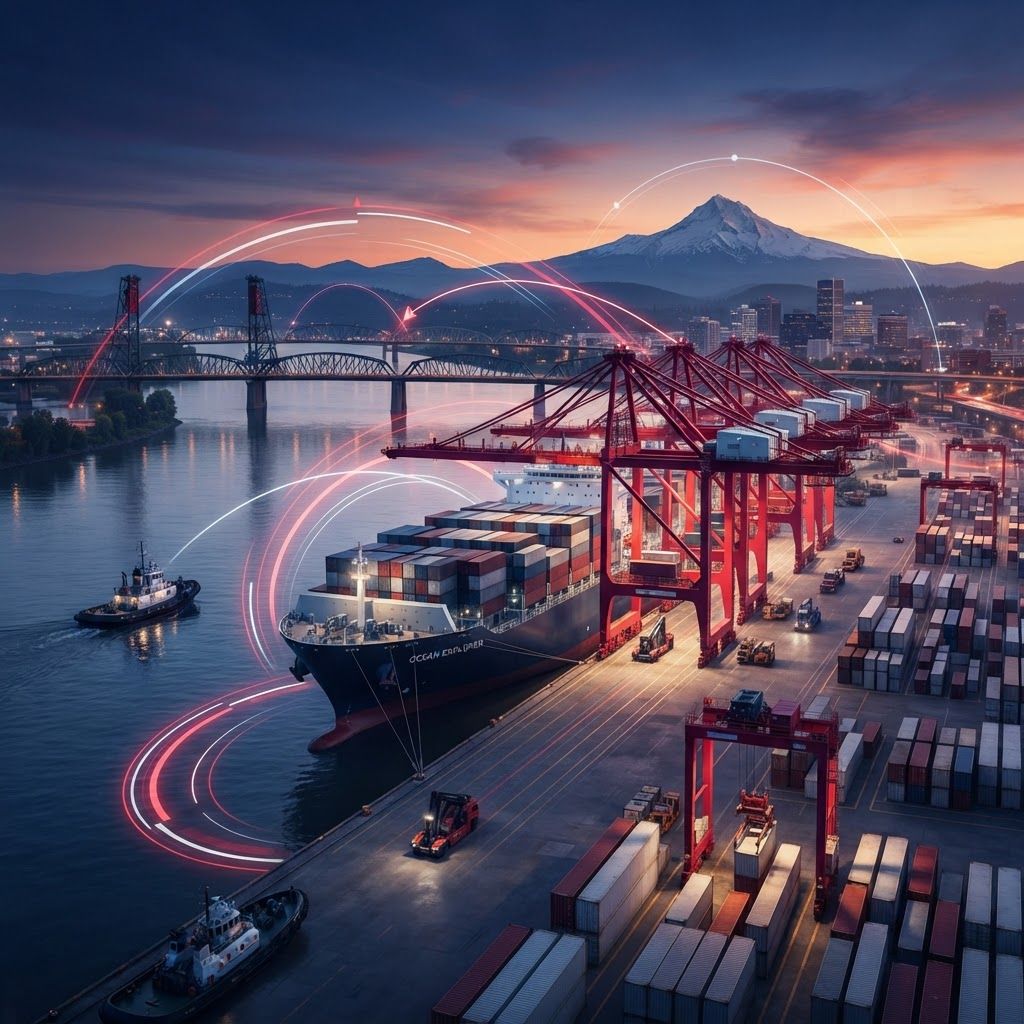
Portland's Position in Global and Local Shipping
Portland is roughly a hundred miles up the Columbia River from the Pacific, connected by a maintained deepwater navigation channel. That geography gives the city an unusual profile: it functions as an ocean port while sitting inland, and it serves as the gateway for enormous volumes of agricultural exports from the interior Northwest that arrive by barge and rail before transferring to ships.
The term shipping means different things to different customers here. For an importer, it means container lines and marine terminals. For a wheat cooperative, it means bulk vessels and grain elevators. For a consumer brand, it means parcel carriers and fulfillment cutoff times. For a downtown law firm, it means a courier who can cross the river in twenty minutes. A useful guide has to address all of these.
Ten Shipping Providers Serving the Region
1. Port of Portland marine terminals form the foundation of the region's waterborne trade, handling containers, automobiles, bulk minerals, grain, and breakbulk cargo across multiple facilities. The port's infrastructure and its rail and barge connections are what make everything else on this list possible.
2. Matson has served the Pacific with a focus on Hawaii, Alaska, and Pacific island trades, offering the schedule reliability that island economies require. For Northwest shippers moving goods to those markets, it is a primary option.
3. SM Line and the container carriers calling regional terminals provide trans-Pacific container service that has been restored and expanded in recent years, giving Oregon importers and exporters a local alternative to trucking containers north to Puget Sound.
4. Westwood Shipping Lines specializes in forest products and breakbulk cargo between the Pacific Northwest and Asia, a trade lane deeply rooted in Oregon's timber economy and still commercially significant.
5. Tidewater Barge Lines operates the Columbia and Snake river barge system, moving grain, petroleum products, and containers on barge with remarkable fuel efficiency per ton-mile. Inland Northwest producers depend on this corridor to reach export terminals.
6. Expeditors International handles the forwarding and customs brokerage layer, arranging ocean and air movements, preparing documentation, and managing compliance. Few importers should attempt international shipping without a capable broker.
7. UPS operates extensive parcel and freight services in the metro area, with air hub connectivity through the airport. Its reliability and integrated tracking make it a default for business shipping and e-commerce fulfillment.
8. FedEx provides comparable parcel, express, and freight coverage with particularly strong overnight and time-definite options. For high-value technology components produced in the western suburbs, express air service is often essential rather than optional.
9. DHL Express excels on international parcel and document shipping, with customs expertise that reduces friction for small exporters shipping directly to overseas customers.
10. Portland's same-day courier network, including established bicycle and van courier companies, covers urgent local delivery for medical, legal, hospitality, and retail customers. In a compact central city with bridge congestion, a bike courier can genuinely outrun a truck.
Choosing the Right Shipping Method
Match mode to cargo. Ocean container service is the economical choice for non-urgent international freight in volume. Air freight makes sense when the value density is high or the deadline is immovable, typically for electronics, aerospace components, pharmaceuticals, and perishables. Barge and rail dominate bulk commodities where cost per ton is the governing metric. Parcel networks handle anything small enough to ship individually. Couriers own the same-day urban niche.
Then look at total landed cost rather than freight rate alone. Duties, customs brokerage, terminal handling, drayage, storage, and demurrage all contribute. A cheaper ocean rate that lands at a congested terminal with long dwell times can easily cost more than a slightly higher rate with clean throughput.
Documentation deserves specific attention. Commercial invoices, packing lists, certificates of origin, and any product-specific regulatory paperwork must be accurate and consistent. Most costly delays in international shipping are paperwork problems, not transportation problems.
Trends Shaping the Market
Decarbonization is advancing across every mode. Ocean carriers are introducing dual-fuel vessels and lower-carbon fuels, terminals are electrifying cargo handling equipment, and parcel carriers are deploying electric delivery vans in urban areas. Shore power capability at berths reduces emissions while vessels are docked, a meaningful improvement for nearby communities.
Supply chain resilience remains a priority after years of disruption. Shippers increasingly diversify routing, keep more buffer inventory, and value the ability to shift between Portland, Puget Sound, and inland rail options depending on conditions. That flexibility has raised the strategic value of having a functioning local container service.
Digitalization continues, with electronic bills of lading, online booking platforms, and container-level visibility becoming standard. Meanwhile the growth of direct-to-consumer commerce has pushed small parcel volume steadily upward, increasing demand for regional fulfillment capacity close to the population.
Practical Recommendations
Consolidate where you can, since full container loads and consolidated parcel pickups both reduce unit cost meaningfully. Insure high-value cargo properly, because carrier liability limits are far lower than most shippers assume. Package for the reality of handling rather than the ideal, particularly for international moves involving multiple transfers.
Build relationships with a forwarder who understands your commodity and a parcel account representative who can help with rate structure as volume grows. And plan around seasonality: agricultural export peaks, retail holiday surges, and winter weather on the Gorge corridor are all predictable, which means they can be managed rather than merely endured.
