
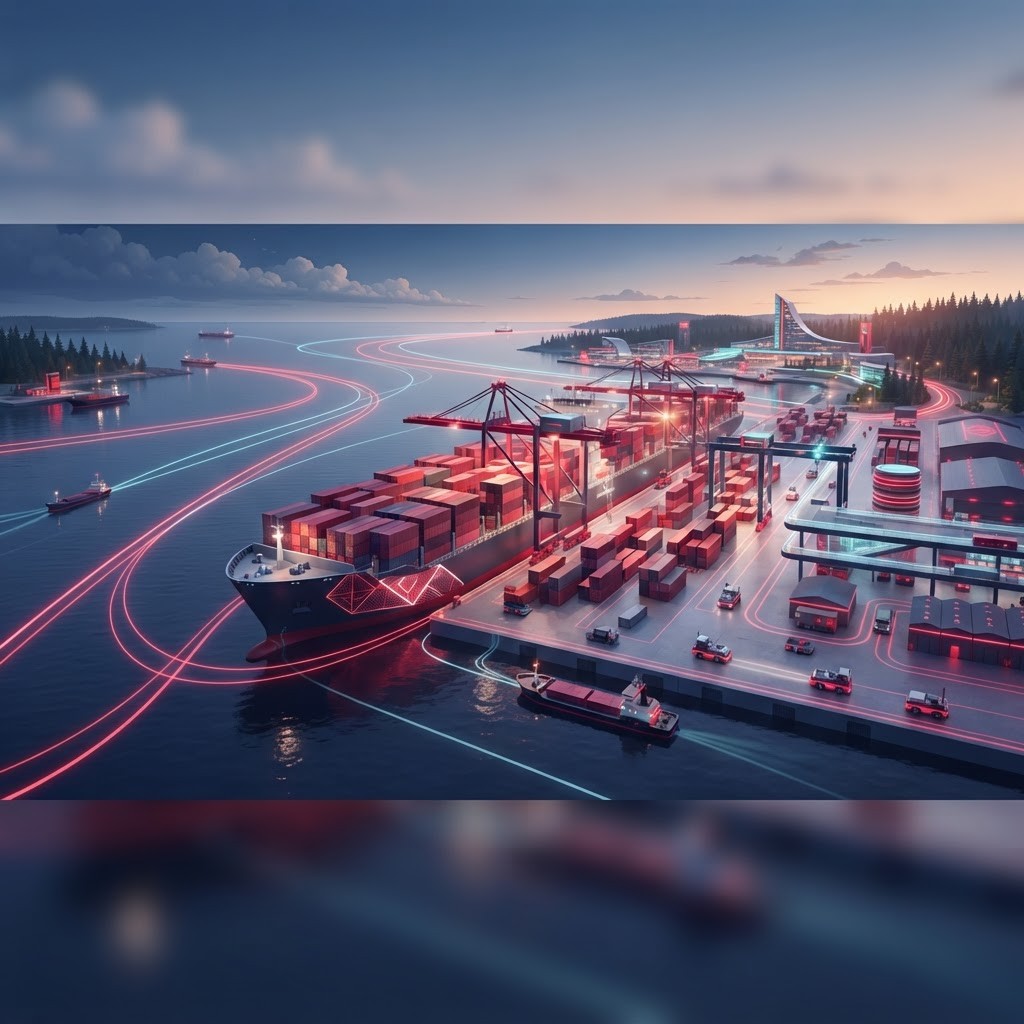
Finland's Maritime Heritage
Shipping has always been central to Finland's economy and identity. Surrounded by the Baltic Sea and dependent on maritime trade for the vast majority of its imports and exports, the country has developed world-class expertise in operating vessels through demanding icy conditions. Finnish shipping companies are renowned for their ice-class ships, skilled crews, and ability to maintain schedules when many other regions would grind to a halt.
This maritime tradition supports industries ranging from forestry and metals to consumer goods and energy. Ports along the southern and western coasts serve as gateways to Europe and beyond, while ferry lines carry millions of passengers between Finland, Sweden, Estonia, and Germany each year. The result is a shipping sector that blends heavy industrial capability with a thriving passenger business.
Strengths of Finnish Shipping
Reliability in harsh conditions is the hallmark of Finnish shipping. Companies invest in vessels engineered for winter navigation and work closely with icebreaking services to keep trade flowing year-round. This expertise is exported globally, with Finnish maritime knowledge influencing ship design and Arctic operations worldwide.
Sustainability is increasingly shaping the sector. Operators are adopting cleaner fuels, energy-efficient hull designs, and shore-power connections to reduce emissions in port. Passenger lines are investing in modern, environmentally conscious ships that offer comfortable travel while lowering their carbon footprint.
Leading Shipping Companies in Finland
Finnlines is a major operator of ro-ro and passenger vessels, connecting Finland with the Baltic, North Sea, and beyond. Its cargo and passenger services form a crucial link in Nordic trade.
Viking Line is one of the most recognizable ferry operators in the region, carrying passengers and freight between Finland, Sweden, and Estonia aboard modern, energy-efficient ships.
Tallink Silja operates popular ferry routes across the Baltic, blending comfortable passenger travel with substantial cargo capacity.
ESL Shipping specializes in dry bulk cargo, transporting raw materials for industry with a fleet that includes highly efficient, low-emission vessels.
Godby Shipping, based in the Åland Islands, focuses on ro-ro cargo transport and vessel chartering with a strong reputation for reliability.
Langh Ship is a family-owned company known for innovative cargo solutions and environmental technology developed in-house.
Meriaura emphasizes sustainable shipping, operating vessels that run on renewable fuels and serving project and bulk cargo needs.
Bore provides ro-ro tonnage and ship management services, supporting cargo flows across European waters.
Arctia delivers icebreaking and specialized marine services that keep Finnish ports and sea lanes open during winter.
Aker Arctic contributes world-leading design and engineering for ice-going vessels, reinforcing Finland's global reputation in Arctic shipping.
Industry Trends
Decarbonization is the defining challenge and opportunity for Finnish shipping. Companies are exploring alternative fuels such as biogas, methanol, and electricity, while retrofitting existing ships to improve efficiency. Digital tools for voyage optimization and predictive maintenance are helping operators cut fuel use and emissions.
The passenger segment continues to evolve as well, with ferry operators enhancing onboard experiences and integrating cargo operations to maximize efficiency. Meanwhile, growing interest in Arctic routes and northern trade keeps Finnish ice expertise in high demand internationally.
Selecting a Shipping Partner
Choosing a shipping company in Finland depends on whether your needs center on bulk cargo, ro-ro freight, or passenger travel. Industrial shippers should weigh fleet capability, ice-class credentials, and environmental performance, while businesses moving goods across the Baltic may prioritize schedule frequency and route coverage. With a sector defined by resilience, innovation, and deep maritime knowledge, Finland offers shipping partners equipped to handle the most demanding conditions while steadily advancing toward a cleaner future.
The Economic Lifeline of Sea Trade
For a country where the overwhelming majority of foreign trade travels by sea, shipping is nothing less than an economic lifeline. Finnish industries depend on reliable maritime links to import raw materials and export finished goods to markets across Europe and the world. Any disruption to these routes has immediate consequences, which is why the reliability and winter capability of Finnish shipping companies carry such strategic importance. This deep dependence has fostered close cooperation between operators, ports, and authorities, creating a well-coordinated maritime ecosystem that keeps trade moving even in the harshest months.
Innovation Born From Necessity
Finland's challenging conditions have made it a global center for maritime innovation. The need to operate reliably through thick sea ice has driven advances in hull design, propulsion, and vessel engineering that are studied and adopted worldwide. Finnish expertise in ice-class shipping and icebreaking is exported internationally, contributing to Arctic operations far beyond the Baltic. This spirit of practical innovation now extends to sustainability, as companies pioneer cleaner fuels and efficient designs. In this way, the demands of the Finnish environment continue to produce solutions that benefit both the domestic sector and the wider maritime world.
Looking ahead, Finnish shipping companies are well placed to lead the industry's transition toward cleaner operations. Their long tradition of engineering excellence, combined with strong environmental commitments and close collaboration across the maritime ecosystem, gives them the tools to remain competitive as regulations tighten and customer expectations evolve. For businesses and travelers alike, this means dependable, forward-looking maritime partners ready to navigate whatever conditions the Baltic and beyond may bring.
