
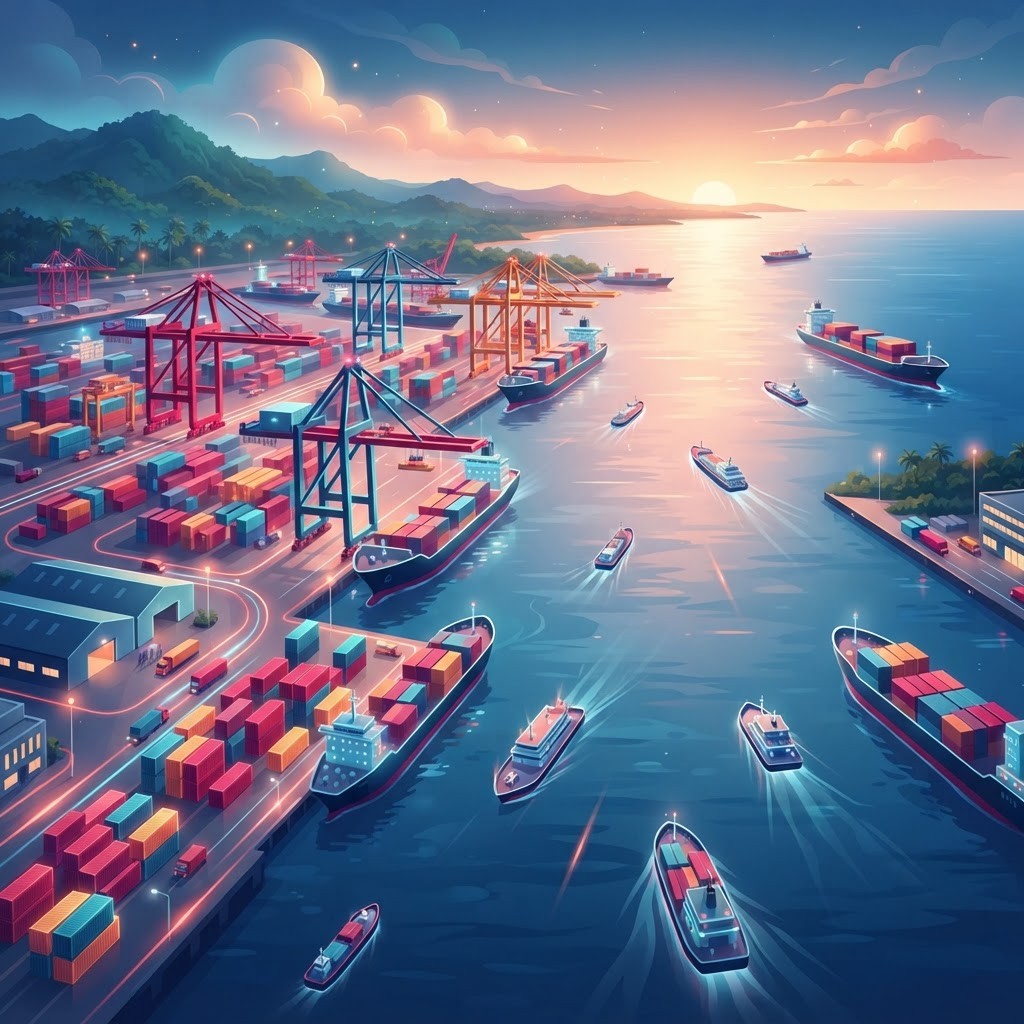
Shipping as the Gateway to Congo's Trade
Shipping is the lifeblood of international trade in Congo, connecting the nation's economy to global markets through its Atlantic ports and extensive river systems. With the mighty Congo River offering thousands of kilometers of navigable waterways and coastal ports serving as entry points for imports and exports, maritime and inland shipping companies play a decisive role in the country's commercial success.
The best shipping companies combine vessel capacity, port expertise, and reliable scheduling to move everything from consumer goods to industrial equipment and raw materials. Their efficiency directly affects the cost and availability of goods across the country.
The Strategic Value of Ports and Waterways
Congo's ports, particularly along the Atlantic coast, serve as critical hubs for containerized cargo and bulk shipments. Pointe-Noire and Matadi are among the most important gateways, handling a large share of the region's trade. Meanwhile, the Congo River enables inland shipping that reaches communities and industries far from the coast.
Companies that master both maritime and river logistics offer clients a powerful advantage, bridging the gap between global shipping lanes and remote domestic markets. This dual capability is especially valuable in a country where road infrastructure cannot always guarantee reliable delivery.
Leading Shipping Companies in Congo
Maersk Line stands as one of the most prominent global carriers serving Congolese ports, offering extensive container shipping services backed by a worldwide network. Its reliability and scheduling consistency make it a trusted partner for importers and exporters.
CMA CGM is another major international carrier with a strong presence in Central Africa, providing container services, logistics solutions, and port operations that support high-volume trade. The company's regional expertise helps clients navigate the complexities of Congolese shipping.
MSC (Mediterranean Shipping Company) delivers substantial container capacity and connectivity to global markets, serving businesses that require dependable ocean freight. Its broad route coverage makes it a versatile choice for diverse cargo needs.
Bolloré Ports and its affiliated maritime services contribute significant port-handling and terminal management expertise, ensuring efficient loading, unloading, and cargo flow. On the inland side, river shipping operators and barge companies such as those serving the Congo River corridor provide essential connectivity for goods moving to and from the interior.
Core Services in Maritime Logistics
Top shipping companies offer a comprehensive range of services. Container shipping remains the backbone of most operations, supporting the movement of manufactured goods, food, and consumer products. Bulk shipping handles commodities such as minerals, grains, and construction materials that move in large volumes.
Many providers also offer integrated logistics, combining ocean freight with warehousing, customs clearance, and inland distribution. This one-stop approach simplifies complex supply chains and reduces the risk of delays at critical transfer points. Specialized services for oversized or hazardous cargo round out the offerings of the most capable operators.
Trends Transforming the Shipping Sector
The shipping industry in Congo is evolving in response to global and regional pressures. Digitalization is improving cargo tracking, documentation, and scheduling, giving clients greater transparency. Port modernization projects are increasing capacity and efficiency, reducing the congestion that historically plagued key terminals.
Sustainability is also rising on the agenda, with carriers exploring cleaner fuels and more efficient vessels to reduce their environmental impact. At the same time, the growth of regional trade is encouraging shipping companies to expand connections between Congolese ports and neighboring markets.
How to Choose a Shipping Partner
Selecting the right shipping company depends on factors such as route coverage, cargo type, reliability, and integrated service offerings. Businesses should evaluate a carrier's schedule consistency, its ability to handle specific cargo requirements, and the strength of its port and inland logistics capabilities.
For companies importing or exporting sensitive or time-critical goods, reliability and communication are paramount. A carrier with strong local partnerships and proven customs expertise can make the difference between smooth delivery and costly delays.
Conclusion
Shipping companies are fundamental to Congo's connection with the wider world, moving the goods that fuel commerce and industry. Global carriers like Maersk, CMA CGM, and MSC, alongside port specialists and river operators, form a network that keeps trade flowing across sea and inland waters. As ports modernize and technology advances, Congo's shipping sector is set to become even more efficient, opening new opportunities for businesses across the nation.
