
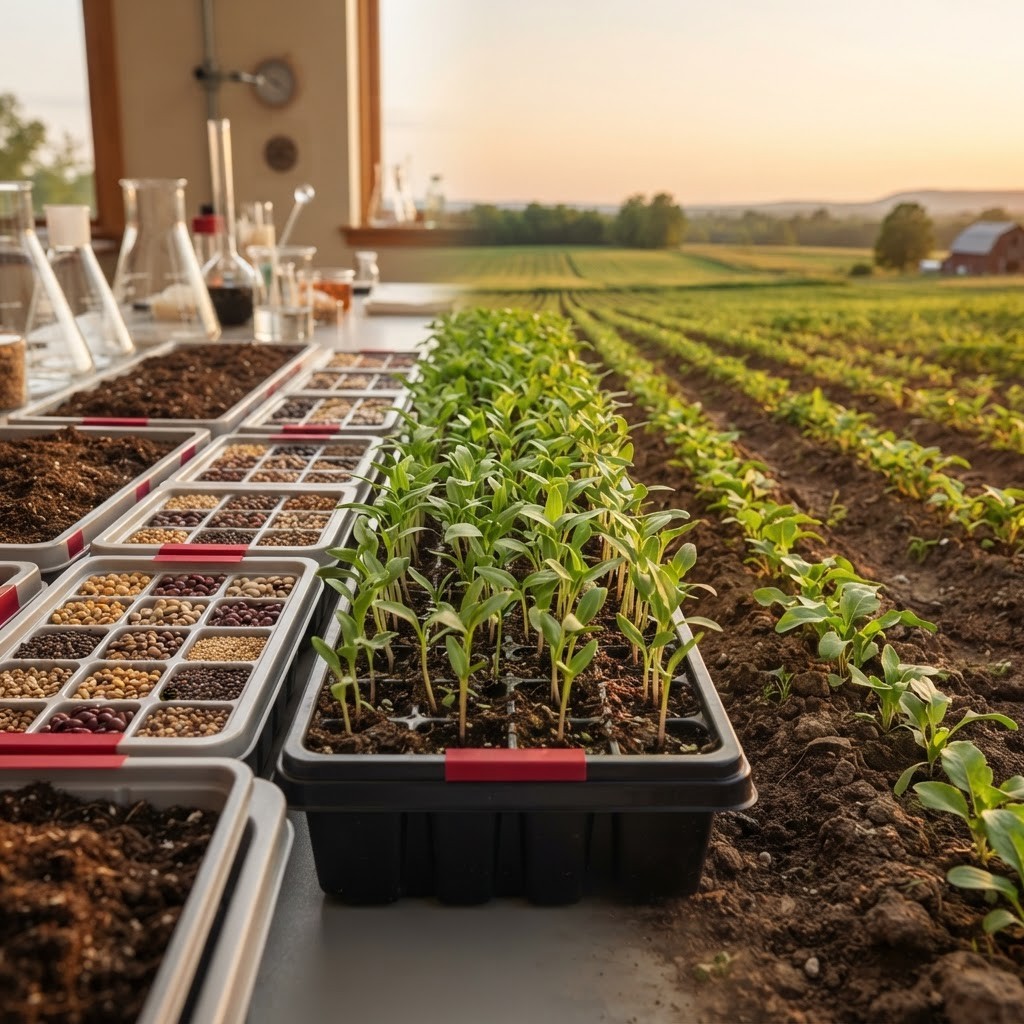
Why Seed Selection Matters in New York
New York growers manage humid summers, cold winters, varied soils, and growing seasons that change significantly from Long Island to the North Country. A reliable seed company offers more than germination: its varieties must fit local disease pressure, market expectations, and harvest windows. The following businesses include New York-based specialists and widely used regional suppliers whose products are relevant to the state’s farms and gardens.
1. Harris Seeds
Harris Seeds, based in western New York, serves commercial growers and home gardeners with vegetables, flowers, herbs, and growing supplies. Its long regional history is a meaningful advantage for customers seeking varieties suited to northeastern conditions. Commercial pack sizes, cultural information, and broad category coverage make it useful for market farms as well as garden retailers.
2. Fruition Seeds
Fruition Seeds is a Finger Lakes seed company focused on organic, regionally adapted varieties. Its breeding and trialing emphasize performance in short seasons and humid climates. Growers interested in flavor, resilience, and seed-system diversity may value its curated catalog. Educational material and community engagement also distinguish the company from high-volume commodity suppliers.
3. Hudson Valley Seed Company
Hudson Valley Seed Company offers open-pollinated vegetable, herb, and flower seeds, with an emphasis on regional stories and artful presentation. The brand is particularly appealing to independent retailers and gardeners who value seed heritage and thoughtful packaging. Its catalog supports edible gardens and pollinator-friendly landscapes while making seeds approachable as gifts.
4. Fedco Seeds
Fedco Seeds is a cooperative supplier serving northeastern growers with vegetables, flowers, herbs, trees, and related products. Its detailed catalog information and climate-aware selection have earned loyalty among serious gardeners and small farms. The cooperative model and transparent sourcing notes help buyers understand variety history. Ordering early is wise because popular selections can sell out.
5. Johnny’s Selected Seeds
Johnny’s Selected Seeds is a major resource for market farmers, offering vegetables, flowers, herbs, tools, and technical growing information. Its variety trials, production focus, and extensive catalog support professional crop planning. New York growers often value choices developed for season extension, protected culture, mechanical harvest, and consistent market quality. Seed cost should be considered alongside labor efficiency and saleable yield.
6. High Mowing Organic Seeds
High Mowing Organic Seeds specializes in certified organic vegetable, herb, and flower seed. Its Vermont location gives the company experience with northeastern production conditions. Organic growers benefit from a catalog developed around their certification needs, while conventional farms may also value disease resistance and regional adaptation. Buyers should review lot-specific germination and treatment details.
7. Seedway
Seedway supplies commercial vegetable and farm seed, serving growers who require professional quantities and agronomic support. Its offerings can include corn, soybeans, forage, turf, and vegetable varieties. Larger New York farms may value access to representatives who understand field conditions and planting goals. Hybrid selection should reflect maturity zone, disease package, standability, and intended end use.
8. Albert Lea Seed
Albert Lea Seed provides field crops, cover crops, forage, and organic seed options. The company is relevant to New York producers adopting diverse rotations or soil-health practices. Cover-crop blends should be chosen according to planting date and objective, whether erosion control, nitrogen fixation, forage, or compaction relief. Generic mixes are not equally suited to every farm.
9. Baker Creek Heirloom Seed Company
Baker Creek is known for an expansive heirloom catalog featuring unusual vegetables, herbs, and flowers. Its visual diversity appeals to gardeners, farm stands, and specialty growers looking for distinctive produce. New York customers should balance novelty with practical adaptation; rare varieties can command attention but may lack disease resistance or uniformity. Small trials are the best approach.
10. Botanical Interests
Botanical Interests offers vegetable, herb, and flower seeds in information-rich packets. The brand is well suited to garden centers and home growers who appreciate accessible instructions and attractive merchandising. Its range supports raised beds, containers, pollinator gardens, and traditional plots. Retailers can build coherent seasonal displays around planting windows and garden themes.
How to Evaluate Seed Quality
Review germination percentage, test date, seed treatment, organic status where relevant, and resistance codes. Professional growers should calculate cost per viable seed and projected saleable plant, not packet price alone. Ask whether a variety performs under field, tunnel, or greenhouse conditions and whether it fits the intended harvest method. Keep lot records so results can guide future orders.
Seed Trends for New York Growers
Demand is growing for climate resilience, disease resistance, compact varieties, culturally significant crops, and flowers that support pollinators. Farms are also using cover crops more strategically to protect soil and manage nutrients. Regional breeding programs are valuable because they test under the same pressures growers face. The best seed company is a learning partner: it provides accurate information, maintains quality, and helps customers choose varieties that fit their land and market rather than simply promoting the newest release.
