
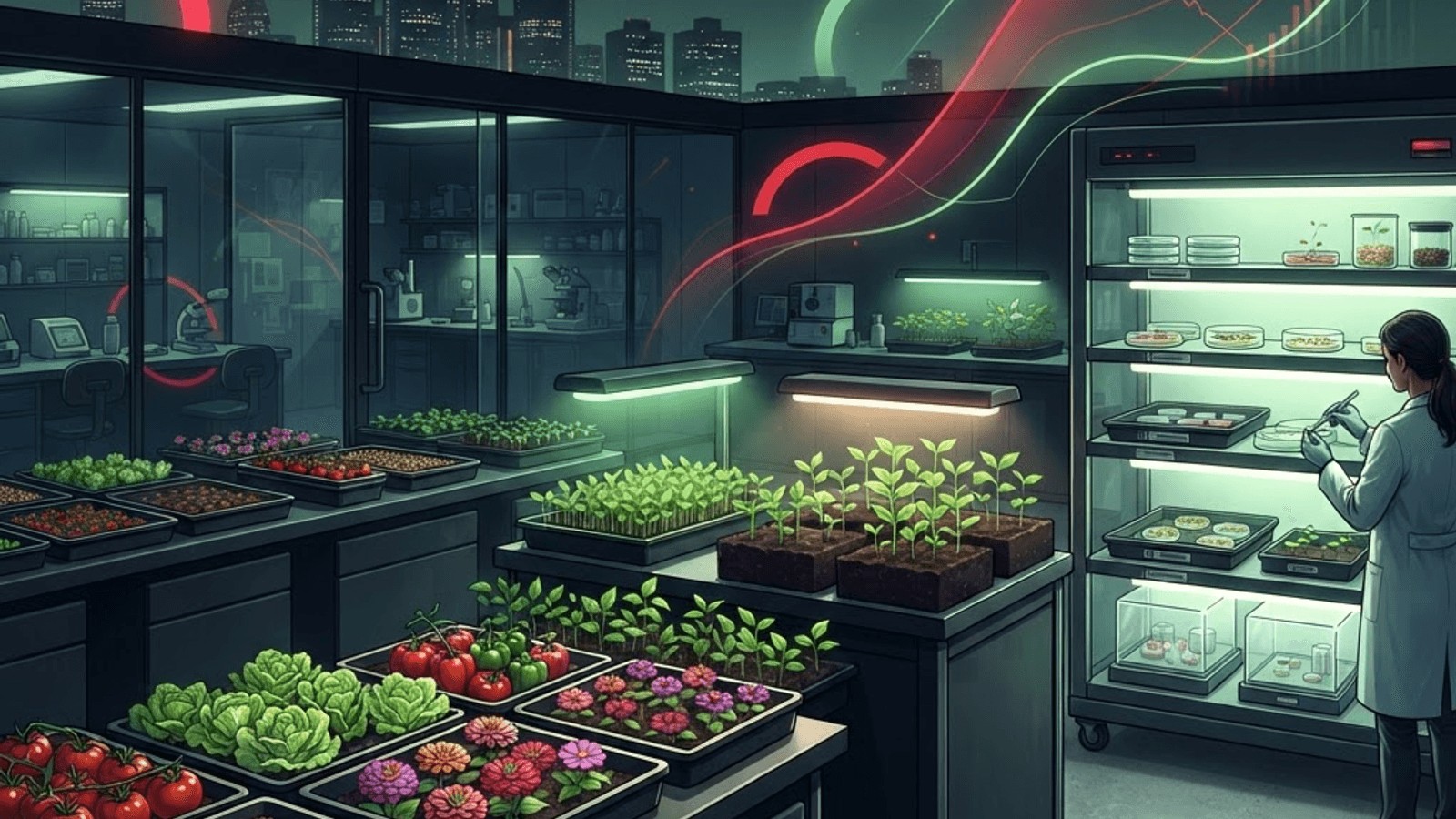
Why Seed Choice Matters More Than Almost Anything Else
Every growing season begins with a decision that quietly determines much of its outcome. Seed variety governs days to maturity, disease resistance, cold tolerance, flavor, storage life and market appeal. A grower can execute soil preparation, irrigation and pest management flawlessly and still struggle if the variety was poorly matched to the climate, the soil or the customer.
In Detroit, that decision carries particular weight. Michigan sits in a growing zone with a defined season, humid summers that encourage fungal pressure, and unpredictable spring and autumn transitions. Urban growers face additional constraints: limited space that rewards compact high-yielding varieties, shading from buildings, and often raised beds with engineered growing media rather than native field soil. Seed companies that understand these conditions provide far more value than a catalog of attractive photographs.
Types of Seed Suppliers
Growers typically work with several kinds of suppliers. Commercial vegetable seed houses serve market farms with professionally sized packets and bulk quantities, detailed variety data and trial results. Heirloom and open-pollinated specialists preserve genetic diversity and distinctive flavor, appealing to direct-market growers and gardeners who save seed.
Regional seed companies focus on varieties proven in specific climates, which for Michigan growers is genuinely useful. Community seed programs and libraries distribute seed locally, often free or at low cost, supporting food access and neighborhood gardening. Finally, cover crop and forage seed suppliers provide the species that build soil health, an increasingly central practice in both rural and urban systems.
Ten Seed Companies Serving Detroit Growers
Johnny's Selected Seeds is among the most trusted names for market farmers. Its catalog combines rigorous variety trialing, detailed growing information, both organic and conventional options, and a strong selection of tools, which makes it a practical single source for small commercial operations.
High Mowing Organic Seeds supplies exclusively organic seed, a requirement for certified growers and a preference for many others. Its northern location means many varieties perform well under conditions similar to Michigan's.
Fedco Seeds operates as a cooperative with a strong emphasis on cold-climate adaptation, regional resilience and affordability, which resonates with growers in the Great Lakes region.
Baker Creek Heirloom Seeds offers an extraordinary range of heirloom and rare varieties, valued by direct-market growers seeking distinctive produce and by gardeners interested in culinary heritage and seed saving.
Seed Savers Exchange maintains and distributes heritage varieties while supporting a broader mission of genetic preservation, appealing to growers who want both quality seed and participation in conservation.
Territorial Seed Company provides a broad vegetable, herb and flower selection with reliable germination and useful cultural guidance for growers managing diversified plantings.
Botanical Interests is widely appreciated for exceptionally informative packaging and a curated selection, making it a strong choice for community gardens, school programs and newer growers who benefit from clear instruction.
Keep Growing Detroit's seed and transplant program functions as a locally rooted supplier, distributing seed and starts to gardens across the city while providing training grounded in Detroit's specific soil and climate realities.
Michigan-based agricultural seed dealers serving field crops supply corn, soybean, small grain and forage seed to farms in the surrounding counties, with agronomic support tailored to regional pest and disease pressure.
Green Cover Seed and comparable cover crop specialists provide the rye, vetch, clover, radish and multi-species mixes that growers use to build organic matter, suppress weeds and protect soil through Michigan winters.
Trends in the Seed Sector
Organic and regionally adapted seed demand continues to climb as growers seek varieties that perform without heavy input reliance. Disease resistance breeding has advanced considerably, offering practical relief from pressures such as downy mildew in cucurbits and late blight in tomatoes, both persistent concerns in humid Midwestern summers.
Seed sovereignty has emerged as an important theme, particularly in Detroit. Community organizations increasingly emphasize local seed saving, culturally significant varieties and independence from distant supply chains. This work preserves genetics adapted to local conditions while strengthening the cultural dimension of food production.
Controlled environment agriculture has created demand for varieties bred specifically for indoor and hydroponic systems, where light spectrum, root zone and spacing differ dramatically from field conditions. Meanwhile, climate variability is pushing growers toward varieties with wider tolerance ranges and toward staggered plantings that hedge against unpredictable weather.
How to Select Seed Effectively
Match variety to market first. A restaurant account may want unusual colors and exceptional flavor, while a wholesale buyer needs uniformity, yield and shelf life. Growing the wrong attribute well still produces a sales problem.
Read the technical data rather than the description. Days to maturity, disease resistance codes, recommended spacing and heat or cold tolerance predict field performance far better than marketing language. For short-season crops, maturity timing determines how many successions fit into a Michigan year.
Trial deliberately. Experienced growers dedicate a small portion of each planting to new varieties, keep records and expand only what proves itself locally. Conditions vary enough between sites that another farm's results are guidance, not guarantee.
Attend to seed quality itself. Germination rate, seed lot age, storage conditions and treatment status all affect stand establishment. Store seed cool and dry, label lots clearly and test older seed before committing valuable bed space to it.
The Outlook for Detroit
Seed supply for Detroit growers has never been better resourced, combining national specialists with genuinely local distribution and education. The city's emphasis on community seed programs, culturally meaningful varieties and soil-building cover crops points toward an agricultural culture that treats seed as both an input and an inheritance. For growers at any scale, thoughtful seed selection remains the highest-leverage decision of the entire season.
