
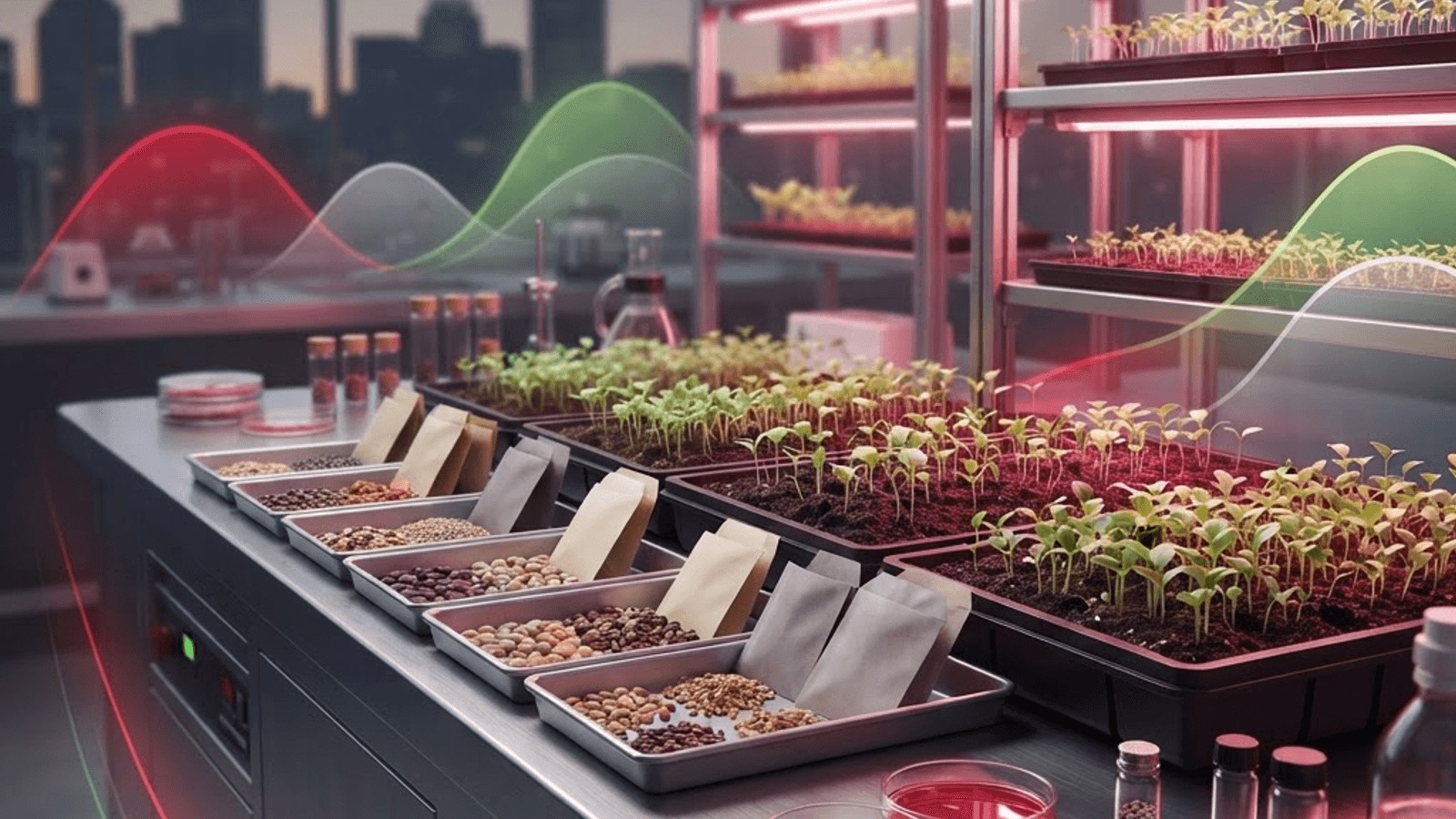
Why Seed Choice Is the Most Important Decision of the Season
Every other input a grower invests in, from irrigation to labour to fertility, is applied to plants determined by the seed chosen months earlier. In eastern Massachusetts, where the frost-free window is relatively short, summers can swing between drought and deluge, and disease pressure from humidity is real, variety selection is genuinely decisive. A cultivar bred for the northeast climate will outperform a nominally superior variety bred for a different region.
Boston-area growers benefit from being close to one of the strongest concentrations of independent seed companies in the country. New England's regional seed sector emphasises cold tolerance, short-season maturity, disease resistance appropriate to humid summers, and flavour rather than shipping durability. Home gardeners in the metro area, who cultivate everything from Dorchester community garden plots to Newton backyards, benefit from exactly the same regional breeding work.
Understanding the Seed Market
The seed trade divides into several distinct categories. Regional commercial seed houses serve market farms with bulk quantities, treated and untreated options, and detailed agronomic data. Heirloom and open-pollinated specialists preserve genetic diversity and unusual varieties. Organic seed producers supply certified organic seed required by certified organic farms. Cover crop and forage suppliers provide soil-building species increasingly central to regenerative practice. Ornamental and cut flower seed companies serve the growing local flower farming movement. Finally, seed libraries and community initiatives distribute culturally significant varieties within Boston's diverse neighbourhoods.
Top 10 Best Seed Companies in Boston
1. Johnny's Selected Seeds. Based in Maine and arguably the most widely used commercial seed source among Boston-area market farms. Growers rely on its extensive northeast-appropriate trials, exceptional variety documentation, tools and supplies range, and consistently reliable germination.
2. High Mowing Organic Seeds. A Vermont company offering entirely certified organic seed, which makes it a natural partner for the many certified organic farms serving Boston markets. Its transparency around breeding and production is widely respected.
3. Fedco Seeds. A cooperatively structured Maine seed company known for cold-hardy varieties, fair pricing, minimal packaging and a strong ethical stance on seed ownership. Popular with small farms and serious gardeners across Massachusetts.
4. Baker Creek Heirloom Seeds. The leading source of heirloom and rare open-pollinated varieties, valued by Boston growers producing distinctive produce for restaurants and farmers markets where visual uniqueness commands premium prices.
5. Hudson Valley Seed Company. A regional company combining well-adapted northeast varieties with a strong focus on art and storytelling, appealing to both market growers and the gift-oriented garden retail segment in the metro area.
6. Sow True Seed and southeastern specialists. Increasingly relevant as warming trends allow Boston-area growers to trial longer-season crops such as certain peppers, okra and sweet potatoes that previously struggled in Massachusetts.
7. Territorial Seed Company. A long-established supplier with strong short-season and cool-weather offerings, used by New England growers for brassicas, alliums and greens programmes.
8. Wyatt-Quarles and cover crop seed distributors serving New England. Suppliers of rye, vetch, clover, buckwheat, oats and mixes have become strategically important as soil health practices spread among eastern Massachusetts farms facing erosion and compaction pressures.
9. Allen Sterling and Lothrop and regional garden seed houses. New England garden centre supply houses distribute seed to the many independent nurseries around Boston, supporting the enormous home gardening market in the suburbs.
10. Boston community seed libraries and neighbourhood seed initiatives. Community-run seed sharing programmes operating through libraries, community gardens and cultural organisations distribute regionally adapted and culturally significant varieties, particularly crops important to Boston's Caribbean, Cape Verdean, Vietnamese and Latin American communities.
Selecting Varieties for Eastern Massachusetts
Focus first on days to maturity. With a typical outdoor season running from mid-May to early October, varieties requiring extended heat units are risky without protection. Second, prioritise disease resistance, especially late blight resistance in tomatoes and potatoes, downy mildew resistance in cucurbits and basil, and clubroot resistance in brassicas, all of which are recurring problems in humid Massachusetts summers.
Third, consider soil conditions. Much of eastern Massachusetts has stony, acidic, glacially derived soil. Root crops perform better in varieties tolerant of imperfect soil structure. Fourth, think about market fit: restaurant buyers reward flavour and unusual colour, farmers market shoppers reward appearance and familiarity, and wholesale buyers reward uniformity and storage life.
Trends in Seed Supply
Organic and untreated seed demand continues to rise as certified acreage grows. Regional breeding programmes, often run in partnership with universities and independent breeders, are producing varieties specifically adapted to northeast conditions and organic systems rather than conventional high-input agriculture.
Seed sovereignty has also become a significant conversation. Interest in open-pollinated varieties that growers can save themselves, in cooperative breeding models and in open source seed pledges reflects concern about consolidation in the global seed industry. Boston's civically engaged growing community has embraced these initiatives strongly.
Practical Ordering Advice
Order early, because popular varieties sell out by midwinter. Buy germination-tested seed and check the packing season. Store seed cool, dry and dark to preserve viability across years. Trial small quantities of new varieties alongside proven performers rather than converting an entire planting at once, and keep written records of what performed well on your specific site.
With careful variety selection and reliable suppliers, growers in the Boston area can produce remarkable quality and volume despite genuinely challenging conditions. Seed remains the least expensive and highest leverage decision in the entire operation.
