
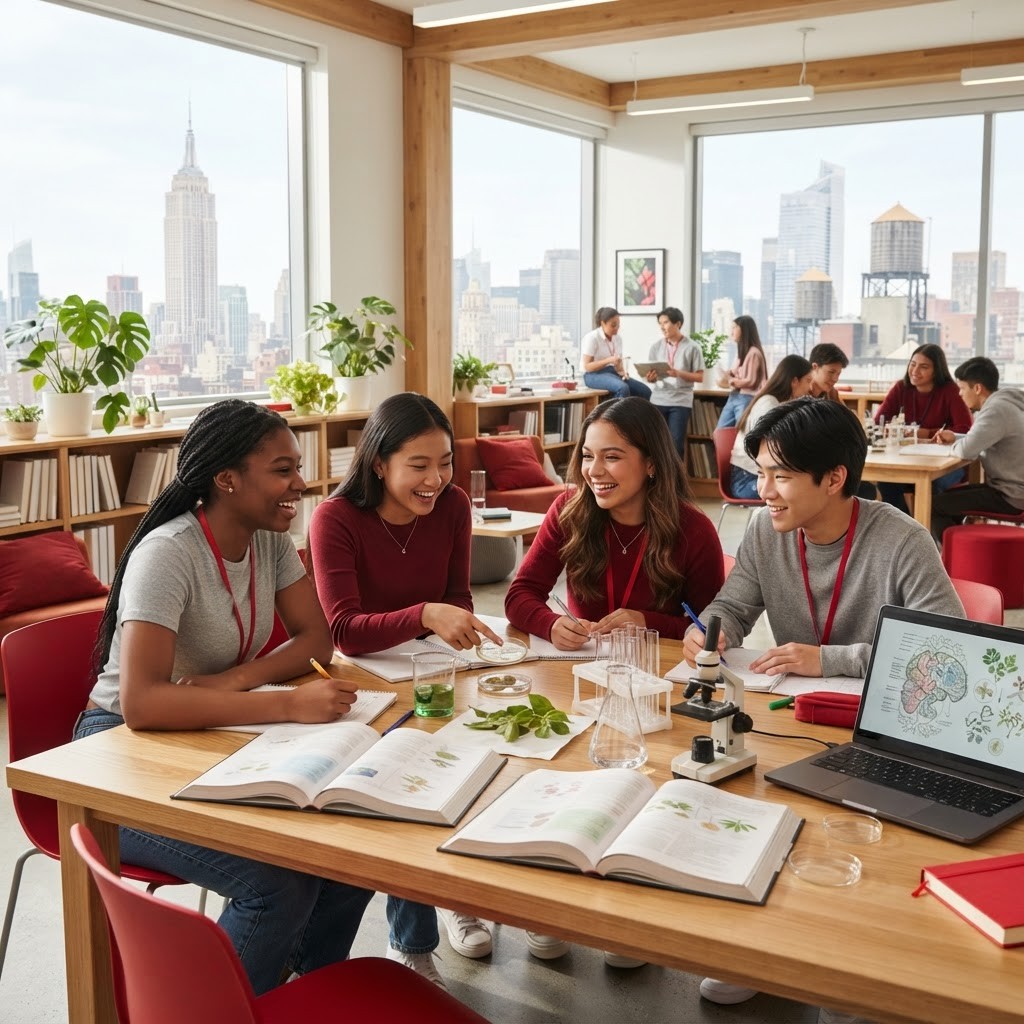
How to Think About New York’s Best Schools
No single ranking can identify the right school for every student. New York schools differ in admissions, grade range, curriculum, size, culture, location, tuition, extracurricular opportunities, and support services. A celebrated institution may still be a poor fit if its pace, commute, or philosophy does not match a child’s needs. The schools below are widely recognized for academic strength and distinctive programs, and they represent both public and independent options.
1. Stuyvesant High School
Stuyvesant is a specialized public high school known for rigorous mathematics, science, engineering, and humanities. Admission is based on the Specialized High Schools Admissions Test. Students gain access to advanced coursework, research, competitions, clubs, and a large community of ambitious peers. The demanding environment rewards independence and strong time-management skills.
2. Bronx High School of Science
Bronx Science is another specialized public high school with an international reputation in science, mathematics, and research. Its curriculum also includes robust humanities, arts, language, and extracurricular offerings. Admission is examination-based. Prospective students should consider both the academic pace and commute, as the school draws learners from across the city.
3. Brooklyn Technical High School
Brooklyn Tech combines a large specialized-school community with engineering, technology, design, and academic majors. Students can explore technical fields while participating in extensive clubs, athletics, and arts. The school’s size creates opportunity but also requires initiative. Admission is through the same specialized high school testing process used by several selective public institutions.
4. Townsend Harris High School
Townsend Harris is a selective public school in Queens with a classical liberal-arts orientation and a strong record of academic achievement. Writing, languages, humanities, and interdisciplinary study are prominent, while students also pursue advanced science and mathematics. Its partnership atmosphere and traditions appeal to learners who value a close community and broad intellectual foundation.
5. High School of American Studies at Lehman College
This small public high school emphasizes American history, civics, research, and strong college preparation. Its location on a college campus creates access to academic resources and a focused environment. The school suits students drawn to history and the humanities while maintaining rigorous study across subjects. Admissions requirements and priorities should be reviewed carefully each year.
6. Trinity School
Trinity is an independent school on Manhattan’s Upper West Side serving students across multiple grade levels. It is known for a challenging academic program, small classes, extensive arts and athletics, and a long institutional history. Families should consider the highly selective admissions process, tuition and aid, community expectations, and whether the school’s intensity suits the student.
7. The Brearley School
Brearley is an independent girls’ school with a strong liberal-arts and sciences curriculum. It emphasizes intellectual curiosity, discussion, writing, and community responsibility. Small classes and close faculty relationships support deep engagement. Applicants and families should explore the school’s educational philosophy, admissions process, financial aid, and the experience of a single-gender learning environment.
8. The Dalton School
Dalton is an independent Manhattan school recognized for its progressive Dalton Plan, which incorporates individual assignments, subject laboratories, and collaborative learning. Its academics, arts, athletics, and extracurricular programs encourage students to take ownership of their education. The model can be especially effective for self-directed learners who communicate comfortably with teachers and manage responsibilities.
9. Horace Mann School
Horace Mann is an independent school in the Bronx offering a broad and demanding academic program alongside substantial arts, athletics, service, and extracurricular opportunities. Its campus and resources support exploration across disciplines. Families should weigh selectivity, commute, tuition, financial assistance, workload, and the student’s preferred balance between competition and community.
10. The Hotchkiss School
Located in Lakeville, Connecticut, within reach of New York families, Hotchkiss is a boarding and day school known for academics, arts, athletics, and a residential community. It differs significantly from city schools because students live and learn on a large campus. Boarding life can foster independence and close relationships, but the residential model must suit the student and family.
Comparing Schools Beyond Reputation
Start with the student rather than the ranking. Consider learning style, interests, desired challenge, social environment, class size, commute, and support needs. Public-school admissions can involve tests, screened criteria, geographic priorities, or centralized applications. Independent schools may require interviews, recommendations, assessments, and financial-aid applications. Requirements can change, so families should rely on current official admissions materials.
Visit when possible and ask specific questions: How are new students supported? What happens when a learner struggles? How accessible are teachers? What is the typical homework load? How does the school approach counseling, belonging, technology, arts, and athletics? Speak with current families while recognizing that experiences vary.
Making a Confident Decision
A strong school offers more than impressive outcomes. It creates a setting where a student can remain curious, develop sound habits, build relationships, and take healthy intellectual risks. New York’s breadth of options is a major advantage, but it can make comparison overwhelming. A thoughtful shortlist based on fit, followed by careful visits and candid conversations, is more useful than pursuing prestige alone.
